What a skincare manufacturer really does, and why buyers should care
Choosing a skincare manufacturer is not just a packaging decision or a simple sourcing exercise. For engineers, product teams, and procurement managers, it is the point where formula intent, packaging compatibility, production stability, and commercial risk all meet. Get that choice wrong and the problems tend to show up later: inconsistent filling, label failures, leakage in transit, slow reformulation cycles, or a product that looks fine in sampling but behaves badly on a retail shelf.
That matters even more in personal care because the buyer is usually judging both function and appearance at once. A minimalist white cylindrical bottle with a black cap, for example, may look straightforward, but the actual factory work behind it can involve material selection, dispensing compatibility, decoration quality, and line efficiency. In other words, the right skin care factory is not simply the one that can make a bottle or fill a formula; it is the one that can keep the whole package working as a system.
For teams sourcing a cosmetic factory, the decision usually comes down to one question: can this partner turn a product concept into a repeatable commercial item without creating avoidable headaches later? That is the frame to keep in mind.
The product format tells you more than the label does
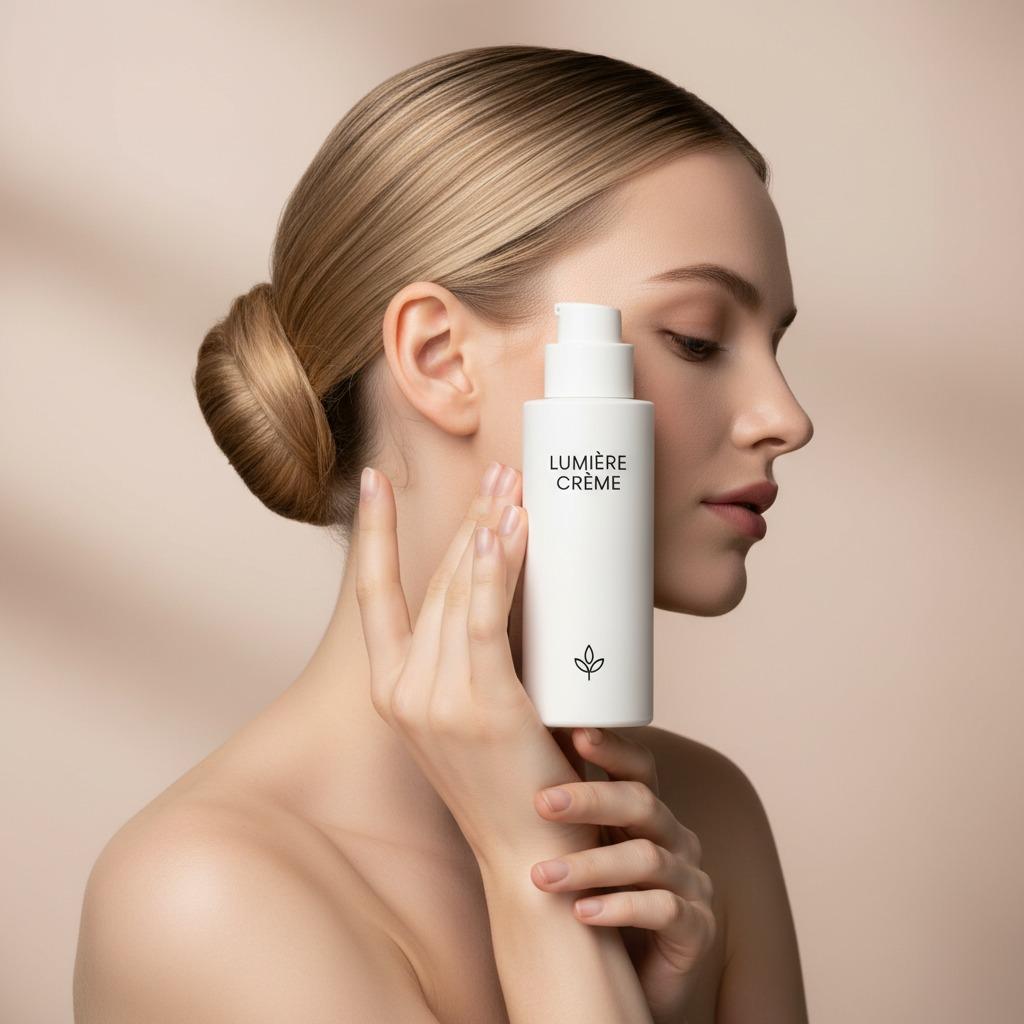
The visible product example here is a handheld cosmetic bottle with a white body, black cap, and a simple printed label. It appears to be a plastic package, likely opaque or semi-opaque with a matte or satin finish. The form factor suggests personal care use, possibly for hair or skin application at home, in a salon, or in a retail demo setting. It could be a spray bottle, pump bottle, lotion container, toner bottle, or leave-in treatment package, but the exact dispenser and formula are not confirmable from the image alone.
That uncertainty is useful, not frustrating. It reflects how many beauty products are sourced in practice: the package must support the use case before the final marketing language is locked in. A bottle intended for a leave-in treatment has different requirements than one used for a scalp toner or styling product. Closure torque, neck finish, liner choice, viscosity range, and user ergonomics can all change the final manufacturing setup.
Buyers sometimes start with branding and leave the engineering for later. That is backwards. The better approach is to define the product’s use pattern first, then ask whether the manufacturer can support it at scale.
Quick buyer takeaway: what to compare before you place an order
If you are evaluating a skincare manufacturer or a skin care factory, the most practical comparison is not marketing language. It is capability alignment. A useful shortlist usually covers these points:
1. Can the factory produce the intended package format consistently?
2. Can it handle your chosen material and finish without quality drift?
3. Does it offer OEM or ODM support if the formula or container needs customization?
4. Can it manage batch-to-batch repeatability and packaging coordination?
5. Does the supplier understand export handling and bulk shipment realities?
That last point is often underestimated. A bottle that looks acceptable in a showroom may not survive a real logistics chain unless the packaging and carton plan are sensible. For buyers shipping into the Middle East, Africa, or Southeast Asia, that matters. SAIL’s broader manufacturing background in export-oriented industrial supply is a reminder that process discipline, warehouse handling, and shipment reliability are not just back-office issues; they shape whether customers receive the product in sellable condition.
What good skincare manufacturing usually includes
1. Packaging compatibility
A bottle is not just a shell. It has to match the formula’s behavior. If the contents are thick, the opening and dispensing system need to support that. If the product is a spray or mist, atomization quality matters. If it is a lotion or treatment bottle, the closure and neck geometry should minimize leakage and simplify filling.
With a simple white-and-black container, the appeal is clear: it gives a clean branded look and enough label space for product information. But the real question is whether the container format suits the fluid inside. Even a modest mismatch can create customer complaints that no amount of graphic design will fix.
2. Production consistency
A serious cosmetic factory should think in terms of repeatable output, not just sample approval. That means stable mixing, filling accuracy, cap application, labeling alignment, and final inspection. For personal care products, buyers often discover that the last 10% of quality is the part that determines whether the product feels premium or merely serviceable.
If a supplier cannot describe its inspection steps clearly, that is a warning sign. The same applies if it answers every question with vague assurances. Good manufacturers are usually specific about process, while still being careful not to overpromise what has not been tested for your exact formula.
3. Decoration and branding support
In skincare, the label often carries as much commercial weight as the formula. A minimalist bottle depends on clean printing, legible text, and a finish that does not make the product look cheap. The visible bottle in this case uses a restrained design, which is sensible for many beauty and grooming lines because it leaves room for later product differentiation through color coding or label changes.
That said, not every factory is equally strong in decoration. Some handle filling well but struggle with print quality or package presentation. If your market depends on shelf appeal, ask how the manufacturer manages artwork consistency and packaging inspection.
Selection criteria that save money later
One common mistake is treating all personal care manufacturers as interchangeable. They are not. Some are strong in formula work, some in plastic packaging, some in contract filling, and some in full turnkey service. The right choice depends on what you actually need.
If your team already has a formula and only needs packaging and filling, the supplier should be judged on line compatibility and packaging quality. If you need a new product developed from scratch, then OEM/ODM capability matters more. SAIL’s own business model in heavy-duty transport shows a useful parallel: customers rarely buy just a truck or trailer in isolation; they want a complete, dependable solution. Personal care sourcing works the same way.
For a buyer, a practical supplier checklist should include:
- Product and package format fit
- Material availability and consistency
- Ability to support customization
- Inspection discipline
- Warehouse and shipment handling
- Responsiveness during sampling and pre-production
Not every item will carry equal weight in every project, but if one or two are missing, expect friction later.
Common mistakes when sourcing from a skincare manufacturer
The first mistake is approving a sample without asking how it will behave in production. A sample can be hand-assembled, carefully filled, and beautifully finished. A production run is less forgiving. If the package has hidden tolerance issues, they show up when the line starts moving.
The second mistake is ignoring end-use. A bottle meant for salon application has different handling demands than one sold through retail or e-commerce. Closure security, leak resistance, and portability all matter, especially for a handheld format.
The third mistake is over-specifying cosmetic claims before manufacturing is settled. It is better to confirm the product platform first and then refine the messaging. Otherwise the team ends up reworking labels, packaging, and compliance materials after the factory setup is already underway.
And one practical caution: do not assume that a minimalist package is automatically easier to source. Simple designs can be demanding because there is less visual distraction. Every alignment issue is easier to see.
How SAIL’s manufacturing mindset fits the sourcing discussion
SAIL is best known for heavy-duty transport solutions, not skincare. Its core business centers on semi-trailers, trucks, and related components such as axles and filters. Still, there is a useful lesson in that industrial profile: dependable manufacturing depends on process control, export readiness, and the ability to support different market requirements without losing consistency. Those are the same traits buyers should look for when selecting a cosmetic factory.
SAIL highlights a modern facility, an annual capacity of over 30,000 units, OEM/ODM support, and quality systems aligned with ISO 9001, SGS, and TUV. Those details belong to its transport business, so they should not be transferred mechanically to personal care. But the underlying sourcing principle is relevant: customers need suppliers that can balance customization with repeatability and handle bulk orders without letting quality slide.
FAQ for procurement and product teams
Is the visible bottle definitely for skincare?
Not definitely. It appears suited to beauty or grooming use, possibly hair or skin care, but the exact formula and dispenser are not visible.
Why does bottle design matter so much?
Because the package affects filling, shipping, shelf appeal, and the user experience. A good-looking bottle that leaks or dispenses poorly is still a sourcing failure.
Should buyers choose a factory that offers both formula and packaging?
Often yes, if the project needs coordination across both areas. But if your formula is already fixed, a strong packaging or filling partner may be enough. The right answer depends on project complexity.
What is the main sign of a reliable supplier?
Clear, specific answers about process and production limits. Reliable factories usually talk plainly about what they can support and what needs testing first.
What to do next
If you are sourcing a skincare manufacturer, start with the product format, not the brochure. Define how the bottle will be used, what kind of closure or dispenser it needs, and how the package must behave in real distribution. Then compare suppliers on capability, consistency, and packaging discipline.
For teams used to industrial procurement, the logic will feel familiar: choose the factory that can deliver the whole system, not just the visible part. In personal care, the visible part may be a white cylindrical bottle with a black cap. The actual value sits in whether the manufacturer can keep that simple object reliable from sample stage through full production.
That is the decision worth making carefully.