American Mahjong: what buyers, hosts, and game-room planners should know
American Mahjong sits in that small but durable corner of tabletop gaming where the product is only half the story. The other half is the experience: a square playing field, a stack of printed tiles, rule cards or score sheets nearby, and enough structure to keep four players engaged for an evening. For anyone comparing American Mahjong rules, evaluating American Mahjong sets, or simply deciding whether this style of tile game belongs in a home, club, or hospitality setting, the useful question is not just “what is it?” but “what kind of set actually works in real use?”
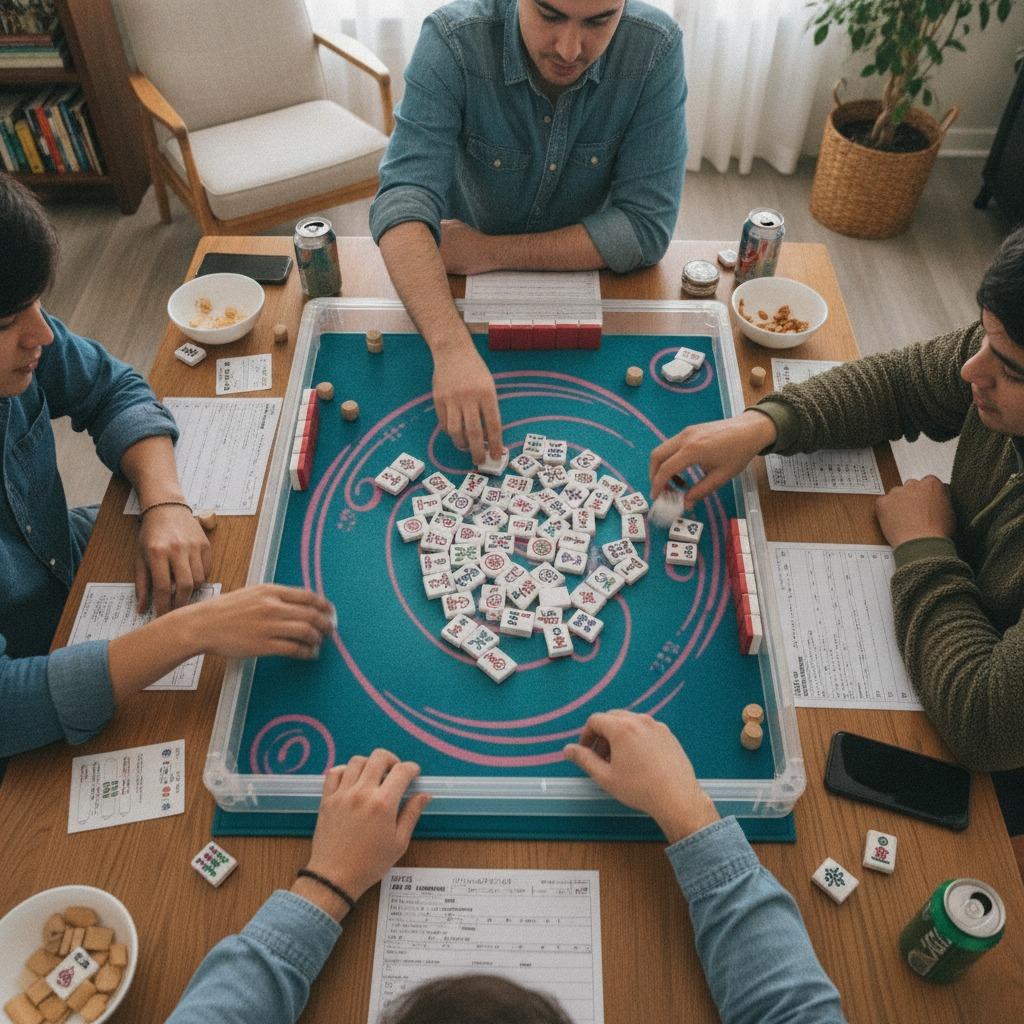
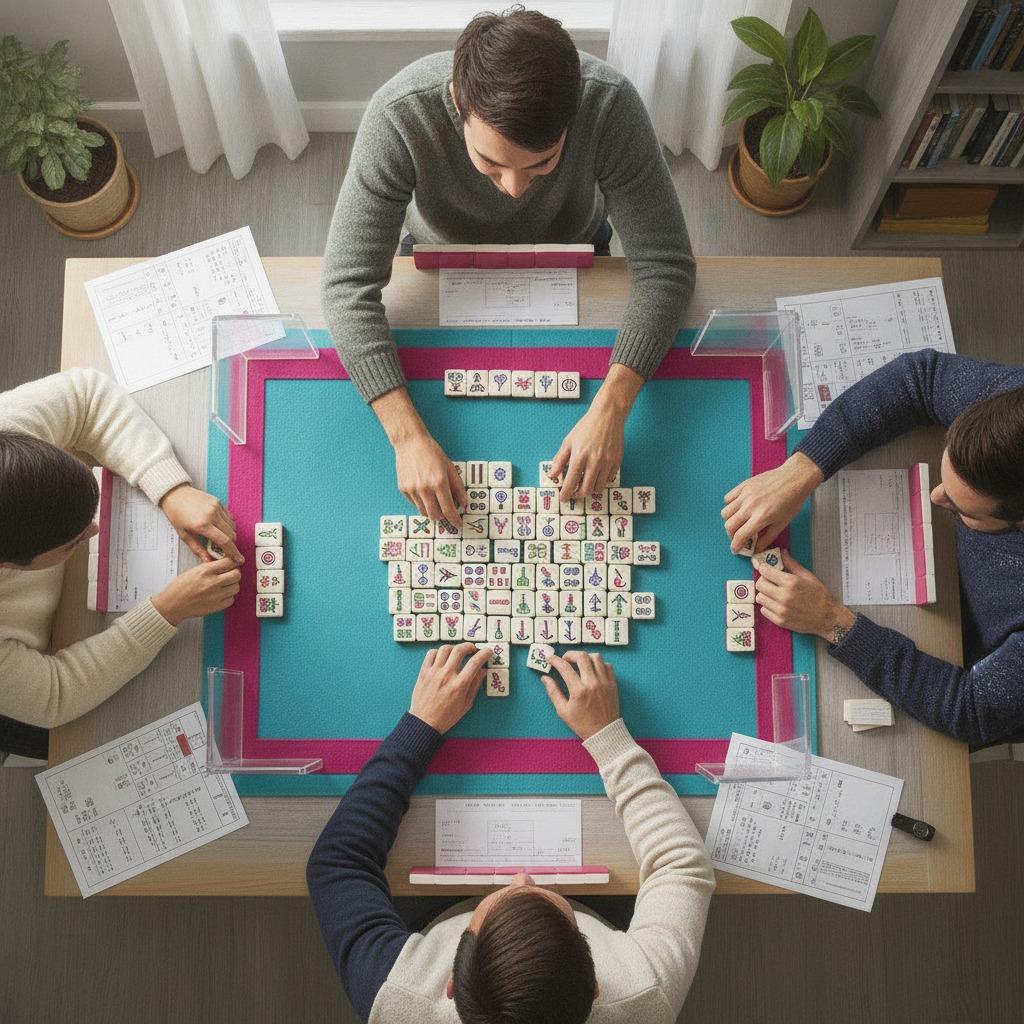
The visible product format here points to a classic social-play setup: a fabric or coated textile mat in a square layout, clear plastic rails or side walls, and many small square tiles with printed faces. That combination matters because it affects how the game feels in use, how easily pieces stay organized, and how practical the set is for repeated group play. Buyers often focus on the tiles alone, but a well-considered playing surface and perimeter structure can make the difference between a tidy game and a constantly shifting mess.
Why American Mahjong keeps showing up in homes and clubs
American Mahjong is popular because it blends planning, memory, and social rhythm. It is not a speed game, and it is not a pure luck game. Players need a clear surface, readable tiles, and a reliable way to manage the central pile and discard area. That sounds simple until you sit four people around a table and start handling small pieces for two or three hours. Then the details start to matter.
For hosts, the appeal is easy to understand. It is a structured group activity that gives everyone something to do without demanding constant movement or loud conversation. For product teams or sourcing managers, the interest is slightly different: the format is familiar, but the buying decision can still hinge on small manufacturing choices. Tile legibility, mat finish, border retention, and the overall fit of the components influence how premium the set feels and whether it is comfortable for repeat use.
What a practical American Mahjong set usually needs
The product category shown here suggests a complete tabletop game assembly rather than a loose collection of tiles. That is important, because buyers are often comparing not just the game itself but the whole kit. In practical terms, a usable set generally depends on three things: the playing surface, the tiles, and the perimeter or containment structure.
1. The playing mat
The mat appears to be a square surface made from fabric or a coated textile. That is a sensible choice for a tabletop game because it helps define the play area and gives the set a more finished look than bare table space. A mat also helps reduce sliding, which matters once players begin sorting tiles or building a central wall. The pink border around the teal or green field adds contrast, which is not just cosmetic; contrast can help players read the boundary of the game area at a glance.
2. The perimeter rails
Clear plastic rails or side walls around the perimeter suggest an attempt to keep tiles contained. This is a small feature that can save a lot of annoyance. Anyone who has played a tile-based group game knows the problem: pieces drift, nudged stacks collapse, and the center area gets cluttered faster than expected. Transparent rails keep the visual field open while offering some physical definition. The caveat, of course, is that the fit and edge finish need to be decent. Rough edges or a loose assembly can create more frustration than benefit.
3. The tiles and printed faces
The tiles appear to be molded plastic or a similar rigid material with printed symbols and numbers in assorted colors. For this kind of game, clarity is not optional. Players need to distinguish suits, symbols, or numbering quickly, especially in a social setting where not everyone is staring at the table with perfect attention. A tile set that prints cleanly and resists visual clutter will generally age better in use than one that tries to be ornate for its own sake.
American Mahjong rules: why the set design matters
Even without assuming the exact rulebook in this image, the connection between American Mahjong rules and product design is straightforward. Rule-driven games rely on piece identification, turn sequence, and a stable play layout. That means the set is not just a decorative item. It is a working interface.
A good set should make it easy to manage the central stack, handle discards, and keep players oriented around the table. If the mat is too slick, the tiles drift. If the boundary is too high or too rigid, handling becomes awkward. If the printed faces are too busy or the symbols too small, the game slows down. Small problems compound over a long session. Buyers sometimes discover this only after the first family game night, which is why sample review and layout inspection matter before purchase.
Key buyer criteria that are easy to overlook
When comparing American Mahjong sets, it helps to look beyond the headline appearance. The visible product tells us a few things, but the real buying questions are more practical.
First, consider readability. Tile printing should be clear enough for mixed-age play. Second, think about storage. A game with rails, tiles, and a mat needs a logical way to be packed away, especially if it will be used in a club room or shared household. Third, consider cleaning. A fabric-like mat may look attractive, but it should still be easy to wipe or maintain between sessions. Fourth, think about durability where pieces meet surfaces. The corners and borders take the most abuse.
And one small but important note: if the set is intended for older players or mixed-skill groups, the visual contrast between tiles, mat, and border becomes more important than flashy artwork. A beautiful set that is hard to read is a poor trade.
Common mistakes when buying or specifying a Mahjong-style set
One common mistake is treating all tile sets as interchangeable. They are not. The feel of a Mahjong-style set depends on size, weight, graphic clarity, and how the components work together on the surface. Another mistake is focusing only on the tiles and ignoring the playing field. A basic tile assortment can be undermined by a weak or awkward mat.
Another practical issue is overestimating how much decorative detail helps. Buyers often like ornate graphics, but for group play, function tends to win. If the game is meant for casual play, family night, or teaching use, the best set is usually the one that makes setup simple and the table easy to read. Fancy packaging does not help once the tiles are on the table.
There is also a sourcing-side caution: images can show a complete-looking system, but exact game type, tile count, dimensions, and rule compatibility may not be obvious. If the purchase is for resale, education, or venue use, verify those details before committing. That sounds obvious, but it gets skipped more often than it should.
Where this kind of product fits best
The visible structure makes this a good fit for home entertainment, family game night, group play, game rooms, and recreational social settings. It is the kind of item that works best when the goal is shared time around a table rather than solitary use. It also has a natural place in clubs or community spaces where a consistent setup matters and the same players may return week after week.
For buyers thinking in product terms, the main value proposition is not complexity. It is repeatability. A square mat, a set of readable tiles, and a perimeter that helps keep the table organized make it easier for players to start quickly and stay focused on the game itself. That is often what people are actually paying for, even if they describe it as “a Mahjong set.”
What manufacturing teams and sourcing managers should pay attention to
This product category appears to combine multiple materials and processes: printed textile or coated fabric for the mat, molded rigid pieces for the tiles, and clear plastic or acrylic-like components for the rails. That means sourcing is not just a matter of buying one part well. It is a coordination problem. Print quality, edge finishing, component fit, and packaging all affect the end user experience.
For a supplier, consistency matters more than novelty. Repeated alignment of the printed surface, stable tile appearance, and clean transparent parts will usually matter more to buyers than a fresh visual theme. If the product is meant for export or private label development, OEM/ODM flexibility can be useful, but the baseline design still needs to support easy play and straightforward assembly.
SAIL’s broader manufacturing background is in heavy-duty transport, not tabletop games, so that company information does not map directly to this product type. Still, the general lesson holds across manufacturing: buyers want dependable production, controlled quality, and reliable shipment. Those expectations do not change just because the item is a leisure product instead of a truck part.
FAQ for first-time buyers
Is this only for experienced players?
Not necessarily. A set with clear tiles and a defined play area can be friendly to casual or learning groups, even if the rules themselves take time to master.
Do American Mahjong rules require a special table?
No special table is required, but a square playing surface with enough room for tiles, hands, and discards makes the game much easier to manage.
What should I inspect in a sample set?
Check tile legibility, mat finish, border fit, and whether the pieces stay organized during normal handling. Those are the details that reveal quality faster than packaging does.
A sensible next step before you buy
If you are evaluating American Mahjong sets for home use, resale, or a shared game space, start with the layout rather than the artwork. Confirm the tile style, check the surface feel, and make sure the perimeter design supports the way your group actually plays. If you are sourcing for a broader audience, ask for clear specifications on components, graphics, and assembly so you are not guessing after the order arrives.
A good Mahjong-style set should make the table feel orderly, not fussy. That is the real test. If the design helps people sit down, sort tiles, and play without constant adjustment, then it is doing its job.