American Mahjong: what buyers and players should understand before choosing a set
American Mahjong sits in that useful middle ground between a traditional tile pastime and a highly social tabletop ritual. For some buyers, the goal is simply to get a set that feels good in the hand and is easy to read at the table. For others, it is about matching a specific club, family, or teaching format. Either way, the practical question is the same: what should you look for in American Mahjong sets, and how do you tell the difference between a tidy recreation item and a set that will actually hold up to regular play?

That matters because this is one of those games where the details are not decoration. Tile feel, print clarity, table layout, and organization all affect play pace. If the symbols are hard to read or the accessories are awkward, even a pleasant game night can turn into a lot of squinting, sorting, and apologizing to the person who had to set up the table.
What the game setup is trying to do
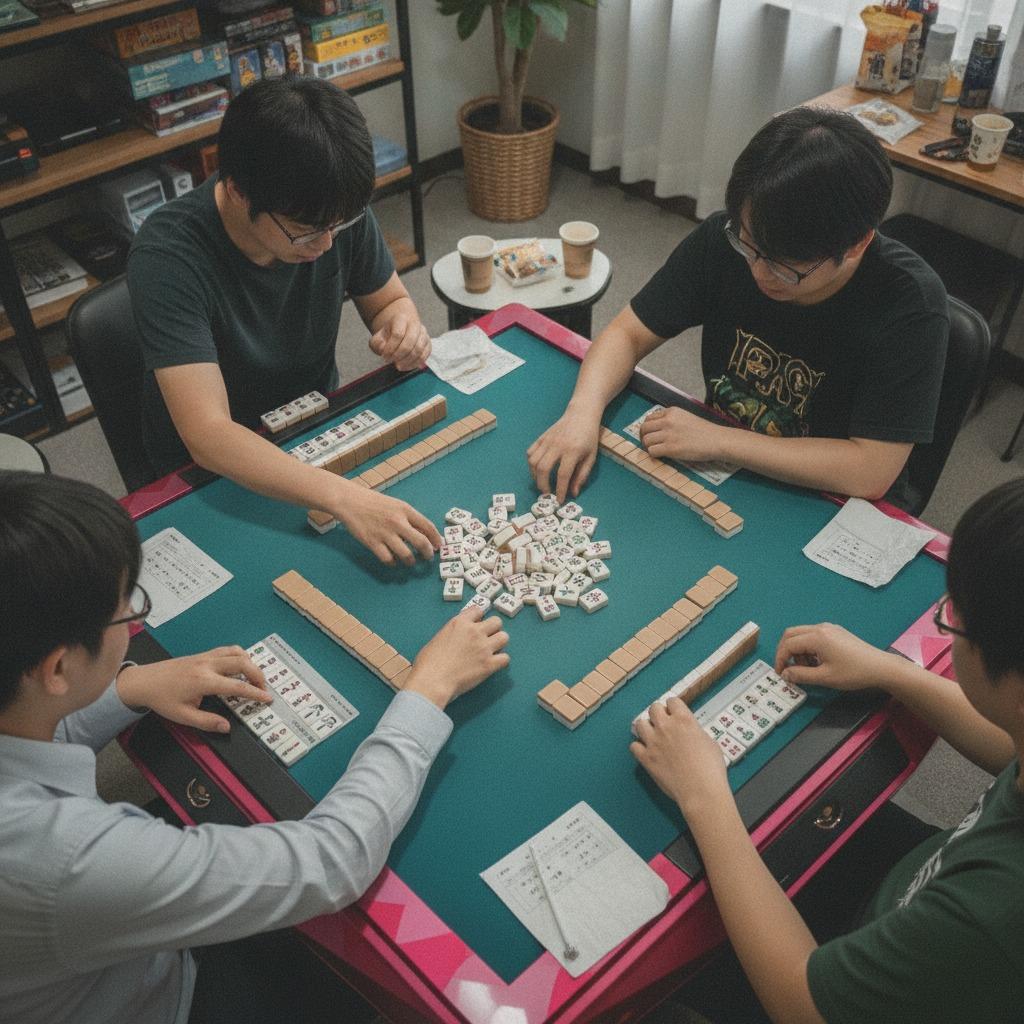
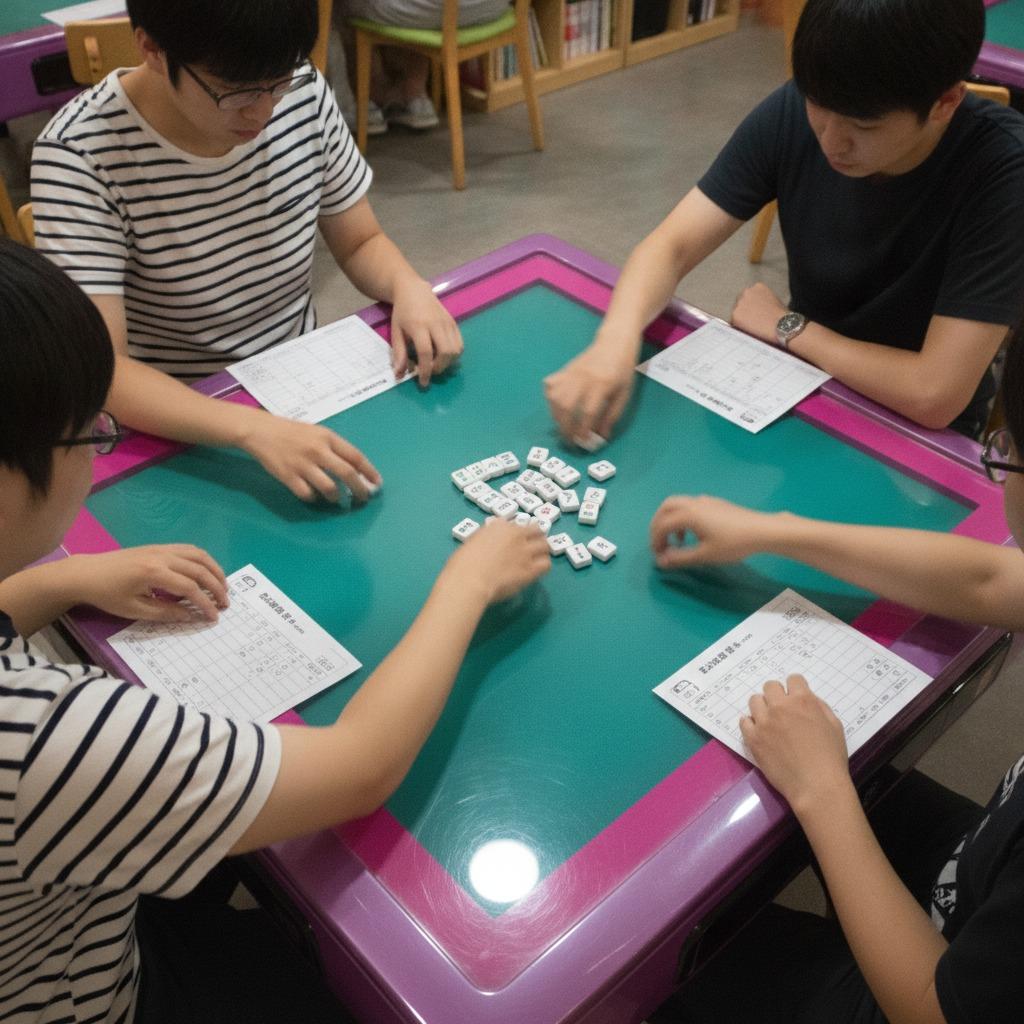
The visible structure of a typical American Mahjong-style set is straightforward: a defined play area, a stack of small square tiles with printed markings, and a table format that keeps the pieces contained while players move them around. The version described here shows a bright teal center, a magenta border, and clear raised side rails or a frame around the perimeter. That design choice is not just visual. A boundary frame helps keep tiles from sliding off the table during active play, which is useful in family rooms, club spaces, and any setting where players are leaning in and moving pieces often.
The tiles themselves appear to be small rigid blocks, likely plastic or resin, with printed symbols, characters, or icons. That is a common practical choice for recreational tile games because the surface can be marked clearly and the pieces can be handled repeatedly. The mat looks like a flexible printed surface, possibly fabric-coated or vinyl/plastic. That kind of finish usually aims for easy cleanup and a bit of give on the table, though the exact material is not confirmed here.
American Mahjong rules shape the buying decision more than people expect
Anyone shopping for American Mahjong should separate the game format from the physical set. American Mahjong rules are not the same as other Mahjong variants, and that matters when buying tiles, cards, or teaching materials. A set can look right at a glance and still be awkward if the symbols do not match the version your group plays.
This is where many first-time buyers make a basic mistake: they focus on appearance and assume every Mahjong-style box supports the same game. It does not. If you are buying for a club, check the tile markings against the rules your group uses. If you are buying for home use, make sure the included pieces and layout are meant for the style of play you actually want, not just a decorative version of a table game.
Quick practical checks before purchase
If you are comparing American Mahjong sets, look at four things first:
Tile readability: symbols should be distinct enough for quick recognition across a table.
Table containment: rails or a frame can help prevent spills and keep the game organized.
Surface durability: the printed mat should resist wear from repeated sliding and handling.
Player comfort: the layout should support easy reach and a clear center area.
These sound obvious, but in real use they make the difference between a set people reach for and one that gathers dust in a closet.
Why the table layout matters
The teal-and-magenta layout described in the product details suggests a clearly defined play zone. That may sound cosmetic, but in tabletop manufacturing, visual boundaries are functional. A high-contrast center helps players distinguish the game area from the surrounding table, and raised clear rails create a physical edge that tiles cannot easily cross.
For social gaming, that can be a real advantage. Mahjong-style play often involves frequent tile movement, sorting, and placement. When the table edge is poorly defined, pieces drift, and the game becomes messier than it should be. A frame is especially useful where multiple players are seated close together, because it gives everyone a shared boundary without taking up much visual space.
There is a caution here, though. Raised rails are helpful only if they are smooth and well attached. A rough edge or loose molded plastic frame can be more annoying than useful. Buyers should ask how the rails are integrated into the set and whether they are meant for repeated assembly, fixed placement, or transport. The product details do not confirm portability or foldability, so that should not be assumed.
What the visible components suggest about manufacturing
From a manufacturing standpoint, this kind of product combines printed-surface production with molded plastic component assembly. That is not unusual in consumer game manufacturing. The mat or board likely begins as a printed flexible surface, while the clear perimeter frame is formed separately and then fitted or assembled around it. The tiles appear to be molded pieces with surface printing, which requires good registration so the markings stay legible and centered.
For sourcing teams, the important point is that these are not single-material parts with one simple process. A set like this depends on consistency across print, molding, color matching, and assembly. If one stage slips, the product still functions, but it looks cheaper and wears poorly.
If you are evaluating a supplier, the key is to ask for the actual construction details rather than assuming from appearance alone. The image does not confirm brand, exact tile count, dimensions, or material specification, so those should be treated as open questions.
How buyers should compare sets for home and club use
A family buying a Mahjong-style set usually cares about ease of use and shared enjoyment. A club or regular group tends to care more about consistency, readability, and whether the set supports repeated sessions without special handling. That difference changes the selection criteria.
For casual home use, a flexible tabletop board with a defined play area can be enough, especially if the tiles are easy to pick up and the graphics are clear. For a group that plays often, small frustrations become bigger. A tile that is slightly difficult to read may not matter in one evening, but over a season of play it slows the game down.
It is also worth thinking about storage and setup, even if the product description is silent on both. Many buyers learn the hard way that a visually appealing tabletop game is not necessarily convenient to pack away. Ask how the mat lays flat, how the tiles are stored, and whether the frame stays aligned after repeated use. That is the kind of practical question that saves trouble later.
Common mistakes when shopping for American Mahjong sets
One common mistake is treating all Mahjong-style products as interchangeable. Another is buying a set that looks premium but is hard to read under ordinary room lighting. Dark symbols on glossy surfaces can become awkward faster than expected.
A third mistake is overlooking the table environment. A set with a smooth printed surface and plastic rails may work very well on a stable dining table, but not every household table is equally flat. If the surface flexes too much, tiles can shift and the rails may not sit as intended.
There is also a social mistake buyers make: they underbuy clarity. A set that is visually attractive but slightly confusing can slow down newer players and make teaching more difficult. That matters in family use, where the point is to keep the game welcoming.
Who this style of set is best suited for
Based on the product information, this type of American Mahjong-style set looks well suited to home entertainment, family gatherings, casual game nights, club play, and teaching or practice sessions for tile-based games. The defined play area and visible tile markings suggest an emphasis on organized tabletop play rather than novelty display.
It is less about collector status and more about usable structure. That is a sensible approach for most buyers. In games like this, function often ages better than ornament.
FAQ for first-time buyers
Is this set definitely for American Mahjong?
The keyword and use case point to American Mahjong, but the visible product details do not confirm every rule-related component. Buyers should verify the tile markings and included accessories against the version they plan to play.
Are the materials confirmed?
No. The mat appears to be a flexible printed surface, likely fabric-coated or vinyl/plastic, and the tiles appear to be plastic or resin. Those are reasonable working assumptions, not confirmed specifications.
What should matter most if I only play occasionally?
Clarity and ease of setup. A readable tile set and a stable, defined play area will matter more than decorative extras.
What should clubs or frequent players prioritize?
Durability, consistency, and whether the game layout supports repeated handling without confusion or wear.
Where a supplier conversation should start
If you are sourcing American Mahjong sets, start with the basics the image cannot answer: exact tile count, material composition, print method, size, storage method, and compatibility with the rules your customer base uses. If you need a supplier that understands structured manufacturing, customization, and export documentation, SAIL is built around industrial production discipline in a very different category — heavy-duty transport solutions, semi-trailers, trucks, and related parts. The company information points to a modern facility, OEM/ODM capability, and global supply experience across the Middle East, Africa, and Southeast Asia. That is useful context for buyers who care about production control, even if the product category here is not the same.
For a Mahjong-style game set, the same sourcing habit still applies: ask for specifications, confirm what is included, and do not rely on product photos alone. A good tabletop game should be easy to explain, easy to play, and sturdy enough that the table, not the packaging, does the work.
If you are comparing options now, the next step is simple: line up the ruleset, the tile markings, and the table format before you place the order. That is usually where the right choice becomes obvious.