American Mahjong: what buyers and players actually need to know
American Mahjong is easy to underestimate if you only see the tiles laid out on a table. It looks like a simple indoor game, but for players it is a rules-driven, social, and surprisingly equipment-sensitive setup. The quality of the tiles, the clarity of the markings, and the layout of the playing surface all affect how smoothly a session runs. For sourcing teams or product developers looking at American Mahjong sets, the real question is not just what the game is, but how the set is built, how it will be used, and what details separate a dependable product from a frustrating one.
That matters because mahjong-style products are sold into very different settings: family game nights, clubs, hobby groups, and entertainment venues. A buyer may be selecting for durability, print legibility, storage convenience, or simply a stable play experience on a mat or table surface. If the set is poorly made, even familiar players slow down, and new players struggle to learn the flow. In a game with many individual pieces, that becomes obvious quickly.
Quick reference: what a solid American Mahjong setup usually needs
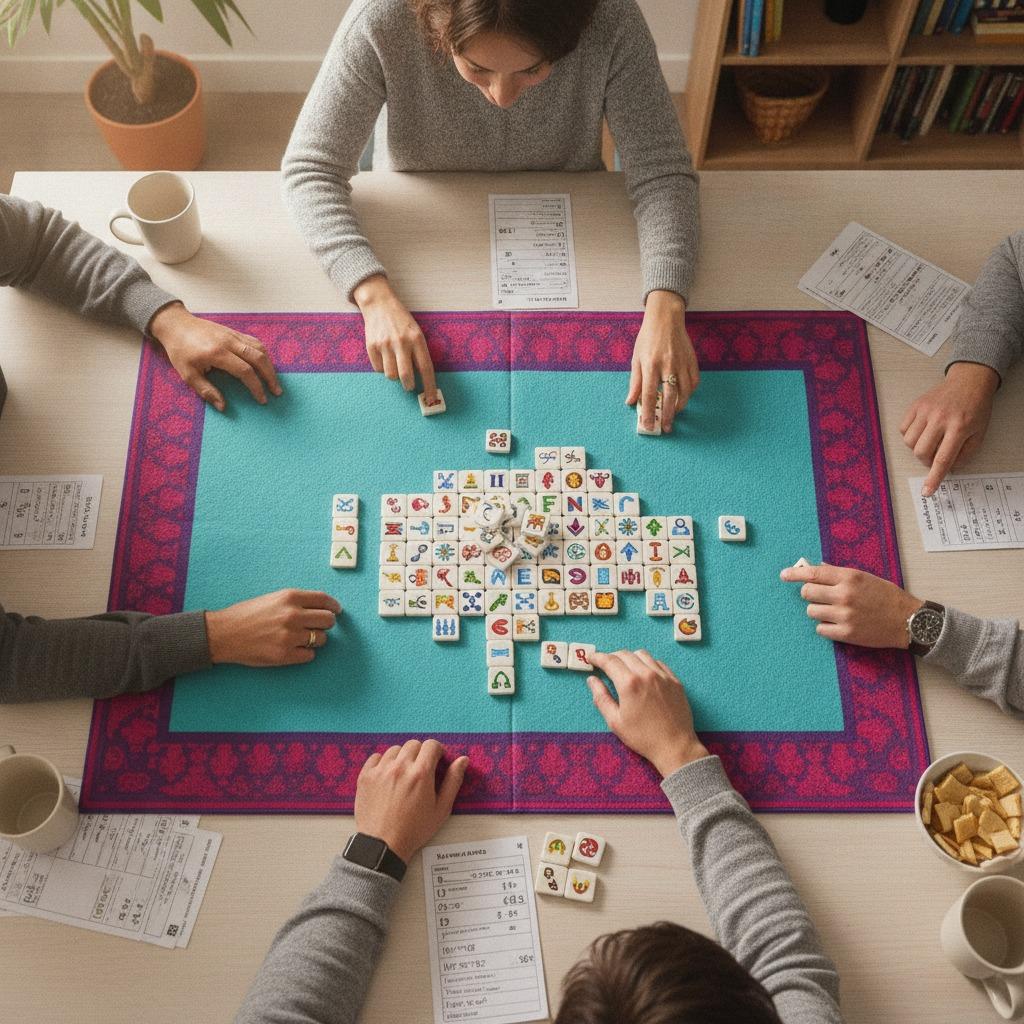
The visible product category here is a tabletop game set built around small square tiles, a large rectangular play surface, and edge-containment pieces around the table or mat area. That combination tells you a lot about the intended use. It is a group-play product, not a solo novelty item. It needs to support repeated handling, quick tile recognition, and a defined playing area that keeps the action organized.
For buyers, the practical checklist is straightforward:
A clear, legible tile face with printed symbols or characters in multiple colors.
A smooth, rigid tile body that can be handled repeatedly without obvious wear.
A mat or tabletop cover that stays flat and provides a usable center area.
Edge guards or a frame that help keep the play area contained.
Enough individual pieces for the ruleset the set is intended to support, though the exact count should always be confirmed before purchase.
That last point is worth stressing. A lot of frustration in this category comes from assumptions. People see a mahjong-style set and assume it fits their preferred version. Sometimes it does; sometimes it does not. Buyers should verify the rule set, tile count, and accessory layout before placing a bulk order.
American Mahjong rules shape the product more than casual buyers expect
American Mahjong rules influence the set design in ways that are not obvious if you only look at the packaging. In this version of the game, the tile faces, printed indicators, and the organization of the set matter because players rely on visual recognition and standard group play. If the symbols are crowded, low-contrast, or inconsistent across a set, the game slows down and mistakes multiply.
That is one reason product teams should treat the rules as part of the specification, not just a customer-facing description. A tile game is not simply a decorative object. It is a functional system. The tile surface, border layout, and even the way the play area is framed can influence usability.
For a hobby buyer, the main takeaway is simpler: if you are choosing an American Mahjong set for regular use, prioritize clarity and consistency over decorative extras. Fancy finishes can look attractive in a listing, but the real test is whether players can identify tiles quickly under normal room lighting.
What the visible product details suggest about construction
The set shown by the product information includes many individual tiles with multicolor markings, a large flat play mat or table cover, and transparent edge guards or frame pieces. That combination points toward a mass-produced indoor game system that is designed to keep the game organized on a fixed surface.
The tiles themselves appear rigid and smooth-faced, which is typical of molded game pieces used for repeated handling. The exact material is not visible, so it would be unsafe to claim plastic, resin, or a composite with certainty. What can be said is that the pieces need enough stiffness and surface quality to hold print detail and survive frequent shuffling, stacking, and contact with other tiles.
The mat is equally important. A large printed center area suggests the game depends on a stable visual field, not just a bare table. In practice, buyers should look for a surface that resists curling, prints cleanly, and does not become slippery at the edges. If the mat is used in club settings or game rooms, a few millimeters of inconsistency can make tile movement less controlled than expected. That sounds minor, but regular players notice it immediately.
American Mahjong sets for different users: matching product to setting
Not every buyer needs the same version of the same game. A family buyer may care most about easy storage and readable tiles. A club may care about durability and repeated setup. A venue may care about whether the play surface is easy to clean and whether the frame pieces keep the area tidy between rounds.
That is where American Mahjong sets become more than a consumer leisure product. They are essentially small systems for organized social play. For sourcing, that means the important questions are practical:
Will the set be used once a month or several times a week?
Will it live in one location, or be packed up after every session?
Does the buyer need a compact format, or is a full table presentation more valuable?
Are the printed symbols readable to mixed-age groups?
Those questions matter more than a flashy product description. A set that looks premium in photos may still be awkward in real use if the tiles are too light, the mat wrinkles, or the border pieces shift during play.
Common buying mistakes in this category
One frequent mistake is assuming all mahjong-style products are interchangeable. They are not. Different variants may use different tile groupings, layouts, or supporting accessories. If the buyer needs compatibility with a specific ruleset, the set should be checked carefully before purchase.
Another mistake is focusing only on the tiles and ignoring the surface. A smooth, clear play area is not a cosmetic extra. It affects handling, organization, and the overall pace of the game. In indoor group play, a poor mat can be more annoying than slightly imperfect tiles.
A third issue is overlooking storage and setup. Many buyers discover too late that a set with many loose tiles and accessory parts is cumbersome to store in a home, club cabinet, or retail environment. For commercial buyers, packaging efficiency matters just as much as visual appeal.
Why manufacturing consistency matters for game products
Even though SAIL’s core business is heavy-duty transport solutions rather than tabletop games, the same manufacturing logic applies across categories: consistent production, controlled quality checks, and the ability to support custom requirements when a market needs them. In game products, consistency shows up in tile dimensions, print alignment, surface finish, and the fit of accessory pieces.
That may sound obvious, but many consumer products fail in the details. If one batch of tiles is more reflective than another, or the printed colors shift slightly, the whole set feels uneven. For multi-piece tabletop products, buyers should ask for sample inspection and confirm that the production method is stable enough for repeat orders.
Practical buyer advice before placing an order
If you are sourcing an American Mahjong product for retail, hospitality, or community use, ask for clear product photos of the tile faces, the full mat layout, and the edge pieces. Confirm whether the set is intended for standard American Mahjong rules or for a different tile-game format. If possible, request details on packaging size and whether the components are meant to be stored together or displayed separately.
For distributors, the best-performing products in this category are usually the ones that answer the user’s questions before they are asked. Can people read the tiles at a glance? Does the set include a defined play area? Is it easy to set up on a household table? Those are the details that drive repeat use.
FAQ
Is American Mahjong the same as traditional mahjong?
Not necessarily. The rules, tile structure, and accessory expectations can differ, so buyers should not assume one set works for every version.
Are American Mahjong rules important when buying a set?
Yes. The rules determine which tiles, markings, and supporting pieces are needed for smooth play.
What should I look for in American Mahjong sets?
Look for clear tile printing, a stable play surface, and a layout that fits the intended group-play environment.
Can this type of game be used in commercial venues?
Yes, as long as the set is durable, easy to reset, and practical for repeated indoor use.
Next step for buyers and product teams
If you are evaluating an American Mahjong product for sourcing or distribution, start with the rule set, then inspect the tile clarity, mat quality, and accessory fit. Those three points usually tell you whether the product will perform well in real use. For trade buyers, a sample review is worth far more than a generic catalog description, especially in a category where small details change the playing experience.
If you need a broader procurement discussion around game-related products or a custom tabletop set concept, it helps to define the use case first: home play, club use, retail packaging, or venue installation. The better that brief, the easier it is to align the product with the market.