American Mahjong: what buyers, players, and table organizers actually need to know
American Mahjong is one of those games people often meet through a family table, a community club, or a gift box that looks more complicated than it first appears. If you are comparing American Mahjong sets, or trying to understand whether a tabletop set is built for casual play or regular group use, the real question is not just what the pieces look like. It is how the layout, tile handling, and reference materials support the game once four players sit down and the hands start moving.
That matters because American Mahjong is a rule-driven social game. The difference between an enjoyable set and a frustrating one is often practical: tile readability, mat surface stability, clear organization, and whether the accessories help players keep pace with the round. In other words, the product is not only about appearance. It is about whether the set makes the game easier to teach, easier to follow, and less likely to break the rhythm at the table.
A quick read on the product form
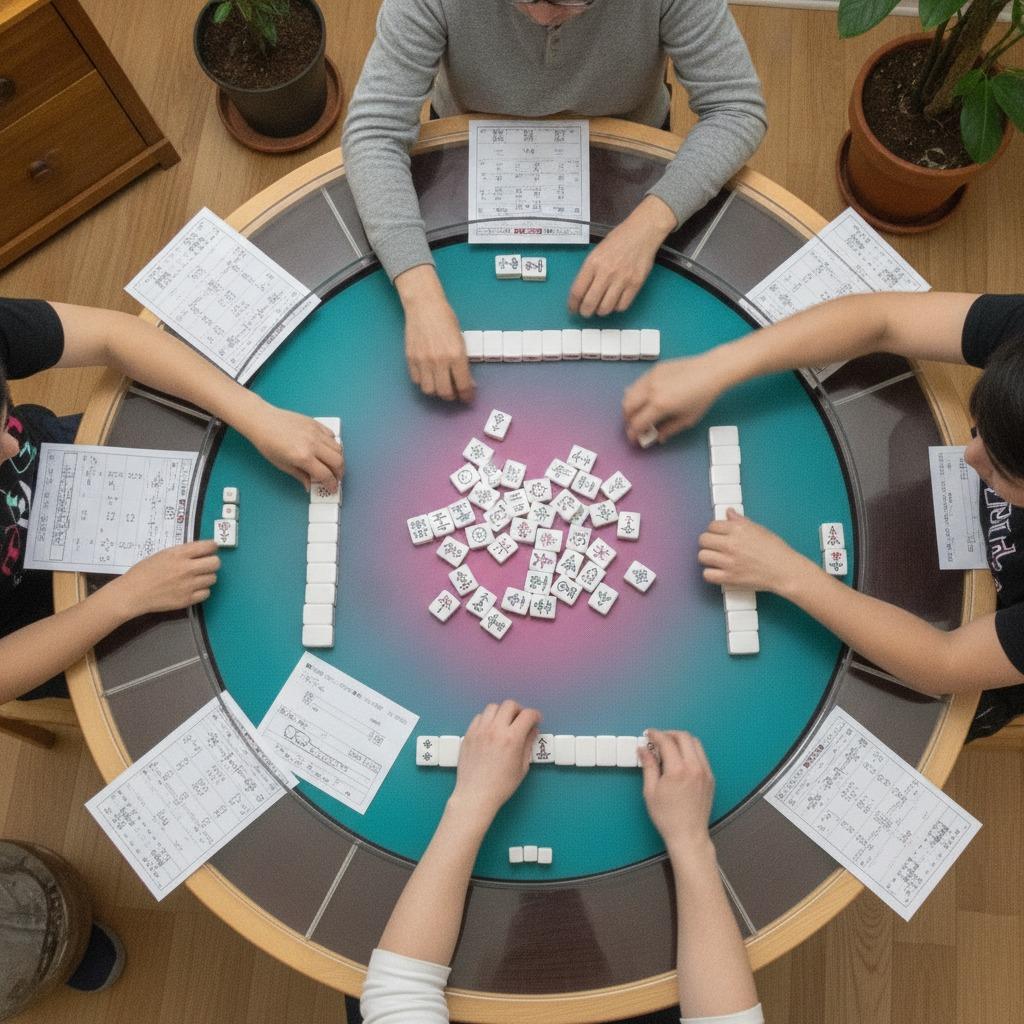
The product information points to a tabletop game set with a square play area, transparent perimeter rails or trays, many small square tiles or cards with printed symbols and colors, and printed rule or score sheets placed at the edges. The visual impression is of a game designed for group play around a central surface, where each player can access pieces and reference materials without crowding the table.
The surface appears to be a soft mat or vinyl-like tabletop cover rather than a rigid board, which is a sensible choice for a game built around repeated handling. The clear side rails suggest an effort to keep tiles contained and organized during play. That is a small detail, but in tabletop manufacturing small details are often the difference between a set that feels tidy and one that turns chaotic after the first shuffle.
Why American Mahjong has such a specific product structure
American Mahjong is not a generic tile game. It depends on pattern recognition, hand building, and rule reference during play, which means the physical set usually has to do more than simply supply pieces. Players need to see tiles clearly, sort them efficiently, and keep the table surface readable enough that everyone can track what is happening.
That is why American Mahjong rules and American Mahjong sets tend to be discussed together. The rules shape the product requirements. The game favors organized layouts, printed reference aids, and tile formats that support fast identification. A set that looks attractive but is awkward to sort can become a burden in actual use. A set that keeps symbols legible and accessories accessible is usually the better buy, even if it is less decorative.
What stands out in the set design
1. A defined square play area
The square table surface is a practical choice for a four-player game. It gives each side a clear position and helps separate personal tile management from the shared center area. For a social game, that matters more than people admit at first. Once players have racks, tiles, and a reference sheet in front of them, the table can become cluttered quickly. A defined play area helps keep that under control.
2. Clear perimeter rails or trays
The transparent side rails appear intended to hold or guide components around the edge. In manufacturing terms, that is a functional accessory rather than a cosmetic one. It can reduce accidental spills, keep pieces from sliding off the play area, and make cleanup easier after a session. If the rails are part of an enclosed or semi-enclosed table system, they may also support more orderly handling during frequent play. The exact structure is not confirmed, so buyers should verify how the rails attach and whether they are fixed or removable.
3. Small printed tiles or cards
The game pieces appear rigid, glossy, and lightweight, likely molded plastic or laminated components. For American Mahjong, legibility is usually a bigger issue than raw durability alone. Symbols, numbers, and color coding need to remain easy to read across a table, especially for older players or in low-glare lighting. In consumer tabletop manufacturing, print clarity and finish quality often carry more weight than people expect. A tile that reflects too much light can slow the game more than a slightly thicker one ever would.
4. Printed instruction or reference sheets
Reference sheets are not just extras. For a game with enough rule complexity to intimidate new players, they are part of the product value. They help reduce the learning curve and let a group spend more time playing and less time arguing over a hand. This is one reason American Mahjong sets often include printed guidance near the play area. A good set should help players locate information quickly rather than force them to search through a separate booklet.
How to judge whether a set suits your use case
There are several practical questions to ask before buying or specifying a set for family use, club use, or retail resale.
First, ask who will actually use it. A casual family group may care most about ease of setup and visual clarity. A regular club may care more about consistency, durability, and how often pieces need to be handled. Retail buyers should also think about packaging, storage, and whether the set looks understandable at first glance. A product that needs a long explanation to sell is harder to move, however good it may be once opened.
Second, check whether the tile format suits the player base. Symbols that are too small, overly decorative, or printed in low contrast can make the game less accessible. If the game is being used across mixed-age groups, that issue becomes even more important. Readability usually outranks novelty.
Third, consider the table environment. A mat-based surface can work well for home play, events, and temporary setups. A more rigid system may be better for dedicated game rooms. The product shown appears closer to a portable tabletop accessory set than a fixed piece of furniture, which gives it broader use but may mean buyers need to manage storage and setup carefully.
Common mistakes buyers make with game sets like this
One common mistake is assuming all American Mahjong sets are interchangeable. They are not. Even if the rule framework is familiar, the physical execution varies a lot. Some sets prioritize compact storage, others emphasize display, and others are built around smooth table handling. Buyers should not assume the packaging photo tells the whole story.
Another mistake is overlooking the surface finish. A glossy finish can look clean in a product image, but in practice it may catch light at the table. That is a minor annoyance in a showroom and a bigger one during play. Likewise, pieces that look sharp and colorful online may not be equally clear in a real room under warmer lighting.
A third issue is neglecting replacement or accessory planning. If a set is meant for frequent social use, it is worth asking how easy it is to store, clean, and reorganize after play. That may not sound exciting, but it is what determines whether the product gets used regularly or ends up in a cupboard after two sessions.
What the manufacturing angle tells you
Even though this is a consumer tabletop product, the manufacturing logic is familiar. Printed graphics, die-cut or molded pieces, assembled accessories, and surface finishing all have to work together. The cleaner the visual system, the easier the game is to use. That means alignment, print quality, and packaging discipline are not trivial. They affect playability directly.
For sourcing teams, this kind of product also raises the usual QC questions: are the tiles consistent in size and print, does the mat lie flat, do the rails fit securely, and are the instruction sheets legible and complete? Those are not glamorous questions, but they are the ones that determine complaint rates after shipment.
Practical buying advice for retailers and distributors
If you are sourcing American Mahjong sets for a market, think beyond the game itself and look at presentation. Consumers often choose a set because they can tell, at a glance, that it will help them organize play. Clean packaging, visible tile contrast, and obvious reference materials sell the idea of a smoother game night.
For distributors, the safest position is to verify the included components and avoid overstating the rule format unless the product documentation is clear. The product information here suggests a Mahjong-like tabletop game, but not every visual cue should be treated as proof of exact version or official rule set. That distinction may sound small, but it matters in catalogue copy and in post-sale expectations.
Where this kind of product fits in the broader game market
American Mahjong sits in an interesting place between strategy game, social ritual, and collectible accessory market. That gives tabletop sets a wider job than simply providing entertainment. They also have to support teaching, hosting, and repeat group play. A good set lowers friction at all three stages.
For product teams, that means the winning formula is usually not maximum ornamentation. It is a balanced package: clear pieces, sensible layout, useful references, and enough durability for repeated handling. In a category like this, the best design is often the one that disappears into the play experience after setup.
Frequently asked buyer questions
Is this set suitable for beginners?
It appears to be structured in a way that could support beginners, especially because of the printed reference sheets. Still, the exact rule set is not confirmed, so buyers should check whether the included instructions match the version they intend to teach.
Is it more like a casual home game or a formal tournament setup?
Based on the available description, it looks more like a social or home-use tabletop set than a formal competitive setup. That said, final suitability depends on tile format, accessory quality, and how the rails and surface are built.
What should I confirm before placing a bulk order?
Confirm component count, print legibility, packaging, storage format, and whether the square mat and clear rails are included as shown. Also confirm whether the product is intended for American Mahjong specifically or for a broader Mahjong-style play pattern.
A sensible next step for buyers
If you are evaluating American Mahjong sets for retail, club use, or private entertainment, start with the details that affect play every time: readability, surface stability, accessory organization, and how naturally the set fits a four-player table. The nicest-looking product is not always the most usable one. In this category, usability tends to win after the first game.
For sourcing teams, the safest approach is to request a full component list and verify the physical layout before committing to volume. For players and organizers, the practical test is simpler: can everyone see the pieces, keep the table tidy, and follow the hand without constant interruption? If the answer is yes, the set is doing its job.