Why Teddy Bear Plush Toy Wholesale Demands a Smarter Sourcing Approach
The global plush toy market is projected to exceed USD 13 billion by 2028, according to Grand View Research (2023). Within that landscape, teddy bear plush toy wholesale remains one of the highest-volume, most competitive segments—and one where material quality, safety compliance, and unit economics separate profitable importers from those drowning in returns and margin erosion.
Whether you're a retail chain buyer stocking seasonal inventory, an e-commerce brand building a private-label line, or a promotional merchandise company fulfilling corporate gift orders, your sourcing decisions at the factory level determine everything downstream: landed cost, sell-through rate, customer satisfaction, and repeat-order viability.
This guide breaks down the critical checkpoints for evaluating a custom teddy bear manufacturer, structuring OEM orders, and managing quality from sample approval through container loading. If you've been burned by inconsistent plush quality or opaque pricing, start here.

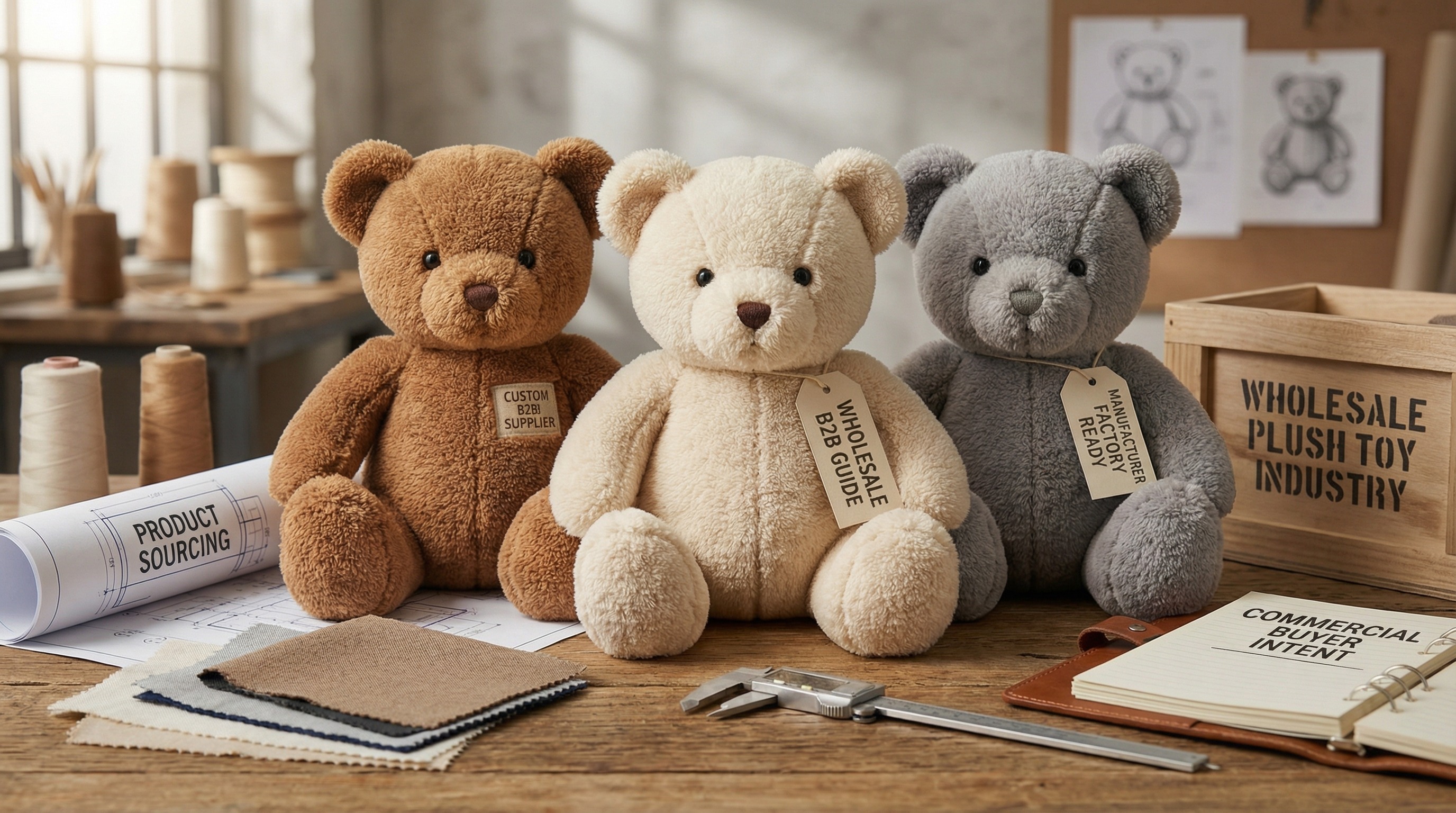
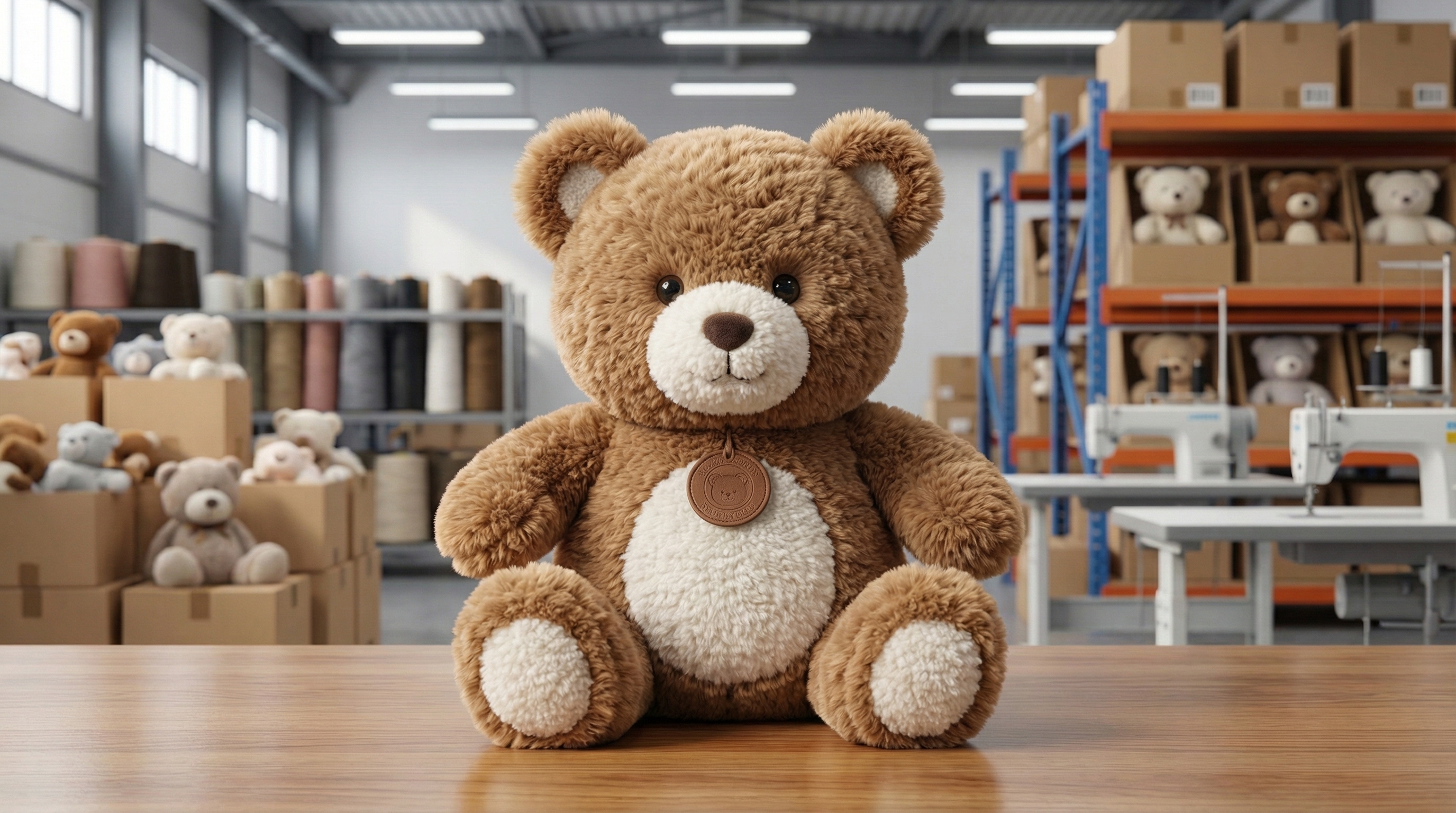
Wholesale teddy bear plush toys staged for bulk inspection—material feel, stitch density, and fill consistency are the first quality gates.
Quick Answer: What to Prioritize in Teddy Bear Plush Toy Wholesale
If you're short on time, here's the decision framework in thirty seconds:
- Safety compliance first. Confirm EN 71 (EU), ASTM F963 (US), or GB 6675 (China domestic) certification before discussing price.
- MOQ and unit cost typically range from 500–3,000 pieces per SKU for custom designs; stock designs can start lower.
- Material grade matters more than material type. Crystal super-soft plush at 280 gsm and 380 gsm look identical in photos but feel completely different in hand.
- Sample-to-bulk consistency is the #1 complaint in plush sourcing. Require a pre-production sample and a golden sample sealed at the factory.
- Lead time: 30–55 days from sample approval to port for most custom teddy bear orders.
Buyer Checklist: Evaluating a Custom Teddy Bear Manufacturer
Not every plush factory is equipped for the same order profile. A factory running 200-piece charity bear orders operates very differently from one tooled for 50,000-unit retail programs. Use this checklist to qualify suppliers before requesting quotes.
1. Production Capability and Capacity
- Monthly output in pieces (ask for peak vs. off-peak figures)
- Number of cutting, sewing, and stuffing lines
- In-house embroidery and printing capability (screen, sublimation, heat transfer)
- Ability to handle mixed-SKU orders within a single PO
2. Material and Safety Infrastructure
- In-house or contracted fabric testing (tensile strength, colorfastness, flammability)
- Documented material sourcing—PP cotton fill, PE pellets, recycled polyester options
- Third-party test reports from recognized labs (SGS, Bureau Veritas, Intertek)
- CPSIA compliance documentation for US-bound shipments
3. OEM and Customization Depth
- Pattern development from sketch or reference photo
- Custom Pantone color matching on fabric and accessories
- Sound module, scent sachet, or weighted pellet integration
- Branded hang tags, woven labels, and retail-ready packaging

Systematic supplier evaluation applies across product categories—the same rigor used in industrial sourcing protects plush toy buyers from costly quality gaps.
Cost and Value: What Drives Teddy Bear Wholesale Pricing
Buyers often fixate on FOB unit price while ignoring the factors that actually determine landed profitability. Here's where the real cost levers sit:
| Cost Factor | Impact on Unit Price | Buyer Control Level |
|---|---|---|
| Fabric grade & GSM | High — can swing cost 15–30% | High — specify in tech pack |
| Fill type & density | Medium — PP cotton vs. recycled fiber | High — set fill weight target |
| Order quantity per SKU | High — setup costs amortized over volume | Medium — depends on channel demand |
| Embroidery / print complexity | Medium — multi-color embroidery adds $0.15–$0.50/pc | High — simplify where possible |
| Packaging tier | Low to Medium — polybag vs. window box vs. display case | High — match to retail channel |
| Safety testing & certification | Fixed cost per SKU ($300–$1,200 per test suite) | Low — non-negotiable for market access |
| Shipping mode | High — sea freight vs. air vs. rail | Medium — plan lead times early |
Key insight: A $0.30/unit savings on fabric grade can generate 10× that amount in returns and negative reviews if the plush feels cheap at retail. Specify GSM, pile height, and hand-feel requirements in your tech pack—not just "soft plush."
Choosing the Right OEM Plush Toy Supplier: Evaluation Framework
Finding an OEM plush toy supplier that aligns with your order profile requires more than browsing trade platforms. Here's a practical evaluation sequence:
Step 1: Initial Screening
Request a company profile, factory audit report (BSCI, SMETA, or Disney FAMA if applicable), and 2–3 recent third-party test reports. Factories that can't produce these within 48 hours are either too small or too disorganized for reliable wholesale fulfillment.
Step 2: Sample Development
Send a detailed tech pack or reference sample. A capable custom teddy bear manufacturer should return a first sample within 7–12 working days. Evaluate stitch count per inch, seam alignment, facial feature placement symmetry, and fill distribution—not just overall appearance.
Step 3: Pre-Production Confirmation
After sample approval, require a sealed golden sample and a pre-production material swatch card. This is your contractual benchmark for bulk inspection. Without it, any AQL inspection becomes subjective.
Step 4: In-Line and Final Inspection
For orders above 3,000 pieces, schedule an in-line inspection at 30–40% completion and a final random inspection per AQL II (ISO 2859-1). Focus inspection criteria on: eye/nose attachment pull strength, seam burst resistance, label placement, and packaging condition.
Step 5: Packaging and Loading Verification
Plush toys are volume-sensitive, not weight-sensitive. A 20' container typically holds 1,800–2,500 cartons of medium-sized bears depending on compression packing. Confirm carton dimensions, pieces per carton, and CBM calculations before booking freight.

From sample approval to container loading, each checkpoint protects margin and brand reputation in wholesale plush sourcing.
Application Scenarios: Where Wholesale Teddy Bears Sell
Understanding end-use channels sharpens your spec decisions and helps you brief your OEM plush toy supplier more effectively:
- Retail chains & department stores: Require retail-ready packaging, UPC barcodes, and full safety certification. Typical order: 5,000–50,000 pcs/SKU.
- E-commerce / DTC brands: Prioritize unboxing experience, branded packaging, and photo-ready appearance. Smaller MOQs but higher customization depth.
- Corporate gifts & promotional merchandise: Logo embroidery, branded ribbons, custom outfit accessories. Orders are deadline-driven—lead time reliability is critical.
- Claw machines & amusement prizes: Cost-optimized designs, bright colors, simplified construction. High volume, lower per-unit spec tolerance.
- Charity & hospital comfort programs: Hypoallergenic fill, machine-washable construction, child-safe embroidered features (no button eyes). Compliance documentation is non-negotiable.
Frequently Asked Questions
What is the typical MOQ for teddy bear plush toy wholesale?
Most custom teddy bear manufacturers set MOQs between 500 and 3,000 pieces per design for fully custom OEM orders. Stock or semi-custom designs may start at 200–500 pieces. MOQ flexibility often depends on factory size and current production schedule.
How do I ensure quality consistency between sample and bulk production?
Seal a golden sample at the factory, require a pre-production material swatch card, and schedule at least one in-line inspection. Reference ISO 2859-1 (AQL sampling) for final inspection criteria. Never rely solely on the counter sample you received months earlier.
What safety standards apply to plush toys?
For the US market, ASTM F963 and CPSIA (lead, phthalates, tracking labels) are mandatory. The EU requires EN 71 Parts 1–3 and REACH compliance. Always request test reports from accredited labs—not factory self-declarations.
How long does OEM teddy bear production take?
From approved sample to goods ready at port, expect 30–55 days depending on order complexity, fabric availability, and factory loading. Add 5–10 days for third-party testing if new certifications are required.
Can I order eco-friendly or recycled-material teddy bears?
Yes. Many OEM plush toy suppliers now offer GRS-certified recycled polyester fabric and fill. Expect a 10–20% cost premium and slightly longer lead times for certified recycled materials. Request the GRS transaction certificate—not just a verbal claim.
Related Solutions Worth Exploring
If you're expanding your product sourcing beyond plush toys, our catalog includes a range of wholesale-ready products across categories. Browse our full product catalog for current offerings, or visit our resource blog for additional sourcing guides, including our in-depth series on B2B plush toy sourcing best practices.
Conclusion: Source Smarter, Not Just Cheaper
Teddy bear plush toy wholesale is a category where the gap between a good supplier and a mediocre one shows up in every customer review, every return rate metric, and every reorder decision. The right custom teddy bear manufacturer doesn't just hit your target price—they protect your brand with consistent material quality, documented safety compliance, and reliable delivery windows.
Use the evaluation framework and checklist in this guide to shortlist suppliers, and invest the time in proper sample development and inspection protocols. The upfront effort pays for itself many times over in avoided quality failures and stronger retail sell-through.
Ready to start sourcing? Whether you need a quote on stock teddy bear designs or want to develop a fully custom OEM plush line, our team can help you navigate supplier selection, sampling, and quality control. Submit your inquiry here and tell us about your project requirements—we'll respond with a tailored sourcing plan within one business day.