Skin Care Manufacturing: Innovations in Custom Formulations
In the rapidly evolving world of skin care manufacturing, companies are increasingly focusing on high-quality, tailored products that meet diverse consumer needs. At the forefront of this industry, skin care manufacturing combines scientific precision with innovative ingredients to create effective solutions for everyday skincare routines. This process not only ensures product efficacy but also emphasizes safety and sustainability, making it a cornerstone for brands aiming to stand out in a competitive market.
Understanding Custom Skin Care Formulations
Custom skin care formulations represent a personalized approach within skin care manufacturing, allowing brands to develop products suited to specific skin types and concerns. This method involves meticulous blending of active ingredients, such as alpha hydroxy acids (AHAs) and hyaluronic acid, to address issues like dullness, dryness, and irritation. For instance, a formulation might incorporate seven types of hyaluronic acid for multi-level hydration, ensuring the skin remains plump and resilient throughout the day. In skin care manufacturing, the emphasis on customization enables the creation of lotions or creams that exfoliate gently while strengthening the skin barrier with components like ceramide 3. This targeted strategy not only enhances user satisfaction but also allows for the inclusion of soothing botanicals, such as Centella Asiatica, to calm sensitive skin and reduce redness. By prioritizing natural, fragrance-free elements, custom skin care formulations cater to those with sensitivities, promoting a clean beauty ethos that resonates with health-conscious consumers.
The process of developing custom skin care formulations begins with thorough research into ingredient compatibility and stability. Manufacturers test various ratios to achieve optimal textures—lightweight and fast-absorbing, for example—to avoid greasiness. This attention to detail ensures that products like exfoliating body lotions glide on effortlessly, delivering visible results without discomfort. Furthermore, skin care manufacturing facilities adhere to stringent quality controls, often certified by international standards, to guarantee consistency across batches. As the demand for personalized skincare grows, custom skin care formulations are becoming indispensable, enabling brands to offer unique solutions that align with individual lifestyles and preferences.
The Rise of Private Label Skin Care in Manufacturing
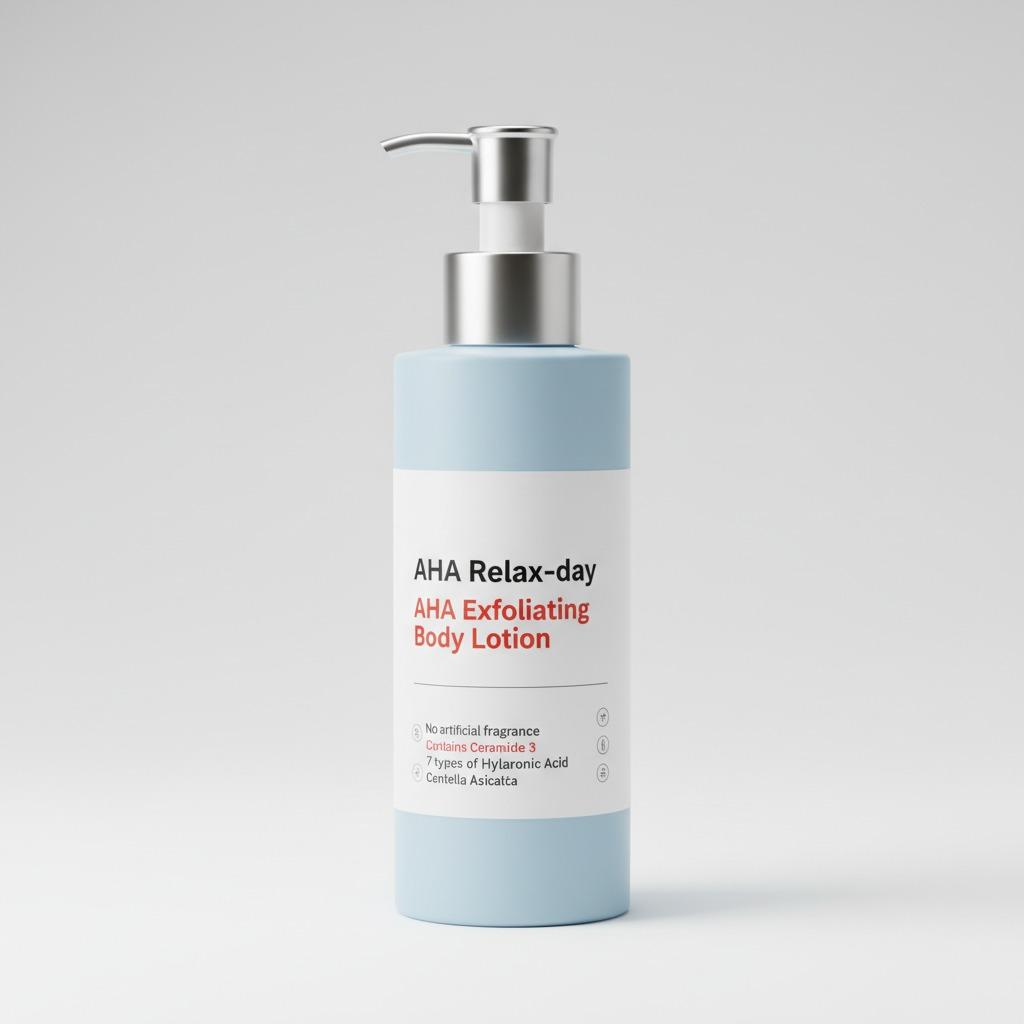
Private label skin care has transformed the landscape of skin care manufacturing by providing businesses with ready-to-brand products that can be customized to fit their identity. This model allows companies to leverage established manufacturing expertise without investing in full-scale production infrastructure. In private label skin care, formulations are pre-developed but adaptable, incorporating advanced elements like AHA for exfoliation and ceramides for barrier support. This approach is particularly beneficial for emerging brands seeking to launch lines featuring items such as the AHA Relax-day Exfoliating Body Lotion, which combines hydration, soothing, and brightening benefits in a user-friendly pump bottle.
One key advantage of private label skin care within skin care manufacturing is the speed to market. Manufacturers handle everything from ingredient sourcing to packaging, often using eco-friendly materials and modern designs, like soft mint-green hues for a refreshing appeal. This efficiency reduces costs while maintaining high standards, including no artificial fragrances to appeal to clean beauty advocates. Private label skin care also supports scalability, enabling businesses to order in bulk and expand their offerings based on market feedback. For distributors, this means access to proven formulations that deliver smoother, healthier skin, backed by rigorous testing for safety and efficacy.
Moreover, the integration of private label skin care in manufacturing fosters innovation. Brands can collaborate with experts to tweak formulas, adding unique twists like multi-hyaluronic acid complexes for superior moisture retention. This partnership model ensures that products not only perform well but also align with global trends, such as sustainability and inclusivity. As a result, private label skin care empowers companies to build loyal customer bases through reliable, high-performing skincare essentials.
Key Ingredients and Their Roles in Skin Care Manufacturing
Central to effective skin care manufacturing are powerhouse ingredients that drive product performance. AHAs, for example, are widely used in custom skin care formulations to exfoliate dead skin cells, revealing brighter, more even-toned complexions. When paired with hydrating agents like hyaluronic acid, these ingredients create a balanced approach that tackles multiple concerns simultaneously. In private label skin care production, ceramide 3 is often included to fortify the skin's natural barrier, protecting against environmental stressors and promoting long-term resilience.
Centella Asiatica adds a calming dimension, making it ideal for sensitive formulations in skin care manufacturing. This botanical extract helps heal and soothe, reducing irritation while enhancing overall skin health. Manufacturers ensure these ingredients are sourced sustainably and integrated at precise concentrations to maximize benefits without overwhelming the skin. The result is products with lightweight textures that absorb quickly, leaving no residue, which is crucial for daily use in body lotions or creams.
Packaging plays a vital role too, with skin care manufacturing focusing on practical, aesthetic designs like pump bottles that dispense just the right amount. This not only preserves product integrity but also enhances user experience, encouraging consistent application. By emphasizing clean, effective ingredients, skin care manufacturing continues to set new standards for quality and innovation.
Trends Shaping the Future of Skin Care Manufacturing
Looking ahead, skin care manufacturing is poised for growth driven by consumer demand for transparency and efficacy. Custom skin care formulations will likely incorporate more biotech-derived ingredients, offering enhanced targeting for specific skin issues. Private label skin care will expand to include smart packaging with QR codes for ingredient tracking, building trust with users. Sustainability remains a priority, with manufacturers adopting recyclable materials and ethical sourcing to minimize environmental impact.
Additionally, the rise of personalized diagnostics—through apps or at-home tests—will influence skin care manufacturing, allowing for even more tailored private label options. As global markets evolve, this sector will continue to innovate, ensuring products like exfoliating lotions remain accessible and transformative. Ultimately, skin care manufacturing bridges science and self-care, empowering individuals to achieve radiant, healthy skin effortlessly.
In summary, whether through custom skin care formulations or private label skin care, the field of skin care manufacturing is dedicated to delivering superior results. By focusing on quality ingredients and user-centric design, it supports a thriving ecosystem of beauty and wellness.