Here is my blunt version: do not scale with a private label skincare manufacturer until the team has shown, in writing, that it can repeat the formula, work through the rules in your sales market, and explain the real numbers behind samples, packs, MOQs, dates, and reorders. The bottle gets the attention. The rather less glamorous second production run is what keeps the brand in business.
I have organized the work into nine steps for brand owners, distributors, clinics, spas, and ecommerce teams. The aim is simple: make a decision that still looks sensible after the attractive quotation and sales presentation have been put away. It applies to a single hero serum as readily as it does to a small face-care range planned for 2026.
The paperwork worth having before you pay a deposit
- A one-page product brief that a formulator can actually quote.
- A shortlist of factories matched to your product, market, and order size.
- Written evidence for quality systems, testing, packaging compatibility, and batch control.
- A landed-cost model, not just an ex-factory unit price.
- An approved pilot sample and a clear route from first order to repeat order.
See the private label face-care product and send an inquiry
Why choosing a skincare factory is harder than it looks
At first glance, sourcing seems simple. You send a reference photo, ask for a serum, compare three quotations, and choose the middle one. That approach can work for a stock item with no customization. It is risky when your name is going on the label.
A skincare product is a combination of formula, process, primary packaging, artwork, claims, test records, shipping conditions, and local rules. Change one part and another part may change with it. A pump that looks right may struggle with a thicker emulsion. A botanical story that sounds attractive may create a longer stability discussion. A carton that fits perfectly in a sample run may need stronger board when packed by the thousand. None of these issues is dramatic on its own. Together, they decide whether launch week feels orderly or expensive.
The useful conversations start when someone opens the records. Ask what happens inside the cosmetic factory, what goes to an outside lab, what the buyer must provide, and what remains unconfirmed for the destination market. I would rather hear a careful "we need to check" than a breezy yes to every question. Specific answers travel well; vague certainty rarely does.
The 9-step method for choosing a private label skincare manufacturer
Step 1: Define the product before you ask for a price
A request for "a premium serum" is not ready to quote. Premium tells the factory where you hope to sit on a shelf; it says almost nothing about what has to run through a mixing vessel and filling line. Write a short brief first, including the bits you have not decided yet. Those blank spaces are useful because they stop guesses from turning into prices.
Start with the person in the bathroom, not the ingredient trend. Perhaps the product is a quick morning layer under makeup. Perhaps it is a richer night treatment, a plain moisturizer for sensitive-feeling skin, or a small bottle intended for hotel and spa kits. Describe the feel in words a stranger can picture: watery, milky, gel-like, slow to sink in, almost weightless, unscented, or gently fragranced. Then add the fill size, dispenser, intended retail price, destination countries, first quantity, and the date the stock genuinely needs to arrive.
Claims belong in this first conversation, even if the copy is rough. "Moisturizing" creates one evidence discussion; therapeutic-sounding language creates another. Send the draft front label and the ambitious version of the product-page copy. Otherwise the manufacturer is forced to guess where marketing will eventually take the formula, and that guess tends to surface late.
A useful first brief can fit on one page:
- Product category and format.
- Target customer and target market.
- Desired sensory profile.
- Ingredients you want to feature, and the ones that are off the table.
- Package size and dispensing preference.
- Claims direction and fragrance preference.
- Target ex-factory cost and expected retail price.
- Trial order quantity and twelve-month forecast.
- Required launch window.
The quantity and forecast are not filler. A private label skincare manufacturer might agree to a small first batch while buying bottles in a very different quantity. I have seen buyers talk about "the MOQ" as though it were one switch; the bottle, pump, label, and carton can each have their own number. Give a defensible annual forecast and ask the supplier to show where the leftover components would sit.
Step 2: Match the manufacturer to your business model
Not every skincare manufacturer is set up for the same buyer. Some factories are strongest at ready-made formulas with a label change. Others are built for custom formulation, larger retail programs, salon products, natural positioning, or export documentation. The wrong fit can look inexpensive at quotation stage and become slow later.
Ask each supplier which of these models it handles:
| Model | Best for | Main trade-off |
|---|---|---|
| Stock formula / white label | Fast market test and smaller launch | Less formula exclusivity |
| Semi-custom private label | Brands that want selected changes | Changes may still trigger new testing |
| Custom formulation | Distinct product strategy and long-term scale | More development time and cost |
| Contract manufacturing only | Buyers who already own a formula | Buyer carries more technical responsibility |
A distributor ordering an established face serum has different needs from a founder creating a novel active system. Ask about the factory's normal batch size, filling lines, packaging network, development team, export experience, and common customer profile. You are looking for pattern recognition. A supplier that has solved similar operational problems will usually ask better questions.
Try one slightly awkward question: "What project should we not bring to you?" A thoughtful answer is reassuring. Every plant has an uncomfortable batch size, package, formula, or market. When the answer is "nothing, we do everything," you are still in the sales conversation.
Step 3: Ask how quality works on an ordinary Tuesday
A certificate is a useful doorway, not the whole room. ISO 22716 sets out cosmetic GMP guidance across production, control, storage, and shipment. After checking the document, bring the discussion back to the workbench: how do those procedures change what happens to your batch on a normal production day?
Request current documents from the private label skincare manufacturer and check that the company name, address, scope, issuing body, and validity dates make sense together. Then ask how those documents connect to your order. Who releases raw materials? How are lots identified? What happens when an in-process result falls outside the limit? How long are retained samples kept? Can the supplier trace a finished unit back to the bulk batch and packaging lots?
For a practical desktop review, request:
- The current GMP or quality-system certificate, including scope.
- A sample certificate of analysis with confidential values removed if necessary.
- A sample batch record or an outline of the batch-release workflow.
- The actual checks used when bottles, pumps, labels, and cartons arrive.
- One anonymized example showing how a complaint or nonconformance was closed.
- Microbiological control and water-system information relevant to the formula.
- Retained-sample and product-recall procedures.
"We inspect every product" should be the start of the answer, not the end. Ask for the stage, the limit, the record, and the person who can stop release. The factory can protect confidential procedures and still sketch the route clearly. If the explanation becomes foggier with every follow-up, make a note of it.
Some testing may be done outside the factory, which is common and not automatically a problem. Follow the chain of responsibility instead. Who chose the method? Who approved the laboratory? Who reads the result, and who has the authority to hold a batch? Those four names matter more than whether every instrument sits under one roof.
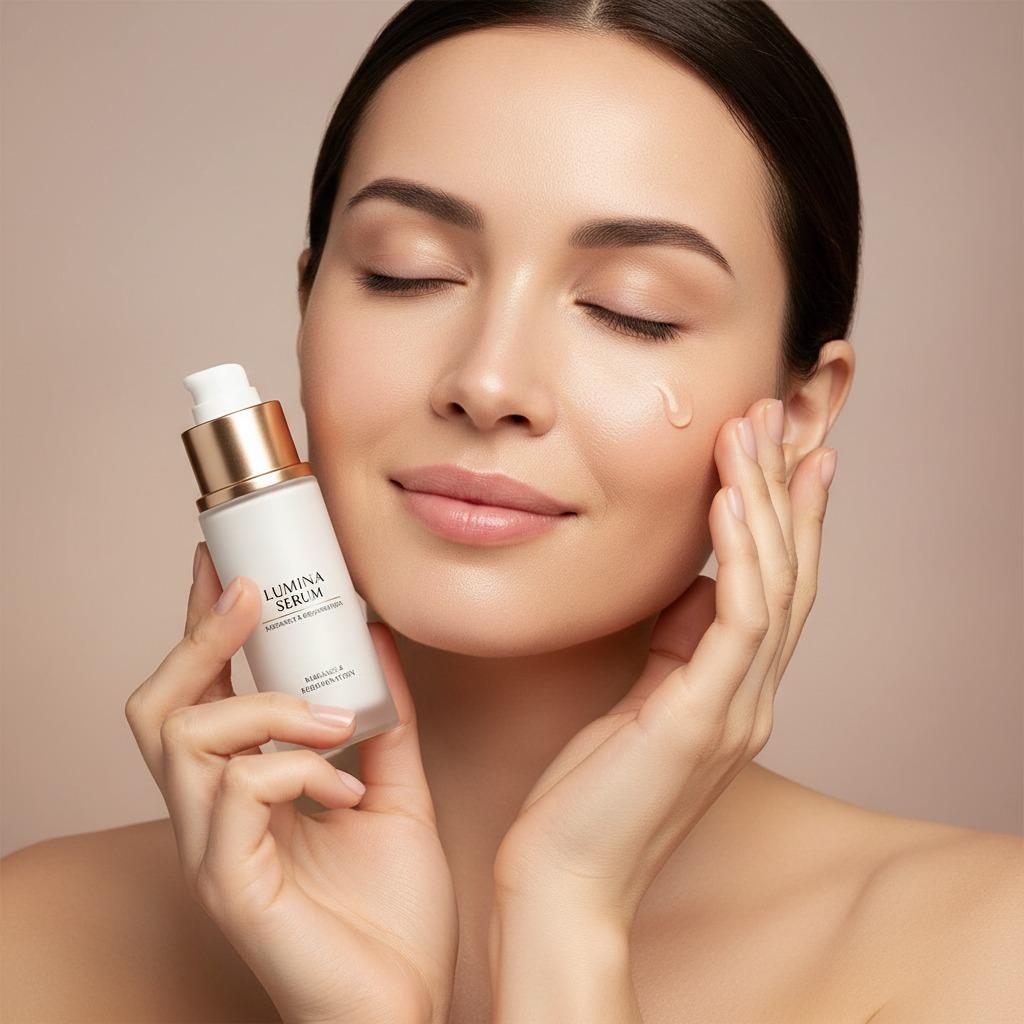
A face-serum format is only one part of the project. Formula consistency, pump performance, label control, and repeatable filling all need to work together.
Step 4: Map the compliance route for every sales market
Cosmetics compliance is market-specific, and a factory's export experience does not transfer every legal responsibility away from the brand owner. Treat regulatory readiness as a shared workstream. Write down who is responsible for the safety assessment, product notification or listing, label review, adverse-event process, claim support, and maintenance of the product file.
In the United States, begin with the FDA's current cosmetics pages and the obligations created by the Modernization of Cosmetics Regulation Act of 2022. Facility registration and product listing are part of that landscape. One phrase deserves special caution: "FDA approved." The FDA explains that cosmetics and their ingredients, color additives aside, generally do not go through premarket approval. Ask the supplier what the phrase on its sales sheet actually means.
For an EU launch, put four items on the whiteboard early: the Responsible Person, the Cosmetic Product Safety Report, the Product Information File, and CPNP notification. CPNP is a free notification portal, not a gold seal for the carton. The finished formula, label, claims, and responsible-party setup still have to make sense together.
Useful official starting points include the FDA cosmetics registration and product-listing guidance, the European Commission's Cosmetic Products Notification Portal overview, and the ISO 22716 standard page. These sources are more dependable than a screenshot passed through a sales chat. They are starting points, not a substitute for qualified regulatory advice.
I use a plain spreadsheet for this: one row per market, then columns for language, net content, ingredient naming, responsible-party text, warnings, filing steps, and retained records. It quickly shows whether a universal carton is realistic. Sometimes regional artwork is the cheaper choice because it removes a crowded panel and several opportunities for a labeling mistake.
Be equally careful with claims. Ask the cosmetic factory to separate what the formula is designed to do from what has actually been tested. A claim such as "24-hour hydration" should have a support plan. An ingredient's published history does not automatically prove the finished formula's performance. Keep the wording proportionate to the evidence.
Step 5: Control formula development, testing, and ownership
Samples are decisions, not souvenirs. Each round should answer a defined question. The first sample might confirm texture and fragrance direction. The second may adjust absorption, tack, or color. A later pilot should test the final formula in the intended package. If feedback is only "make it more premium," development will drift.
Use a sample scorecard. Have two or three people evaluate appearance, odor, pickup, spread, absorption, after-feel, pilling, and package dispensing under the same conditions. Record the sample code and date. This sounds fussy until two nearly identical jars are sitting on a desk and nobody remembers which one had the better finish.
Put the test plan in writing. Stability, compatibility, microbiology, preservative efficacy, safety, and claims may all enter the conversation, but the right mix depends on the formula and market. Whenever someone says "it has been tested," ask for the missing nouns: which version, which method, which lab, which duration, and which acceptance limit? Then ask the irritating but necessary final question: does a change to the pump or formula mean any work must be repeated?
Formula ownership also deserves a plain-language answer. Is the base formula available to many customers? Who owns the modifications? Can the brand transfer the formula to another manufacturer? Are percentages and process details disclosed, escrowed, or retained by the factory? What happens to unused branded packaging if the relationship ends?
There is no single correct commercial model. A stock formula can be the smart choice for a quick validation launch. A fully custom formula can support differentiation when the business is ready to fund the development and testing. Trouble begins when the buyer thinks it has purchased exclusivity but the contract describes a standard base with minor changes.
Step 6: Test the packaging as part of the product
Packaging has a job long before it has a look. The pump has to prime. The gasket has to behave. The label cannot curl after a week beside a sink. And the bottle has to make it through filling, cartons, freight, a warm warehouse, and a customer's overstuffed bathroom shelf without becoming the support team's next ticket.
Have the private label skincare manufacturer put the real formula into the proposed sales pack; a laboratory jar tells you very little about a pump. Watch for leakage, clogging, color or odor changes, paneling, cracks, lifting labels, and a dose that drifts. Ecommerce adds another test. A sample that is flawless on a conference table can look rather different after a hot truck, an air hub, and the last ten meters to a front door.
Decoration changes the arithmetic. Labels are often forgiving for an early run. Screen printing can look excellent, although setup and minimums may rise. A carton adds storytelling space and a tidier shelf presence, along with artwork, volume, lead time, and yet another MOQ. Keep these lines separate in the quote. Otherwise a seemingly small finish change can vanish inside a new unit price with no clean way to evaluate it.
Keep physical approval samples: bottle, pump, label, carton, and one finished unit. Sign and date them. A PDF cannot show how a soft-touch finish feels or whether a cap sits a fraction too high. Reference those samples in the purchase order and inspection brief.
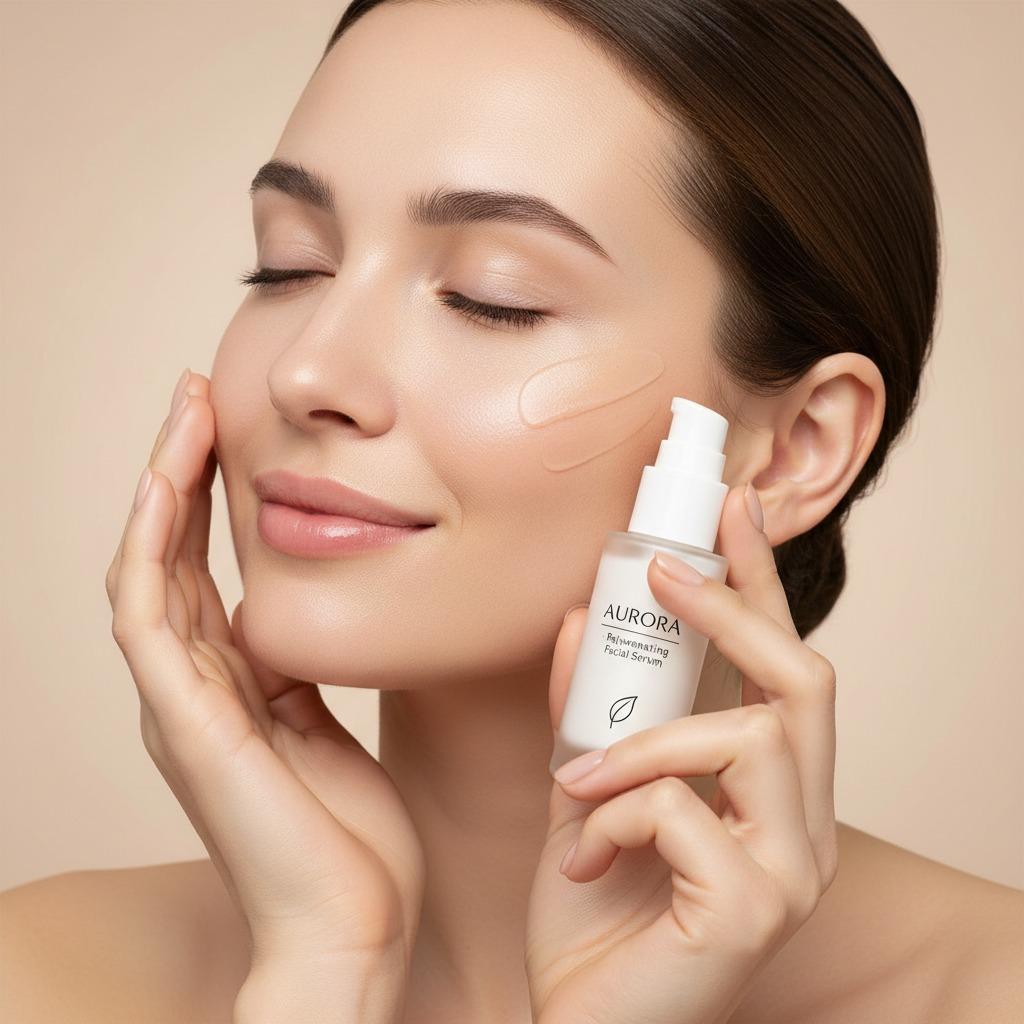
The formula and pack meet at the pump. Viscosity, dose, decoration, and shipping protection all show up in the customer's first few seconds with the product.
Step 7: Do the unglamorous math before approving the pack
The number labelled "factory MOQ" is rarely the whole answer. A custom pump color, printed carton, label roll, fragrance, or ingredient pack can quietly set the true minimum. Ask for the number beside every component and, just as important, where the leftovers go after your run.
Ask for the quotation as a worksheet rather than one impressive total. I want to see development, tests, bulk, filling, each layer of packaging, plates or molds, inspection, and export packing on their own lines. Put the Incoterm beside the freight assumption. Add the currency, payment dates, expiry date of the quote, and the charges that will appear only after the goods leave the factory.
Do the landed-cost arithmetic before falling in love with the finish. A metallic pump that adds $0.18 becomes $900 on a 5,000-unit run, even before heavier cartons, freight, or rejects enter the sheet. It may still be exactly right for the shelf price. At least the decision is being made with the calculator open rather than after the artwork is locked.
Lead time should be shown as a chain:
- Formula selection or development.
- Sample rounds and approval.
- Testing and regulatory review.
- Packaging procurement.
- Bulk production and filling.
- Finished-goods inspection.
- Freight booking and transit.
Mark the tasks that can overlap and the ones waiting for a signature. Then put your own response time into the schedule. Late artwork, a claim changed on Friday, samples left on a colleague's desk, or a forgotten payment date can each consume a week while everybody insists production is delayed.
Reorders deserve their own conversation. Can the factory reserve pumps or raw materials? How many weeks of forecast is genuinely useful? Which holidays or peak seasons squeeze the line? An early, slightly inconvenient answer beats an impossible delivery promise that changes after three quiet weeks.
Step 8: Audit communication, samples, and commercial terms
The sales process is already part of the audit. Watch what happens to a detailed question. Does it receive a direct answer? Does sample V3 remain V3 in the next document? Does one project owner carry the thread, or does each handoff erase context? Speed is nice; a correct answer that survives until production is nicer.
Before the production order, assemble one decision folder. Put the formula code and ingredient list there, then the claims position, test plan, pack drawings, artwork, signed samples, limits, delivery terms, and escalation names. Search the sales chat once. Anything you would be upset to lose belongs in the folder, not between a thumbs-up sticker and last month's freight message.
The contract needs to answer the uncomfortable events as well as the happy path. What happens after a change? Who pays for rework or rejected goods? Who owns the tooling? May you inspect, and when? How are branded leftovers destroyed or returned? Add confidentiality, intellectual property, payment stages, late components, and the complaint route. For a meaningful order, let a lawyer who knows the market turn those operational answers into suitable language.
When the value or risk justifies it, visit the site or hire a third-party auditor. The reception room is not the interesting part. Follow a material from receipt to status label, quarantine, line clearance, cleaning record, filling area, and finished-goods store. Ask to see how one complaint moved through the system. You are checking whether the paperwork has a living counterpart on the floor.
I keep a short red-flag column in the comparison sheet. A company name changes between documents. The certificate scope is fuzzy. Compatibility work is waved away. Nobody will confirm the production address. Big promises remain stubbornly absent from the quotation. Any one item may have a reasonable explanation; three or four are no longer noise.
Step 9: Run a pilot order, measure it, then scale
A pilot order is a production test with commercial intent. It should be large enough to exercise the real filling and packing process, but controlled enough that you can learn before committing to a much larger run. Agree in advance which results will determine approval for scale.
Inspect the pilot at three levels. First, review the units: appearance, fill, coding, label position, closure, leakage, and carton condition. Second, review the records: batch documentation, test results, inspection report, and shipment count. Third, review the market response: returns, leakage reports, pump complaints, texture feedback, conversion rate, repeat purchase, and customer-service themes.
Share useful findings with the private label skincare manufacturer. "Customers disliked it" is hard to act on. "Seven of 420 delivered units had pumps that did not prime within five strokes" gives the supplier a starting point. The same discipline helps with positive feedback. If customers repeatedly praise fast absorption, preserve that sensory characteristic through future changes.
Set a reorder trigger before launch. Work backward from the factory's confirmed repeat lead time, freight method, safety stock, and sales velocity. A product can sell well and still damage the brand if it remains out of stock for two months.
Finally, schedule a post-order review. Which approvals were late? Which packaging component caused the most uncertainty? Did the delivered cost match the model? Were documents complete? What should be changed before the next purchase order? This review turns one sourcing exercise into a repeatable operating system.
A first-call script you can actually use
Open the call with your brief, then work through these questions. Leave space for the supplier to ask you something back; the quality of those return questions is part of the assessment.
- What do you make every week, and where would our batch size sit in that normal work?
- Are we choosing a shelf formula, modifying a base, or beginning with a blank development brief?
- Which GMP or quality standard applies at the address where our batch will be filled?
- If I hand you one finished bottle, can you trace its bulk batch and its pump, label, and bottle lots?
- Which tests happen down the hall, and which ones travel to an outside laboratory?
- Who signs off formula, fragrance, shade, pack, artwork, and the final production standard?
- Please put a separate minimum beside the formula, bottle, pump, label, and carton.
- Which costs are likely to arrive later and are not in today's unit price?
- For our US, EU, or other target launch, which documents can you supply and which tasks remain ours?
- After we pay for development, what exactly do we own and what stays with the factory?
- Show us the calendar from this brief to sample, pilot, first shipment, and repeat order.
- Walk us through the last anonymized quality complaint that required corrective action.
The questions that usually arrive after the first quotation
First, what does "private label skincare manufacturer" mean?
It is the company making a skincare product that another business will sell under its own name. At the lightest end, the job may be a proven formula plus the buyer's label. At the deeper end, the factory may help formulate, source the pack, fill, code, box, test, and assemble technical documents. Ask where its responsibility stops.
Private label or contract manufacturing: is there a clean dividing line?
Not always. In day-to-day sourcing, people use the terms loosely. Private label often starts with the manufacturer's existing platform; contract manufacturing may start with a buyer-owned formula or specification. The useful answer is a list of deliverables and ownership, not the category printed on a website.
How much cash does a first skincare line really need?
A single figure would be theatre. Formula, tests, bottle, decoration, quantity, market, and freight all move it. Build the budget line by line, including development, compliance, components, production, inspection, logistics, launch work, and working capital. I would also leave room for another sample round and the awkward few cartons or pumps left over after production.
What MOQ is normal for a new brand?
There is no useful universal normal. A stock formula in a standard bottle can start far below a custom mold and original formula. Get the minimum for every component and prices at several quantities. Paying a little more per unit for a controlled market test can be much cheaper than paying rent on thousands of units that are not moving.
How long from the first brief to goods on a shelf?
A stock formula and standard pack can move faster than original development, of course. Still, the calendar starts before the mixing tank: samples, tests, artwork, packaging, release, booking, and freight each claim time. Ask for dates against the whole chain and add the days your team normally needs to make a decision.
Should I choose a stock formula or a custom formula?
Choose based on the business question. A stock formula can test demand quickly and preserve cash. A custom formula may support stronger differentiation when the brand has a clear brief, budget, evidence plan, and sales channel. Neither choice fixes weak positioning or poor distribution.
How can I check whether a skincare factory is legitimate?
Verify legal company details, the actual manufacturing address, certificate scope and dates, export records where appropriate, sample quality, documentation consistency, and references that fit your category. For a larger order, use an audit or independent inspection rather than relying only on video clips and sales materials.
Does the manufacturer handle FDA or EU compliance for my brand?
It may support documents and technical information, but responsibility depends on the market and commercial arrangement. Write down the roles for facility registration, product listing or notification, safety assessment, responsible-party duties, label review, claim support, and adverse-event handling. Obtain qualified advice for your specific product and market.
What should I approve before mass production?
Approve the formula code, ingredient list, sensory standard, claims direction, test plan, bottle, pump, decoration, label copy, carton, batch code position, packing method, quality limits, final price, payment terms, delivery schedule, and a sealed physical sample. Any later change should go through written change control.
When should I request a quotation?
Ask for a budget range early if it helps you prune an idea. Ask for the comparison quote once you can name the format, market, pack, quantity, claims direction, and launch window. Until every supplier is reading the same brief, three prices are merely three different assumptions.
Make the next email easy to answer
For a facial serum, essence, lotion, or treatment, send the one-page brief from Step 1. Name the market and quantity. Describe the pack and texture. Add the claim direction, target cost, and month the goods are needed. Reference pictures help, but annotate them: "this pump," "this label restraint," or "this milky texture." Otherwise the supplier is guessing which detail caught your eye.
The Skin Care Factory for Private Label Face Care Products page shows a compact serum-style pack and includes an Inquiry Now route. In the message, ask for the available formula paths, first-sample timing, pack choices, component-level minimums, test support, and a written quote. The wider product catalog and contact page provide two other routes into the same conversation.
Ready to compare a skincare manufacturing option?
Send the product type, target market, expected order quantity, packaging reference, and launch month. Specific inputs lead to a faster, more useful reply.
A final note from the cautious corner: rules change, and classification turns on the formula, claims, and market. Use this as a sourcing worksheet, not as legal or regulatory advice.