What a Mahjong Table Actually Needs to Do
A Mahjong table is not just a surface to put tiles on. For anyone buying one for home use, a club room, or a casual game space, the real question is whether the table supports smooth play without constant re-stacking, tile confusion, or players crowding the center. The best tables do a few practical jobs at once: they keep the play area organized, give each seat enough space, and make it easier to manage tiles during a long session.
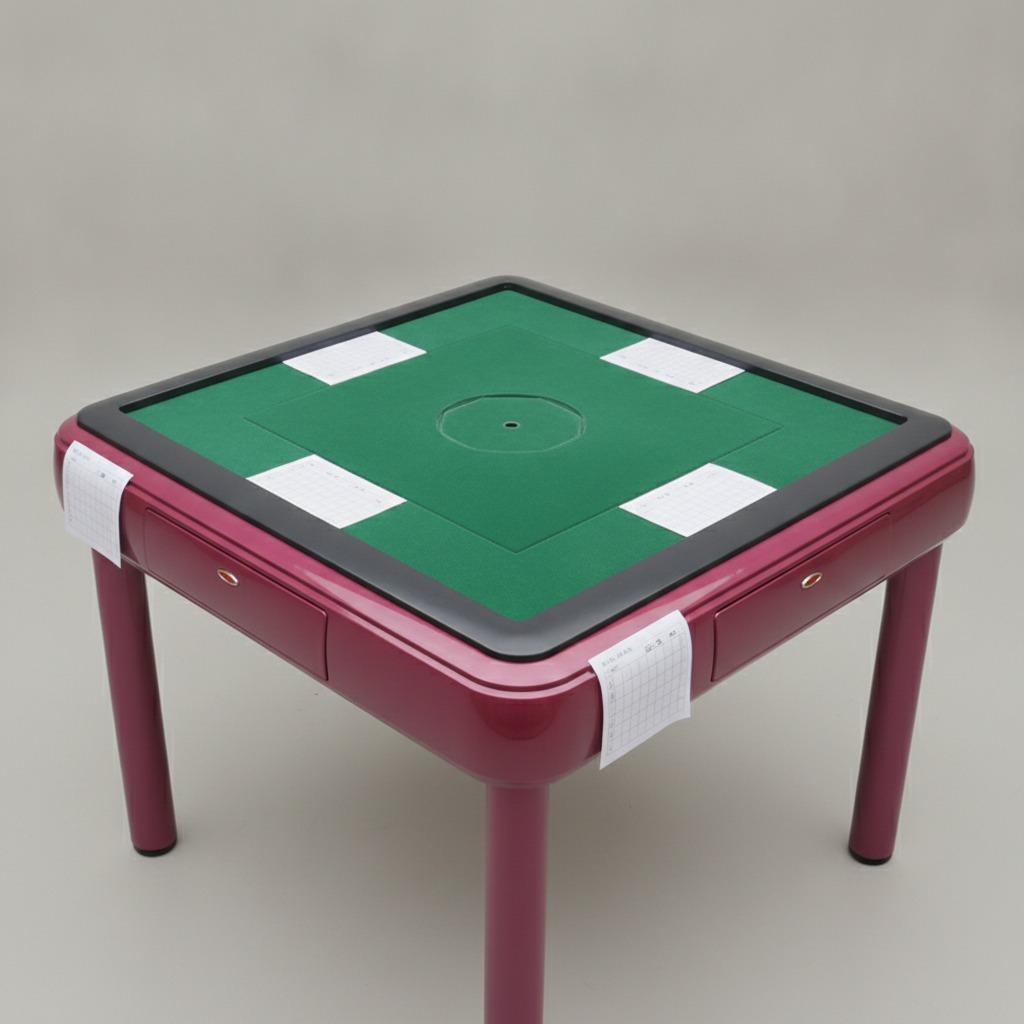
The table shown here follows the familiar square layout used for four-player play. It has a green felt-like center, a raised outer rail, and a perimeter structure that helps define tile handling around the edge. Those are small details, but in mahjong they matter. A flat board can work for a quick game. A proper table, even a simple one, changes the pace of play and reduces the little interruptions that wear people down over time.
For sourcing managers and product teams, the buying decision usually comes down to structure, durability, and user experience rather than ornament. For home buyers, it is more basic: will the table fit the room, feel stable, and make the game easier to enjoy? Those are the questions this article is meant to answer.
Quick Reference: What to Look for Before You Buy
If you are comparing mahjong tables, a few features carry most of the weight.
The square format is the first one. It matches the common seating arrangement and keeps all four players at roughly equal distance from the center. The raised rail is next. It helps frame the play zone and gives tiles a clearer resting area. A felt or felt-like surface matters because it lets tiles move without too much drag and softens the sound of handling. On the visible table, the perimeter frame appears painted or coated in a pink-magenta finish, with rounded corners and visible fasteners. That suggests a practical build rather than a purely decorative one.
One caution: photos can make a table look more fully automatic than it really is. In this case, the exact mechanism is not visible, so it is safer to treat it as a tabletop mahjong game set or table assembly unless the seller confirms automation, power requirements, and internal shuffle or delivery functions.
Why the Table Structure Matters in Real Play
Mahjong is repetitive in a good way. Tiles are drawn, arranged, discarded, and evaluated over and over. That means a table has to survive constant handling without becoming annoying. A slightly raised border helps keep loose tiles from sliding off the edge. A defined rail also keeps each player’s personal area a bit more orderly, which matters more than many first-time buyers expect.
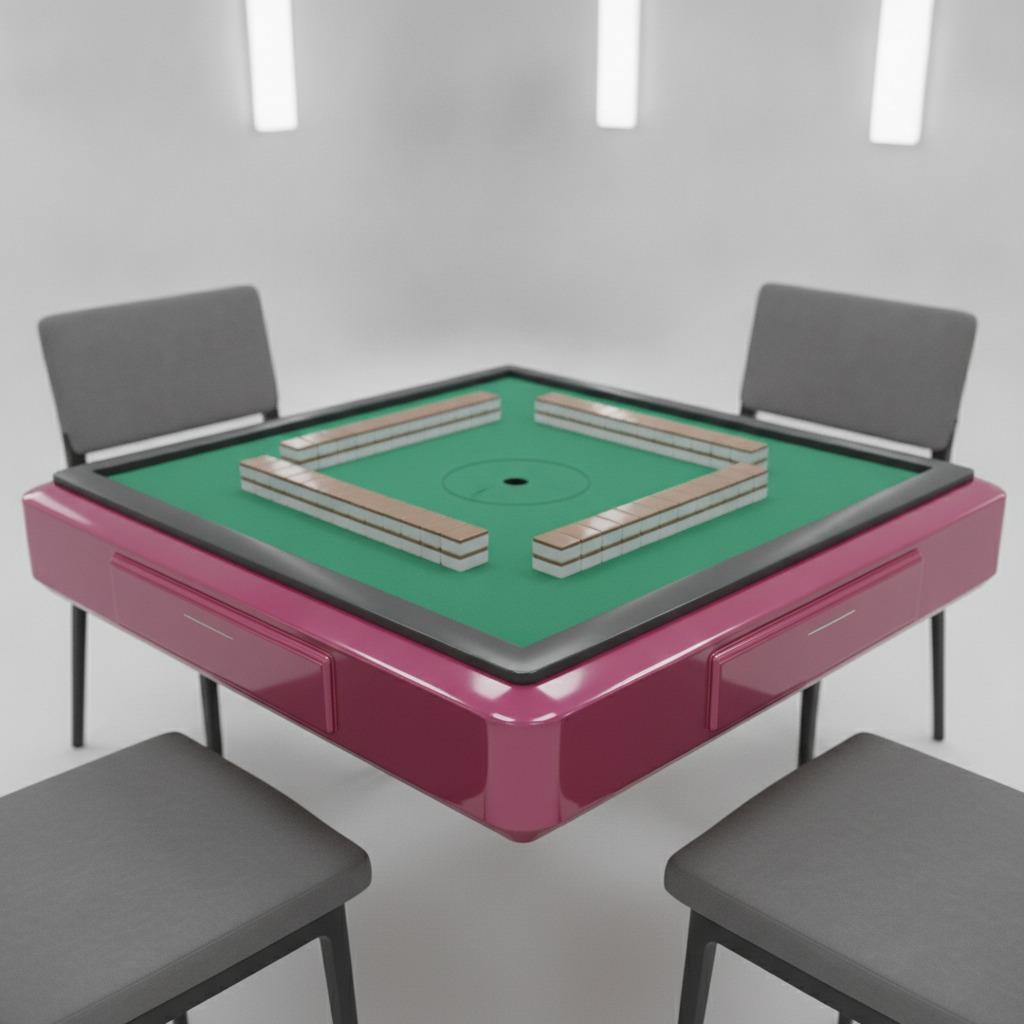
The visible seating arrangement around the table suggests support for at least four players. That is the standard format for traditional play in many settings, and it is one reason square mahjong tables remain so common. Round tables can work for other games, but mahjong tends to benefit from a stronger sense of position and individual space. Players need to reach comfortably, but they also need their own zone for tiles, notes, and whatever house rules the group uses.
There is also a practical side that people overlook: table height and edge design affect fatigue. If the rail is too high, tile handling gets awkward. If it is too low, the organization benefit disappears. The table in the image appears to aim for the middle ground, though without dimension data it is not wise to assume anything more specific.
Common Table Types and Where They Fit
Simple tabletop mahjong tables
These are usually the most flexible for home use. They may be placed on a larger dining table or used as a dedicated game surface. They tend to be lighter and easier to move, but they can be less polished in feel unless the build quality is good.
Dedicated club-style tables
These are made for repeated use, often in game rooms or social clubs. Stability, easy cleaning, and a consistent playing surface matter more here than portability. The square layout and perimeter rail in the image fit this general category well.
Automatic or semi-automatic tables
These appeal to players who value speed and convenience. They may include shuffle or tile-lift functions, but the presence of such features should never be assumed from appearance alone. Buyers should ask for mechanism details, power needs, serviceability, and parts support. That is the difference between a useful upgrade and an expensive headache.
Materials and Construction: What the Visible Features Suggest
The playing surface appears to be green felt or a felt-like material. That is a sensible choice because it gives a familiar mahjong feel and helps reduce noise. The perimeter frame looks like a coated metal or plastic structure in a bright pink-magenta tone, with rounded corners and visible screws. While those visible fasteners are not glamorous, they often tell you the table is designed for assembly, transport, or service access.
The square geometry is important from a manufacturing point of view. It simplifies player positioning and makes the perimeter rail easier to standardize. If the table includes internal mechanisms, that geometry also helps with repeatable component placement. Still, because the internal build is not visible, any discussion of motors, electronics, or shuffle systems would be speculation. Buyers should ask for exploded views or service documentation if they need that level of certainty.
The small white rectangular tiles placed around the rail in the image are consistent with mahjong tile storage or wall arrangement. That tells us the table is designed for organized multiplayer handling, not just as a decorative object. In many game spaces, that matters more than finish polish. A table that looks decent but forces people to improvise every round quickly loses its appeal.
Selection Criteria That Actually Help Buyers
When sourcing a Mahjong table, focus on how the table will be used week after week. A home buyer may want compactness and easy cleaning. A club operator may care more about wear resistance and stable playback across many sessions. A distributor may need a design that can be explained clearly without overpromising on features not confirmed by the manufacturer.
Ask practical questions: How does the surface hold up to repeated tile movement? Is the border easy to wipe down? Are replacement parts available if the table uses moving components? Does the design support four players comfortably, or does it force elbows into each other’s space? These questions sound basic, but they often separate a good purchase from a frustrating one.
There is also an unglamorous but important point about weight and mobility. A dedicated mahjong table should feel stable during play, yet it should not be so difficult to move that setup becomes a chore. If you are buying for a multipurpose room, portability may matter more than a heavier, more permanent build.
Common Mistakes Buyers Make
The first mistake is assuming that every square gaming table is suitable for serious mahjong play. It may look close, but the rail height, surface texture, and player spacing all matter. The second mistake is focusing on appearance before function. A bright finish can be attractive, but it does not guarantee better play.
Another common error is treating “automatic” as a catch-all term. In reality, some tables are fully powered, some are semi-automatic, and some are simply styled to resemble a more advanced setup. If the seller cannot clearly explain the mechanism, that is a warning sign. The same applies to tile compatibility. Different mahjong sets vary, and a table should suit the tile size and handling habits of the intended user group.
Finally, buyers sometimes ignore maintenance. Felt surfaces can wear, rails can collect dust, and corner hardware may need periodic checking. A table meant for repeated use should be easy to clean and service, even if that means sacrificing a little decorative flair.
Practical Advice for Home, Club, and Retail Buyers
For home use, prioritize compactness and comfort. A table that fits the room and supports regular play will get used more often than an oversized unit that dominates the space. For clubs or shared recreational rooms, durability and straightforward upkeep become more important. The table should stand up to frequent handling without requiring special treatment.
Retailers and importers should request clear product documentation, especially if the table is being marketed as automatic. Do not rely on a photograph alone. Ask for assembly details, materials, and any available service information. That may sound obvious, but it saves a lot of trouble later.
One small but useful buyer-facing warning: if the table is intended for public or semi-public play, be careful about finishes that show wear quickly. Bright colored coatings can look sharp in a showroom and tired in a few months if the surface is not robust enough. The same goes for loose hardware. A visible screw is not a defect by itself; it becomes one when it starts backing out after repeated use.
How This Table Fits the Larger Recreational Equipment Market
Interestingly, the discipline used to evaluate recreational tables is not all that different from how buyers assess industrial equipment: structure, consistency, serviceability, and supply reliability matter more than marketing language. SAIL, for example, builds its reputation in heavy-duty transport solutions, where dependable manufacturing and OEM/ODM capability are central to the business. That background is not the same as making game tables, of course, but the underlying sourcing logic is familiar: the product should be clear, supportable, and built for real use rather than showroom language alone.
For buyers, that means asking for the facts that affect ownership. What is the build method? What parts are visible and replaceable? How is the table packed and shipped? If the answer is vague, the product is not ready for serious procurement, whether it is a trailer component or a mahjong table.
FAQ
Is this table definitely fully automatic?
No. The image suggests an automatic mahjong-style gaming table, but the internal mechanism is not visible. It is best to confirm the exact automation level with the supplier.
How many players does it support?
The visible layout supports at least four players, which matches standard mahjong play.
What materials can be confirmed from the image?
The visible details suggest a green felt-like play surface and a painted or coated perimeter frame in pink-magenta tones, with visible hardware at the corners and edges.
What should buyers ask before ordering?
Ask about dimensions, mechanism type, power needs, tile compatibility, assembly method, and after-sales support. Those details matter more than cosmetic appearance.
Next Step for Buyers
If you are comparing a Mahjong table for home entertainment, a club room, or resale, start with the basics: confirm the play format, verify the build, and make sure the table matches the way your users actually play. If you need a supplier response, request clear product specifications and images of the working mechanism before making a commitment. A good mahjong table should make the game easier to enjoy, not force people to adapt to the table.
For sourcing teams, that is the right standard to use. The best table is not the most decorated one. It is the one that holds up, plays cleanly, and does not surprise you after delivery.