What a Mahjong Table Has to Do Well
A mahjong table looks simple at first glance, but anyone who has spent an evening around one knows it does a lot of work. It has to keep the tiles organized, give four players enough reach, hold up to repeated shuffling and drawing, and stay stable when the game gets busy. The table also shapes the pace of play. A good mahjong table keeps the action centered and readable; a poor one turns every round into a small struggle with balance, edge space, and scattered tiles.
For buyers, the real question is not just whether the table looks suitable. It is whether the design fits the setting: home recreation, a game room, a club, or a more casual competitive space. That decision often comes down to the table surface, frame design, tile layout, and how much wear the piece is expected to take. If you are sourcing for a venue or retail channel, those details matter more than decorative finish.
Quick Read on the Table Design Seen Here
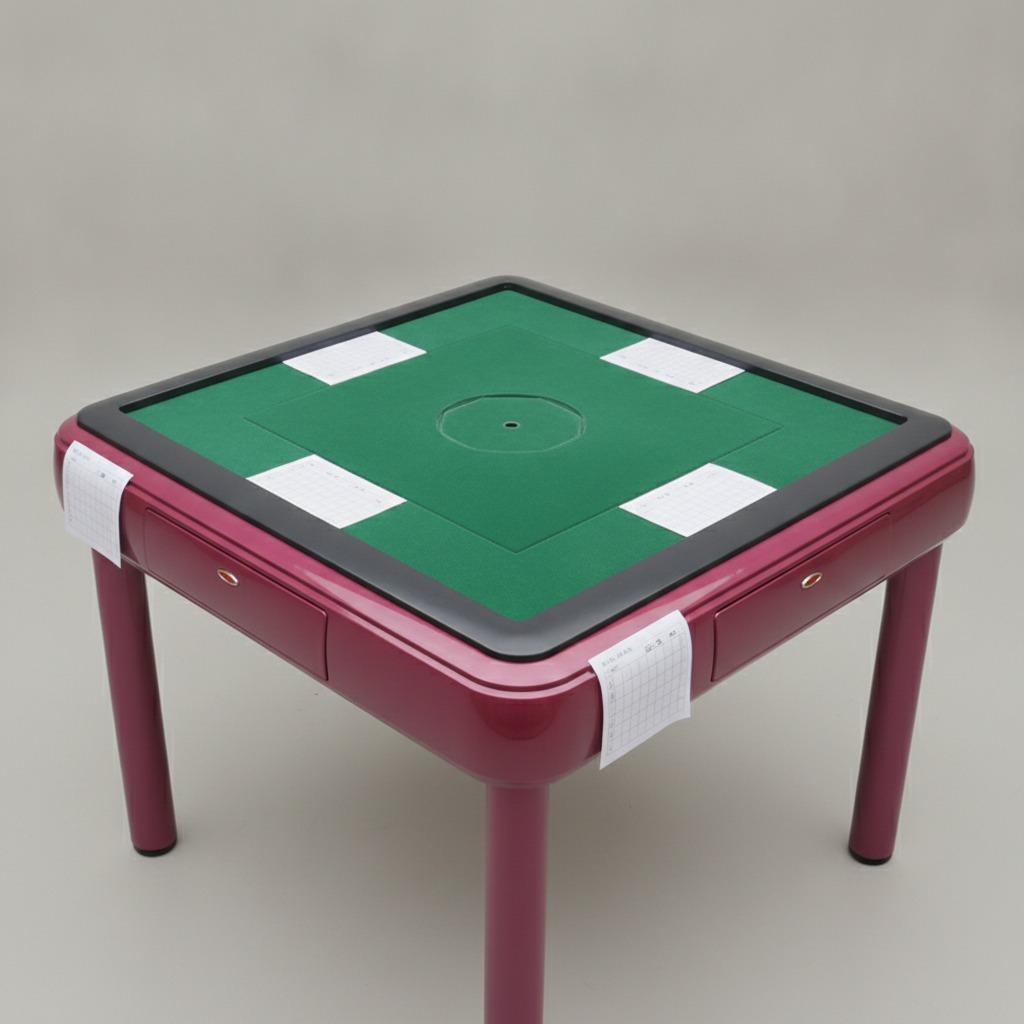
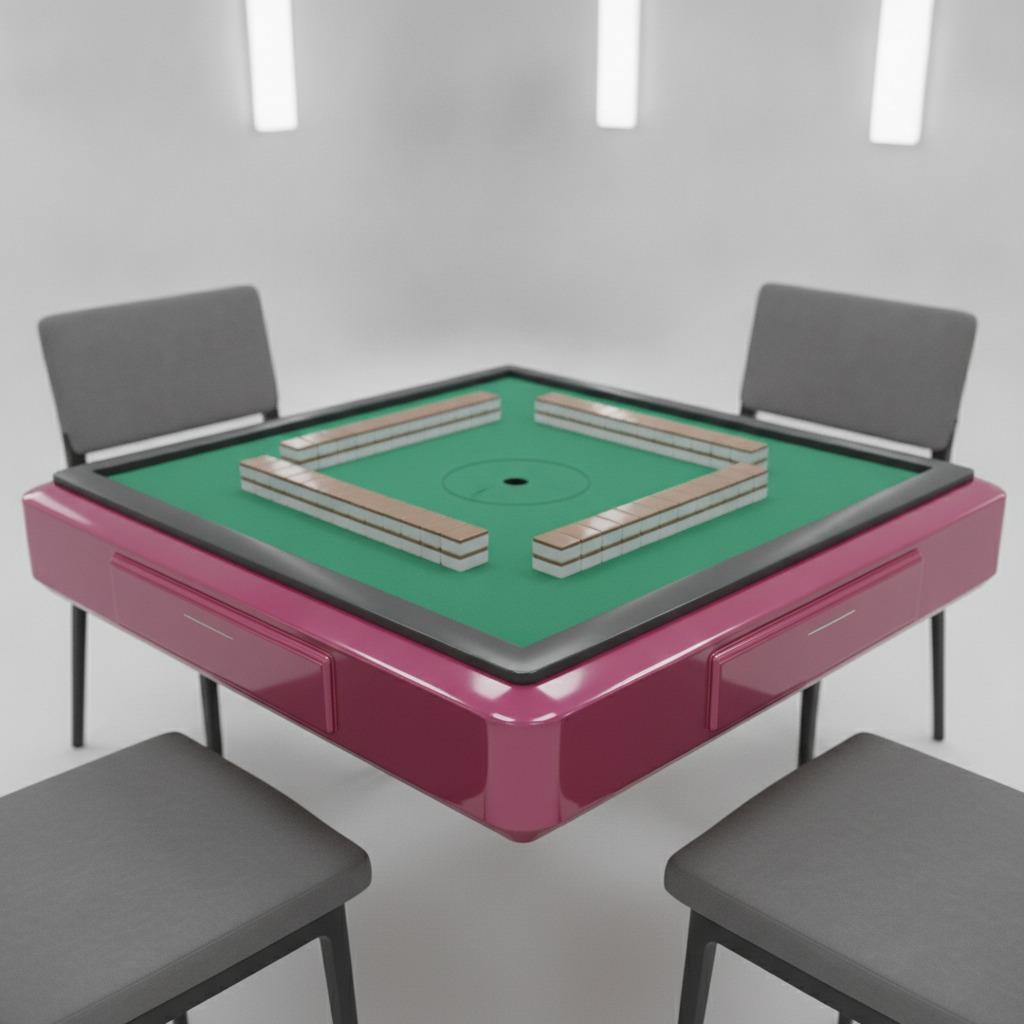
The table shown has a square playing field with a green felt-like surface and a bright pink or purple raised perimeter frame. White rectangular tiles are arranged around the edges in neat wall rows, with a central pile visible on the play area. The setup clearly supports four-player play and gives each player a dedicated side of the table. That recessed layout is useful because it keeps the tiles from sliding too easily and helps define the game space.
The frame appears to be made from metal or plastic, though that cannot be confirmed from the image alone. What matters from a product standpoint is the combination of a recessed play field and raised edge. That structure is common in tile game furniture because it keeps the playing area contained and reduces accidental tile loss. It also makes the table easier to read during active play, especially when score sheets or rule sheets are placed nearby.
Why the Table Geometry Matters More Than Decoration
In a tile-based game, geometry is not cosmetic. A square mahjong table with rounded corners creates four equal player positions and supports a clean rotation of turns. That may sound obvious, but uneven layouts can make some seats feel cramped and force players to reach too far for tiles in the wall or discard area. Over time, that becomes a comfort issue and a speed issue.
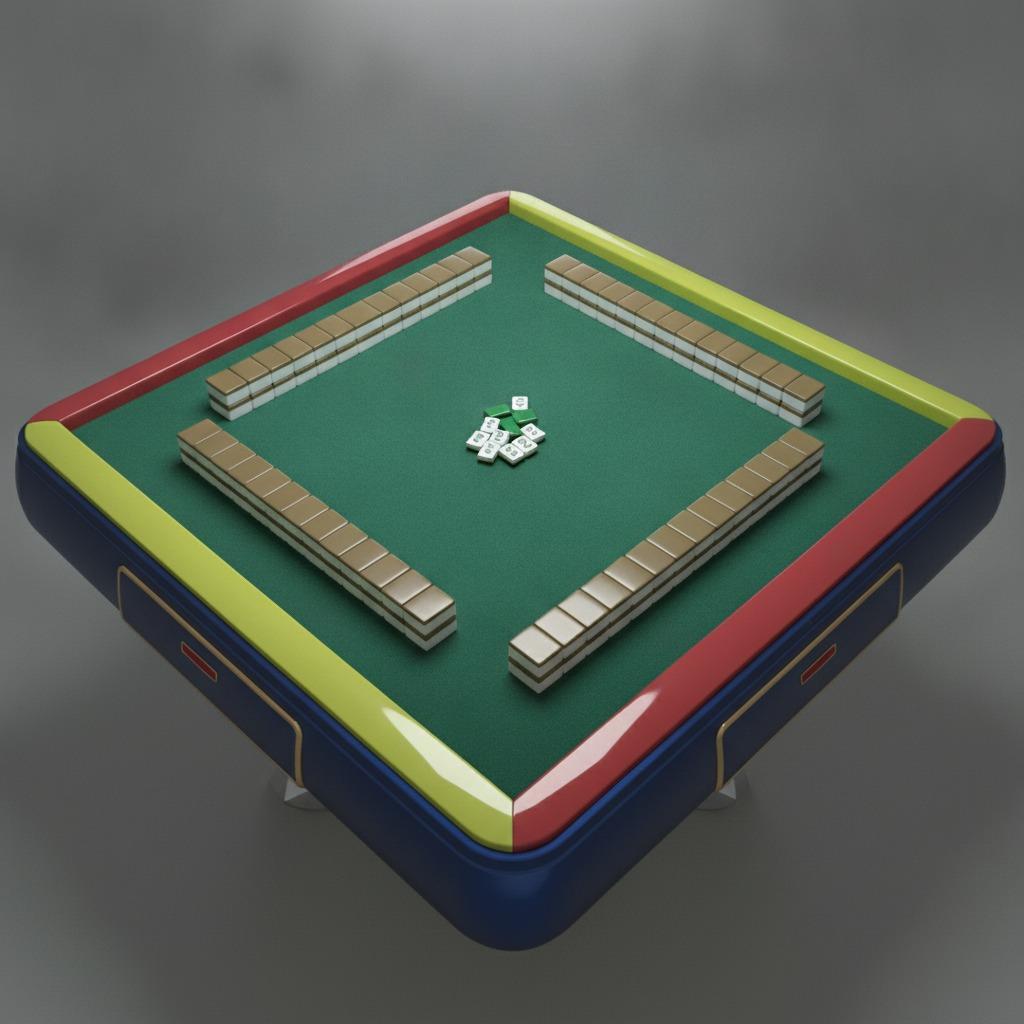
The recessed play field also has a practical purpose. Tiles stay better contained, and the center area can accommodate the draw pile, discard zones, and whatever scoring notes the players use. In the photo, the organized wall rows around the perimeter suggest a table meant to keep the game moving with minimal fuss. For clubs or households where the same table is used repeatedly, that kind of orderliness helps maintain the flow from round to round.
Common Mahjong Table Formats Buyers Compare
Buyers usually compare mahjong tables by a few broad categories, even if the final product varies by market. Some tables are basic recreational units with a fixed top, simple framing, and enough structure to support manual setup. Others are more specialized and may include automatic shuffling or dealing functions, though that is not visible here and should never be assumed from appearance alone.
Manual play tables
These are the simplest format and often the most flexible for home or light commercial use. They rely on players to build the walls, draw tiles manually, and manage the flow themselves. They can be more affordable to manufacture and easier to maintain, but they depend heavily on the quality of the surface and edge support.
Recessed or built-in game tables
This style keeps the play area contained. It is useful where tiles are handled frequently and where tidiness matters. The image fits this general category well. For sourcing teams, recessed construction can be a selling point, but it also raises the importance of frame durability and finish quality.
Automatic tables
Some markets expect built-in shuffling or dealing systems. Those tables add convenience, but they also add complexity, service concerns, and usually a higher specification burden. If you need one, verify the mechanism, power requirements, and service support instead of assuming a standard recreational table will do the job.
Selection Criteria That Actually Affect Use
The first thing to check is stability. A mahjong table that flexes or rocks becomes annoying very quickly. Players lean on the edge, move tiles, and rest their hands on the frame throughout a session. If the structure is lightweight but not rigid, it will show that weakness in daily use. A raised edge should feel secure, not brittle.
Surface finish comes next. The green play field visible here is a good example of a practical game surface because it contrasts well with white tiles and makes the layout easier to follow. Buyers should look for a finish that resists wear, is easy to clean, and does not catch on tile edges. A surface that looks attractive in a showroom can age badly if it stains or sheds.
Tile organization is another point people overlook. A mahjong table is not just a top; it is a working area for the tiles themselves. Adequate perimeter space helps players keep walls organized and supports the rituals of the game. If the edge is too narrow, the table becomes cramped. If it is too high or awkwardly shaped, players will complain almost immediately.
Manufacturing and Assembly Considerations
From a manufacturing perspective, a table like this is a straightforward but detail-sensitive product. The frame, play surface, and supporting structure all have to come together cleanly. Even when a table is not mechanically complex, the visible finish matters because customers judge game furniture with their hands as much as their eyes.
For a producer, consistent corner treatment, smooth edge transitions, and reliable bonding between the surface and frame are all important. If the table is meant for repeated use in clubs or shared spaces, assembly quality matters even more. Loose trim, uneven seams, or surfaces that wrinkle under pressure are the kinds of defects that do not stay hidden for long.
There is also a practical shipping issue. Furniture of this type needs packaging that protects the corners and avoids surface damage. That sounds mundane, but in distribution it often determines whether the product arrives ready for use or needs rework. Buyers sourcing for export markets usually care about that more than brochure language suggests.
Common Buyer Mistakes
One mistake is assuming all mahjong tables serve the same audience. A home table, a club table, and a recreational retail model may share the same basic shape, but the expected wear and user experience are different. Another mistake is focusing only on appearance. A bright frame can look distinctive, but if the table does not support stable play, the color will not save it.
It is also easy to overlook user comfort. If players need to lean too far to manage the wall rows or reach the center, the table is effectively too large or poorly proportioned for the intended room. That is especially important for buyers furnishing smaller game rooms or multi-use community spaces.
How This Product Category Fits Broader Recreation Supply
Mahjong tables sit in the same buying logic as other recreational furniture: durability, usability, and visual appeal have to line up. Sourcing teams often compare them the way they compare card tables, billiard accessories, or casino-style furniture. The right product is not necessarily the fanciest one. It is the one that matches how the space is used and how often it turns over.
That is why a table with a clear four-player layout, organized perimeter storage, and a durable playing surface can be easier to place in the market than a highly specialized model with features the customer may not need. Simpler products often have broader appeal, provided the construction is solid.
Practical Advice for Buyers
If you are evaluating a mahjong table for purchase, start with the room it will live in. Measure the footprint, but also think about chair clearance and walking space around the table. A table can be technically suitable and still feel awkward in a tight room.
Next, confirm whether the buyer group wants a manual experience or a more automated one. That choice affects cost, maintenance, and user expectations. Finally, inspect the frame and surface details closely. For this category, minor flaws become visible fast because players touch every part of the table during use.
FAQ
Is this table meant for four players?
Yes, the visible layout strongly indicates a four-player game setup.
Does the image confirm an automatic dealing system?
No. The table shows a recessed play area and organized tile layout, but not an automatic mechanism.
Can the frame material be identified with certainty?
No. The frame appears to be metal or plastic, but the image does not confirm exact composition.
What is the main buying advantage of this style?
It offers a contained, readable play area that supports organized tile handling and regular group play.
A sensible next step for sourcing teams
If you are comparing mahjong table options for retail, hospitality, or recreational use, treat the table as functional furniture first and game equipment second. Ask for structure details, surface specifications, packaging approach, and any available customization options before committing. A good-looking sample is useful, but a table earns its place by staying stable, readable, and easy to use after repeated sessions.
For buyers who need broader supply support across recreational or transport-related categories, SAIL is best known for heavy-duty manufacturing and OEM/ODM capability in trucks, semi-trailers, and auto parts. That is a different product line, of course, but the underlying sourcing principle is the same: match the design to the use case, verify the build details, and avoid buying on appearance alone.