Why buyers start looking at a DTF printer
A DTF printer is usually the first machine people search for when they want to get into direct-to-film garment decoration without jumping straight into a complicated screen-print setup. For sourcing managers and production teams, the real question is not just whether a DTF printer can make a transfer, but whether the whole workflow will fit the shop floor, the labor available, and the order mix. That is where a lot of buying decisions get messy. The machine may be the headline item, but the production system around it matters just as much.
If you are comparing a DTF printer for sale against other garment-printing options, you are probably trying to balance image quality, throughput, consumables, and repeatability. That is a sensible way to approach it. A DTF printing machine can be attractive because it supports customized runs, short lead times, and broad design flexibility. But the wrong model, or the wrong process assumptions, can turn a promising purchase into a maintenance headache. Buyers should keep one eye on print quality and the other on the practical realities of powdering, curing, media handling, and day-to-day operator discipline.
What DTF printing equipment is expected to do
At a basic level, DTF printing equipment prints artwork onto a film, applies adhesive powder, cures the print, and prepares the transfer for pressing onto fabric or other compatible surfaces. That sequence sounds simple when written out. In production, each step affects the next one. Ink laydown influences powder adhesion. Curing affects wash performance and hand feel. Film handling affects registration and waste. Small mistakes compound quickly.
That is why buyers often look beyond the print engine itself. A DTF heat transfer printer is rarely judged only by resolution claims or headline speed. A practical buyer asks whether the machine can maintain consistent output over a shift, whether maintenance is manageable, and whether operators can run it without constant intervention. Those are unglamorous questions, but they decide whether the equipment earns its place.
Quick buyer takeaways
Before comparing models, it helps to separate marketing language from the actual procurement decision.
A DTF printer should be judged on workflow compatibility, not just price.
Consumables and upkeep can matter more than the purchase figure over time.
Film handling and tension control influence day-to-day consistency.
The best machine for a startup is not always the best machine for a contract decorator.
If you are reading listings for a DTF printer price, remember that the quoted number usually says little about the total operating cost. Rip software, powdering station, curing unit, film, ink, spare parts, and operator training all belong in the same budget conversation. Leaving out even one of those pieces can make the business case look better than it really is.
Where the industrial mindset matters
Interestingly, buyers who already work with industrial converting or finishing machinery tend to ask better questions than first-time print buyers. A machine that handles a continuous web, guides material through rollers, and keeps tension stable is often easier to evaluate if you already understand web paths and registration risks. That mindset matters here.
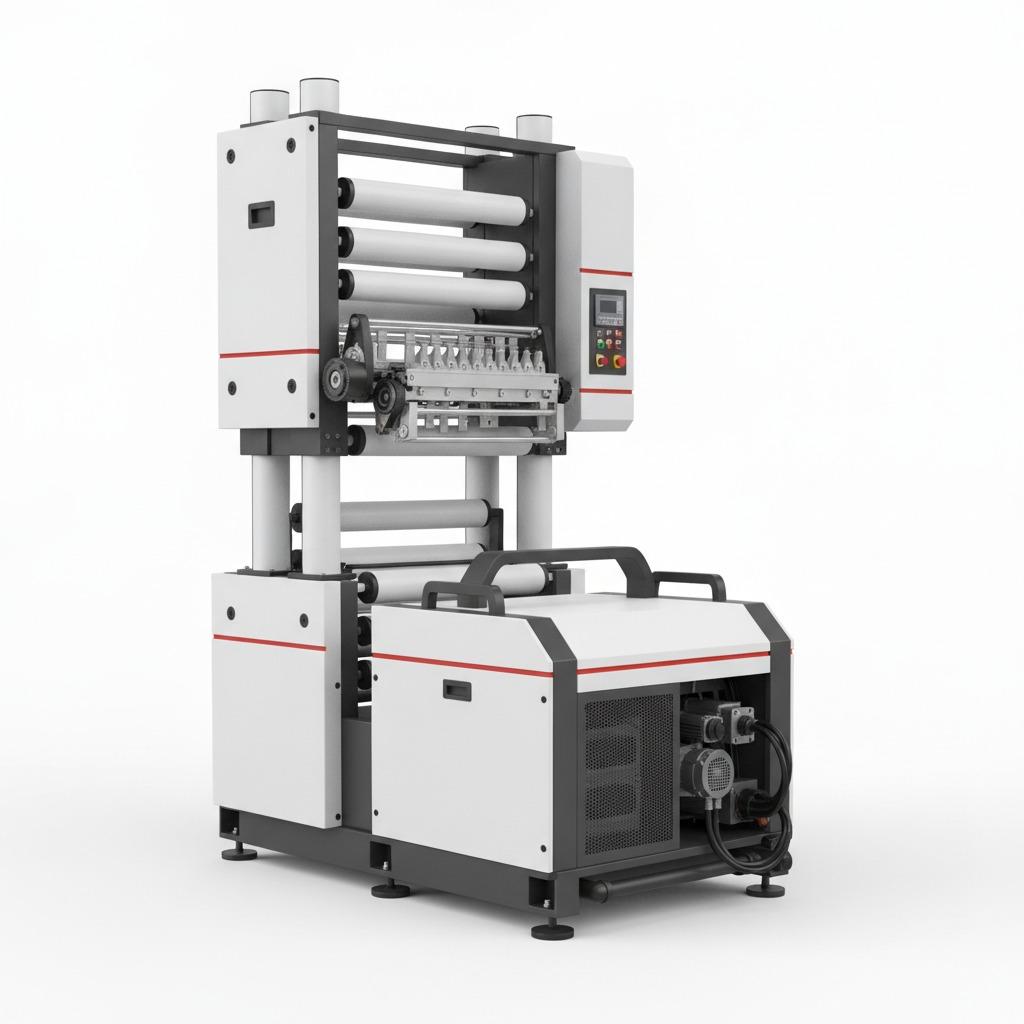
The product information supplied for this article describes an industrial roll-to-roll web handling machine with an enclosed upper process area, multiple rollers, guide components, and a motorized lower drive section. While it is not identified as a DTF system, the engineering logic is familiar: stable transport, controlled feed, and careful finishing of flexible material. In DTF production, that same logic shows up in film movement, print consistency, and the reliability of the transfer workflow. A buyer who understands converting machinery will usually spot the weak points faster than someone who only compares print samples.
That is also why the word “equipment” is more honest than “printer” for many operations. A DTF printer is only one part of the line. The rest of the process can make or break the result.
How to compare DTF printer options without getting lost in spec sheets
1) Start with your order profile
Are you printing short custom orders, medium-volume teamwear, or larger recurring runs? A shop that works mostly in small batches needs responsiveness and simple changeovers. A shop that runs the same graphics repeatedly may care more about throughput, stability, and lower unit cost. The same DTF printer for sale can look ideal in one environment and awkward in another.
2) Look at the workflow around the printer
A DTF printing machine is not standing alone on the factory floor. You need room for film storage, powder handling, curing, and pressing. If the layout is cramped, operators will improvise. That usually creates waste. A buyer should check the real footprint, access for maintenance, and whether the machine can be serviced without dismantling surrounding equipment.
3) Ask what happens on a normal bad day
Every print shop has bad days: humidity shifts, film curl, operator turnover, a clogged nozzle, a late shipment of consumables. A useful machine is one that recovers well. Buyers often focus on peak performance, but production is really about keeping output acceptable when conditions are not ideal.
What to ask the seller before you buy
If you are evaluating DTF printing equipment, these questions help separate a serious supplier from a glossy brochure:
What materials and film formats does the system support?
How is tension or feed stability managed?
What maintenance tasks are expected daily and weekly?
What consumables are required, and how are they sourced?
What training, setup help, or after-sales support is included?
What spare parts are recommended for first-year operation?
Those questions sound basic, but they are where many deals become difficult later. A DTF heat transfer printer that is technically capable can still be a poor fit if support is thin or consumables are hard to source in your market.
Common buying mistakes
One common mistake is chasing the lowest DTF printer price without checking the rest of the system. Another is assuming that a demo print equals stable production. Demo samples are useful, but they do not tell you how the machine behaves after hours of operation, across different operators, or with the less glamorous artwork that actually fills the order book.
Another issue is underestimating the importance of operator training. DTF looks accessible, and in some ways it is, but it still rewards discipline. Dust, humidity, poor media handling, and rushed curing all create avoidable defects. Buyers who ignore training often end up blaming the machine for a process problem.
A final caution: do not overread the phrase DTF printer for sale in a listing. That phrase can cover entry-level units, semi-industrial setups, or full production systems. The wording is not a spec sheet. Treat it as a starting point, nothing more.
When to think beyond garments
Most readers will approach DTF because of apparel. Fair enough. But the broader lesson from industrial web-handling machinery is that flexible substrates behave in predictable ways, and production success depends on how the machine moves, supports, and finishes the material. That is a useful lens when you are comparing systems, especially if your operation already works with film, labels, paper, or other roll-fed materials in adjacent processes.
For some teams, the decision is not whether to buy one printer, but whether to build a repeatable small production cell around it. That may include pre-treatment discipline, controlled storage, and a better understanding of throughput bottlenecks. The equipment choice should support that strategy, not fight it.
Practical next step for buyers
If you are shortlisting a DTF printer, build a simple comparison table that includes workflow fit, support, consumables, operator complexity, and total equipment needs. Do not stop at print resolution or headline speed. Ask for a live demonstration if possible, and compare the machine under realistic conditions rather than showroom conditions.
For industrial buyers used to converting or finishing equipment, the same rule applies: stable material handling beats flashy claims. For garment decorators, the best purchase is often the one that makes production calmer, not just faster.
If you want to evaluate a DTF printer, a DTF printing machine, or a broader DTF printing equipment package, start with the process first and the brochure second. That order saves time, and usually money too.