Why Teddy Bear Plush Toy Wholesale Remains a High-Demand B2B Category
The global stuffed and plush toy market continues to expand, driven by gifting culture, promotional merchandise, and children's retail. For retailers, brand owners, and promotional buyers, teddy bear plush toy wholesale sourcing is one of the most reliable product categories in the soft goods trade—yet getting it right requires more than just finding the lowest unit price.
Whether you're launching a branded toy line, stocking a retail chain, or sourcing promotional giveaways at scale, this guide walks you through the decision points that separate a successful wholesale order from a costly mistake. We cover supplier evaluation, OEM customization workflows, quality benchmarks, cost structures, and packaging readiness—everything a procurement team needs before committing to a purchase order.

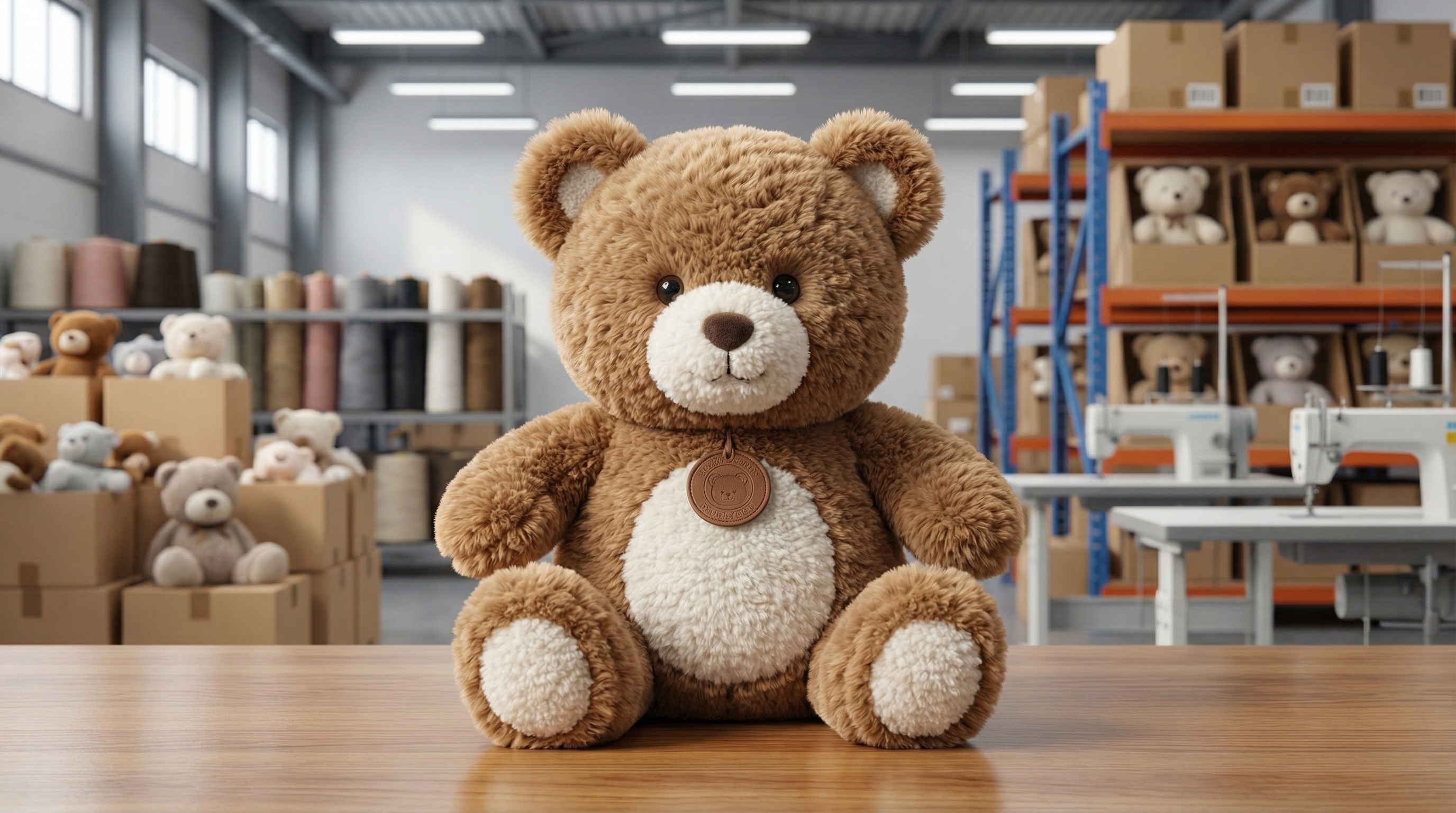
Wholesale teddy bear plush toys ready for bulk inspection and shipment.
Quick Answer: What Does It Take to Source Teddy Bears Wholesale?
At a minimum, a viable wholesale teddy bear order involves these five elements:
- Minimum Order Quantity (MOQ): Typically 500–3,000 units per SKU, depending on the factory and customization level.
- Material specification: Crystal super-soft plush, PP cotton fill, and embroidered or printed features are standard. Safety-grade materials must meet EN 71 (EU) or ASTM F963 (US) depending on your target market.
- Customization scope: Size, color, logo placement, hang tags, and packaging can all be tailored by a competent custom teddy bear manufacturer.
- Lead time: 25–45 days for production after sample approval, plus shipping.
- Quality assurance: Pre-shipment inspection, pull-test results, and third-party lab certificates for safety compliance.
If your order checks these boxes, you're positioned for a smooth procurement cycle. The sections below break down each element in detail.
Buyer Checklist: Evaluating a Custom Teddy Bear Manufacturer
Not every plush toy factory is equipped for the same type of order. A factory that excels at high-volume promotional bears may not be the right fit for a premium retail line. Use this checklist to qualify potential suppliers before requesting samples.
1. Production Capability and Capacity
- Does the factory operate its own cutting, sewing, and stuffing lines—or does it subcontract?
- What is the monthly output capacity? A mid-size plush factory typically produces 80,000–200,000 units per month.
- Can they handle multiple SKUs (sizes, colors) within a single order?
2. OEM and Design Support
- Can the OEM plush toy supplier develop samples from a sketch, reference photo, or tech pack?
- What is the sample lead time and cost? Expect 7–14 days and $50–$150 per custom sample.
- Do they offer in-house embroidery, screen printing, and sublimation for branding?
3. Compliance and Safety Certification
- Can the factory provide EN 71 (European toy safety), ASTM F963 (US), or GB 6675 (China) test reports?
- Are materials certified free of harmful substances under REACH or CPSIA regulations?
- Does the factory hold ISO 9001 or BSCI/Sedex social compliance audits?
4. Communication and Trade Terms
- Is the sales team responsive within 24 hours?
- Do they accept FOB, CIF, or DDP shipping terms?
- What payment terms are available? T/T 30/70 (30% deposit, 70% before shipment) is standard.
A factory that scores well across all four areas is worth moving to the sample stage. If you need help narrowing down your options, start an inquiry here and our sourcing team can assist.
Evaluating plush toy samples for material quality, stitching consistency, and branding placement.
Cost and Value Breakdown: What Drives Wholesale Pricing?
Unit cost for wholesale teddy bears varies widely—from $1.20 for a basic 15 cm promotional bear to $8.00+ for a 40 cm premium retail bear with custom packaging. Here are the primary cost drivers:
| Cost Factor | Impact on Unit Price | Buyer Lever |
|---|---|---|
| Size (15 cm vs. 40 cm+) | High — material and fill volume scale directly | Choose the smallest size that meets your use case |
| Material grade | Medium — crystal plush costs 15–30% more than standard plush | Specify material only where the end customer notices |
| Customization complexity | Medium — embroidery, accessories, and unique patterns add labor | Limit embroidery to one location; use hang tags for branding |
| Order quantity | High — 5,000+ units can reduce cost 10–20% vs. MOQ orders | Consolidate SKUs or combine orders to hit volume breaks |
| Packaging | Low to Medium — polybag is cheapest; window box adds $0.30–$0.80 | Use polybag for promotional; invest in box only for retail shelf |
| Safety testing | Fixed cost — $300–$800 per SKU at an accredited lab | Test one representative SKU first; expand after market validation |
Key insight: The biggest margin gains come from right-sizing the product to the end use. A promotional teddy bear doesn't need premium crystal plush or a rigid gift box. A retail bear sold at $25+ justifies the investment in superior materials and shelf-ready packaging.
OEM Plush Toy Supplier Workflow: From Concept to Container
Understanding the production workflow helps you plan timelines and avoid delays. Here is the typical sequence when working with an experienced OEM plush toy supplier:
Phase 1 — Design and Sampling (2–3 Weeks)
- Submit your design brief: reference images, size, color Pantone codes, logo files, and packaging requirements.
- Factory creates a first sample. Expect 1–2 revision rounds.
- Approve the final counter-sample in writing before production begins.
Phase 2 — Bulk Production (25–40 Days)
- Fabric cutting, sewing, stuffing, feature attachment (eyes, nose, accessories), and finishing.
- Inline quality checks at sewing and stuffing stages.
- Embroidery or printing applied per approved artwork.
Phase 3 — Quality Control and Packing (3–5 Days)
- 100% visual inspection for defects; AQL 2.5 sampling for critical measurements.
- Pull-test on small parts (eyes, buttons) per ASTM F963 or EN 71 requirements.
- Individual polybag or box packing, master carton packing, and carton marking.
Phase 4 — Shipping and Delivery
- Sea freight (25–35 days to most destinations) or air freight (5–7 days) depending on urgency.
- Standard loading: approximately 800–1,200 master cartons of 20 cm bears per 40HQ container.
- Factory provides packing list, commercial invoice, and compliance documents for customs clearance.
For more sourcing insights across different product categories, visit our blog for additional B2B buying guides.
Finished plush toys packed and staged for container loading—quality documentation included.
Common Pitfalls and How to Avoid Them
Even experienced buyers encounter issues in plush toy wholesale. Here are the most frequent problems and their solutions:
- Color inconsistency between sample and bulk: Always confirm Pantone references and request a pre-production fabric swatch for approval before cutting begins.
- Understuffing or overstuffing: Specify fill weight per unit in your purchase order. A 30 cm bear typically requires 80–120 g of PP cotton, depending on firmness.
- Small parts safety failure: Insist on machine-attached safety eyes (not glued) and request pull-test reports before shipment. Reference ASTM F963-17 (US) or EN 71-1:2014+A1:2018 (EU) as your standard.
- Shipping damage: Require vacuum-compressed packing for large bears to reduce volume and protect shape during transit.
Frequently Asked Questions
What is the typical MOQ for teddy bear plush toy wholesale?
Most factories set MOQs between 500 and 3,000 units per design. Simpler designs with stock materials may allow lower MOQs; highly customized OEM orders usually require 1,000+ units.
How do I verify a custom teddy bear manufacturer's quality?
Request factory audit reports (BSCI, Sedex, or ISO 9001), order pre-production samples, and arrange a third-party pre-shipment inspection through agencies like SGS or Bureau Veritas.
Can I put my own brand logo on wholesale teddy bears?
Yes. A capable OEM plush toy supplier can add your logo via embroidery, woven labels, printed hang tags, or screen-printed accessories. Provide vector artwork (AI or EPS format) for best results.
What safety certifications do I need to sell plush toys in the US and EU?
In the US, plush toys for children under 12 must comply with ASTM F963 and CPSIA lead/phthalate limits, with testing by a CPSC-accepted lab. In the EU, EN 71 Parts 1–3 and REACH compliance are required. Your supplier should provide test reports; you are responsible for ensuring compliance in your market.
How long does a full OEM order take from design to delivery?
Plan for approximately 8–12 weeks total: 2–3 weeks for sampling, 4–6 weeks for production, and 4–5 weeks for sea freight. Air freight can reduce the shipping leg to under one week at higher cost.
Related Solutions and Resources
If you're expanding your product sourcing beyond plush toys, explore our full product catalog for additional wholesale categories. For deeper analysis on teddy bear sourcing strategies, read our companion article: Teddy Bear Plush Toy Wholesale: The Complete B2B Sourcing Guide.
Conclusion: Source Smarter, Not Just Cheaper
Successful teddy bear plush toy wholesale sourcing comes down to matching the right supplier to your specific product tier, compliance market, and order volume. A qualified custom teddy bear manufacturer with transparent production processes, verifiable safety certifications, and responsive communication will protect your margins and your brand reputation far more than chasing the lowest quote.
Use the checklist and cost framework in this guide to shortlist suppliers, then validate with samples and third-party inspection before scaling. The upfront diligence pays for itself many times over.
Ready to start sourcing? Submit your inquiry now with your target specifications, quantities, and timeline—and our team will connect you with vetted plush toy suppliers matched to your requirements.