What a Mahjong Table Needs to Do Well
A mahjong table is not just a piece of game furniture. For players, it shapes the pace of the match, keeps the table organized, and decides whether a long evening feels smooth or awkward. For buyers, the real question is whether the table fits the way people actually play: four players around a square surface, enough room for tiles, a stable frame, and a finish that allows easy sliding without turning the room into a noisy struggle.
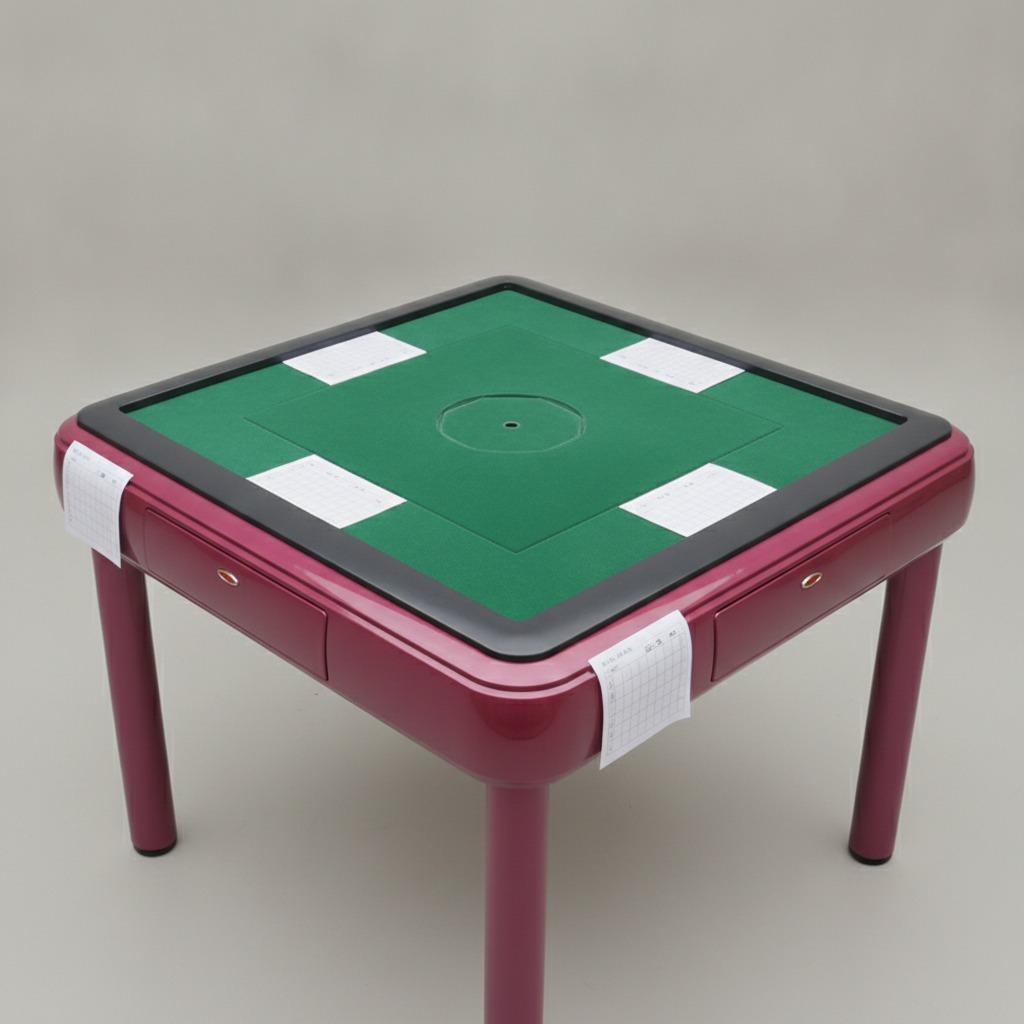
The table described here follows that basic logic. It is a square, four-player setup with a green playing surface, a pink or magenta outer frame, and edge areas that appear designed for tile stacks or storage. Paper score sheets sit at the sides, which is a small detail but an important one. It suggests the table is meant for practical, social play rather than a decorative display piece. That matters because buyers often choose on appearance first and regret it later when the table is uncomfortable to use.
Quick Reference: What to Look for Before Buying
If you are comparing a mahjong table for home use, club play, or casual group gaming, the most useful checklist is simple:
- Four-player layout with clear seating sides
- Square table geometry for balanced reach
- Smooth central surface for tile movement
- Edge storage or placement areas to keep tiles organized
- Stable corners and a frame that can handle repeated use
- A surface finish that is easy to clean after long sessions
That sounds straightforward, but in practice the details separate a decent table from one that becomes annoying after a few games. A table that looks fine in a product photo may still wobble, trap dust at the seams, or leave players constantly reaching too far for tiles. Buyers should keep an eye on structure first and styling second.
How This Table Format Supports the Game
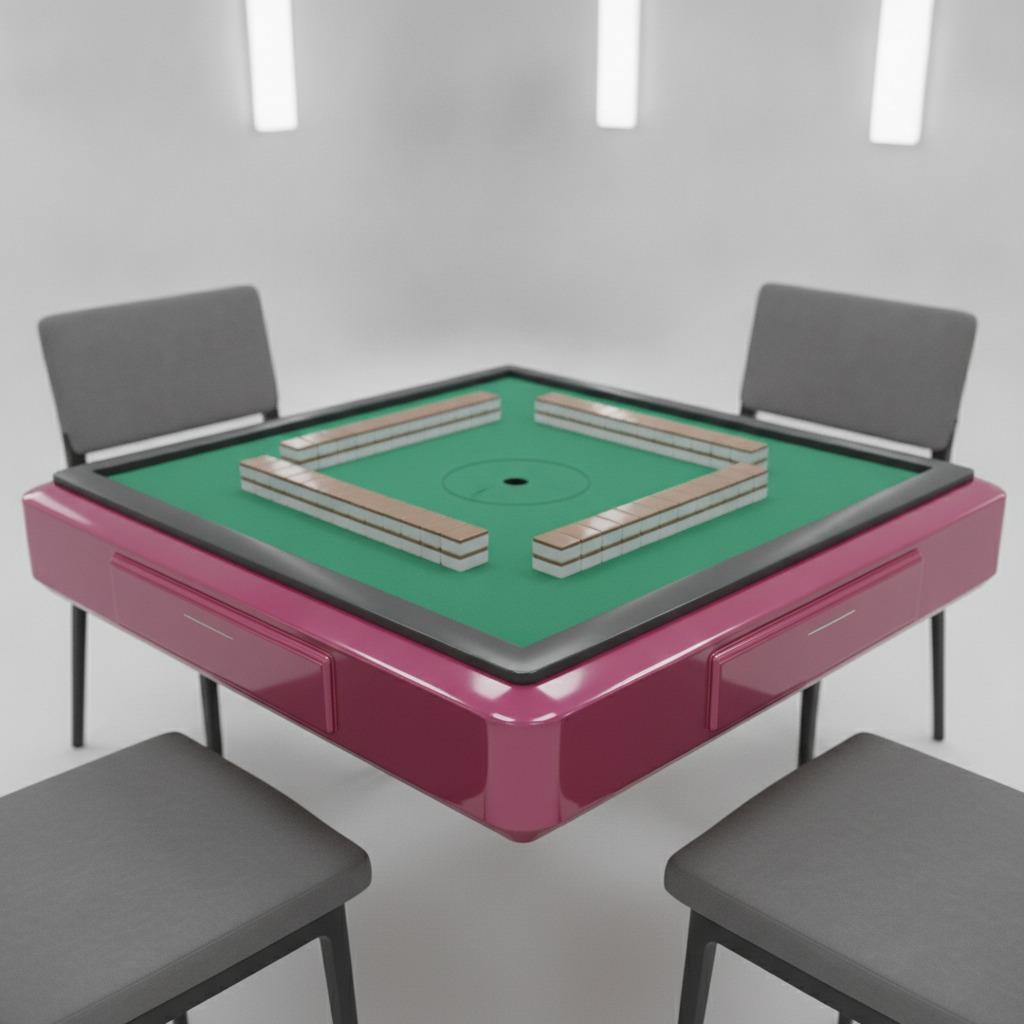
The visible structure suggests a tabletop game equipment format built around four-player play. A central play field gives everyone access to the action, while perimeter areas can hold stacked tiles or blocks. That is a useful arrangement because mahjong-style games depend on controlled movement: tiles are drawn, arranged, discarded, and sometimes shuffled across the surface many times in a single round.
The green felt-like or vinyl surface is a familiar choice for this kind of equipment. It helps tiles move with less friction than bare wood or gloss laminate, and it reduces the harsh clatter that can make long sessions tiring. The frame, with its rounded corners and visible fasteners, appears to be built for regular handling rather than luxury presentation. That is not a drawback by itself. In game furniture, practical construction usually matters more than a polished finish that looks nice on day one and ages badly after that.
Why the edge areas matter
Tile games generate clutter quickly. Loose tiles, stacked sets, score sheets, and personal hands all compete for space. Edge storage or placement zones help keep the center clear and reduce accidental spills. In a club setting, that kind of layout saves time. In a family setting, it saves arguments. Small thing, big effect.
Manual, Automatic, or Something In Between?
From the available information, the exact mechanism is unclear. The table may be a manual mahjong table, an automatic tile-mixing style table, or a folding game table with built-in tile handling. Buyers should be careful here. Many product photos show a surface arranged for tile management, but that does not prove the table has motorized shuffling or dealing features.
If you need automatic mixing, confirm the mechanism directly. Ask how the table handles tile gathering, whether it uses powered components, and whether the system changes the way the playing surface is accessed or cleaned. If you only need a stable social gaming table, a simpler manual design may be the better purchase. It is usually easier to maintain and less likely to create service issues later.
Materials and Build: What Can Be Said Safely
The visible construction suggests a laminated top or coated game surface with a molded or coated outer frame. The square geometry and corner screws imply assembled furniture rather than a single molded shell. That is typical for recreational equipment in this category, especially where a balance is needed between cost, durability, and easy mass production.
One practical point for sourcing teams: the surface finish should be judged by use, not by appearance alone. A smooth green top may look ideal, but if the material is too soft it can mark easily. If it is too slick, tiles may slide too much. If seams are rough, players will notice immediately when setting tiles or moving score sheets. The best tables usually feel calm in use, which is not something buyers always think to test until after delivery.
Buyer Decision Factors That Actually Matter
For engineers, sourcing managers, and product teams, the decision is usually less about the game itself and more about the user experience over time. A mahjong table should support repeat play without becoming fragile or fiddly. That means paying attention to the following points.
Stability
Because players lean in, shift weight, and handle tiles constantly, the frame must stay steady. Even slight wobble can make the table feel cheap. If the table is intended for clubs or frequent home use, ask how the legs, joints, and fasteners are reinforced.
Surface usability
The playing field should let tiles slide smoothly, but not uncontrollably. It also needs to tolerate repeated cleaning. Paper score sheets on the edges are a clue that the table is meant for real sessions, not just display.
Space management
Mahjong tables work best when each player has defined space. Edge storage zones help, but the table must still leave enough central room for tile operations. A table that is too small can feel cramped very quickly, especially in longer casual games.
Durability of corners and frame
Rounded corners are useful because they reduce wear and make the table easier to use in tight rooms. Visible screws and fasteners can be a positive sign if they are placed cleanly and the structure is solid. They are not glamorous, but they are often what keeps a table serviceable after many weekends of play.
Common Mistakes Buyers Make
One common mistake is assuming all mahjong tables are similar. They are not. A table for relaxed family play has different priorities from one used in a club where the table may be occupied for hours at a time. Another mistake is focusing too much on color or styling. The magenta outer frame in this table gives it a noticeable look, but the real value is in the layout and build.
Another practical error is ignoring maintenance. Game tables get touched, bumped, spilled on, and cleaned often. If the material is difficult to wipe down, the table becomes less attractive after a short period. Buyers should also confirm whether scorekeeping is intended to be manual. In this case, the presence of paper score sheets suggests that it is, which is perfectly normal. Still, it helps to know before ordering accessories separately.
Who This Type of Table Fits Best
This format suits home mahjong play, social gaming groups, family gatherings, and organized casual use where the game is part of the evening, not a formal tournament setup. The square layout and integrated edge areas make it practical for four players. It also suits buyers who want a table that looks more finished than a folding card table but does not necessarily require a complex automatic mechanism.
For distributors, this kind of product sits in a useful middle ground. It is specialized enough to have clear demand, but broad enough to appeal to clubs, households, and leisure venues. The main sales story is usability, not novelty.
A Practical Note for Procurement and Customization
Because the exact mechanism, dimensions, and material specifications are not supplied here, any serious buying decision should be based on direct sample review or detailed technical confirmation. If a supplier offers OEM or ODM service, that can be useful for adapting surface color, frame style, tile storage arrangement, or overall proportions. But customization should be tied to actual use conditions, not just a catalog image.
That caution is worth repeating. Game tables often fail not because the concept is wrong, but because the buyer did not confirm how the product will be used day to day. A club table, a family table, and a retail display model are not the same thing.
FAQ
Is this table only for mahjong?
Not necessarily. The layout and surface also suit other four-player tile games or casual tabletop play, as long as the tiles and playing style match the surface space.
Can I tell from the image whether it is automatic?
No. The photo suggests tile handling features, but it does not confirm a motorized or automatic shuffling system.
Why does the table have paper score sheets?
That usually indicates manual scorekeeping, which is common in social and club play. It is a small but useful sign that the table is meant for practical game sessions.
What should I ask a supplier first?
Ask about the mechanism, surface material, frame construction, and whether the table is intended to fold, stay fixed, or support any automatic tile-handling function.
Next Step for Buyers
If you are sourcing a mahjong table for resale, club use, or a private gaming room, start by confirming the table’s structure and play format before discussing styling. The right decision is usually the one that makes the table easy to use for four players, easy to keep clean, and sturdy enough for repeated sessions. Once those basics are clear, the rest becomes much easier to compare.
For product teams and distributors, that is also where a good supplier conversation begins: with the surface, the frame, the tile layout, and the actual user workflow. The details are modest, but they decide whether the table becomes a favorite or just another piece of furniture in the corner.