Teddy Bear Plush Toy Wholesale: The Complete B2B Sourcing & Procurement Guide
For procurement managers, retail buyers, and promotional product coordinators, teddy bear plush toy wholesale represents one of the highest-volume, most versatile categories in the soft goods supply chain. Yet it's also one of the most misunderstood. Unit costs vary wildly depending on fill type, fabric grade, and order structure. Lead times swing by weeks based on customization depth. And a single quality misstep—wrong eye attachment method, inconsistent fill weight—can trigger safety recalls or brand damage.
This guide cuts through the noise. Whether you're placing your first bulk teddy bear order or optimizing an existing supply line, you'll find a practical framework for evaluating suppliers, controlling costs, and ensuring consistent quality at scale.

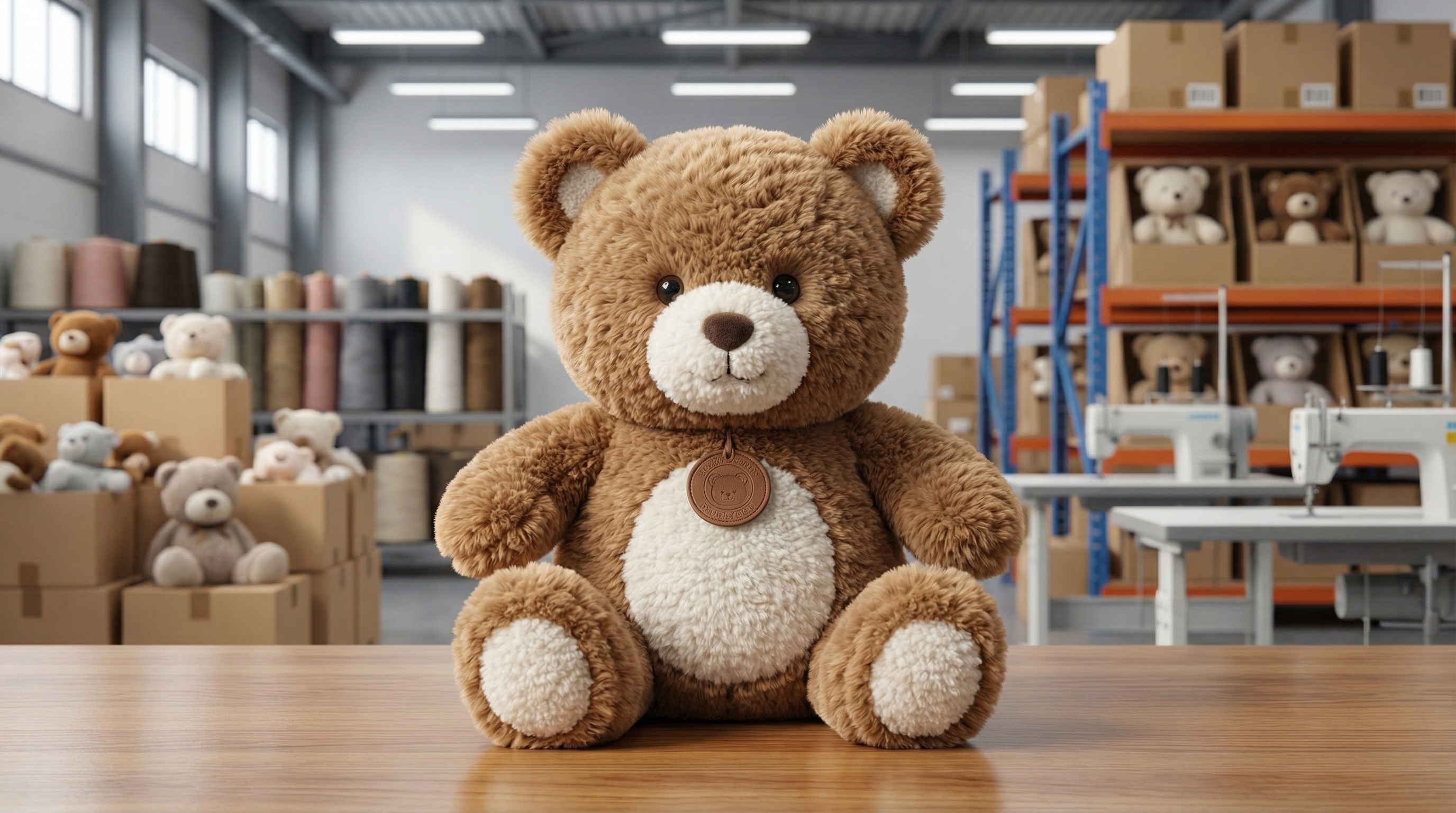
Wholesale teddy bear plush toys ready for B2B distribution—quality starts with the right sourcing partner.
Quick Answer: What Does Teddy Bear Plush Toy Wholesale Actually Involve?
At its core, product sourcing for plush teddy bears means securing a reliable manufacturer who can deliver consistent units—at agreed specs, safety standards, and price points—across repeated production runs. A typical wholesale engagement includes:
- MOQ negotiation — Most factories set minimums between 500–5,000 units per SKU, depending on customization level.
- Material and safety specification — Fabric type (crystal super-soft, short plush, organic cotton), fill material (PP cotton, recycled polyester), and compliance with EN 71 (EU) or ASTM F963 (US) toy safety standards.
- Design and branding — Logo embroidery, custom hang tags, branded packaging, and Pantone color matching for corporate or retail programs.
- Quality control and shipping — In-line inspections, pre-shipment audits, and FOB/CIF logistics planning.
If you need a fast quote or want to discuss specifications, start an inquiry here.
Buyer Checklist: 8 Points to Verify Before Placing a Bulk Teddy Bear Order
Before you commit to any OEM plush toy supplier, run through this checklist. It's built from the most common failure points in wholesale plush procurement:
- Safety certifications on file — Ask for current EN 71, ASTM F963, or CPSIA test reports. A credible supplier will share these proactively, not after you ask twice.
- Pre-production sample process — Expect 7–15 days for a physical sample. Review fabric hand-feel, color accuracy, stitching quality, embroidery sharpness, and overall proportion. Approve in writing before production begins—this becomes your quality benchmark.
- Fill weight consistency — Request a target fill weight per unit (in grams) and a tolerance band (typically ±5%). Inconsistent fill is the #1 cause of "some look flat, some look overstuffed" complaints.
- Seam strength and eye/nose attachment — For children's products, safety-lock eyes and double-stitched seams are non-negotiable. Verify the attachment method during sample review.
- Color batch uniformity — Fabric dye lots vary. Ask how the factory controls color consistency across a 5,000+ unit run.
- Packaging specs — Individual polybag, display box, or bulk carton? Packaging drives per-unit cost and shelf presentation.
- Lead time clarity — Get production time and shipping time as separate line items. "30 days" that actually means 30 days production + 25 days ocean freight is a different commitment than 30 days door-to-door.
- Payment terms and IP protection — Standard terms range from 30% deposit / 70% before shipment. For custom designs, confirm in writing who owns the mold, pattern, and artwork.

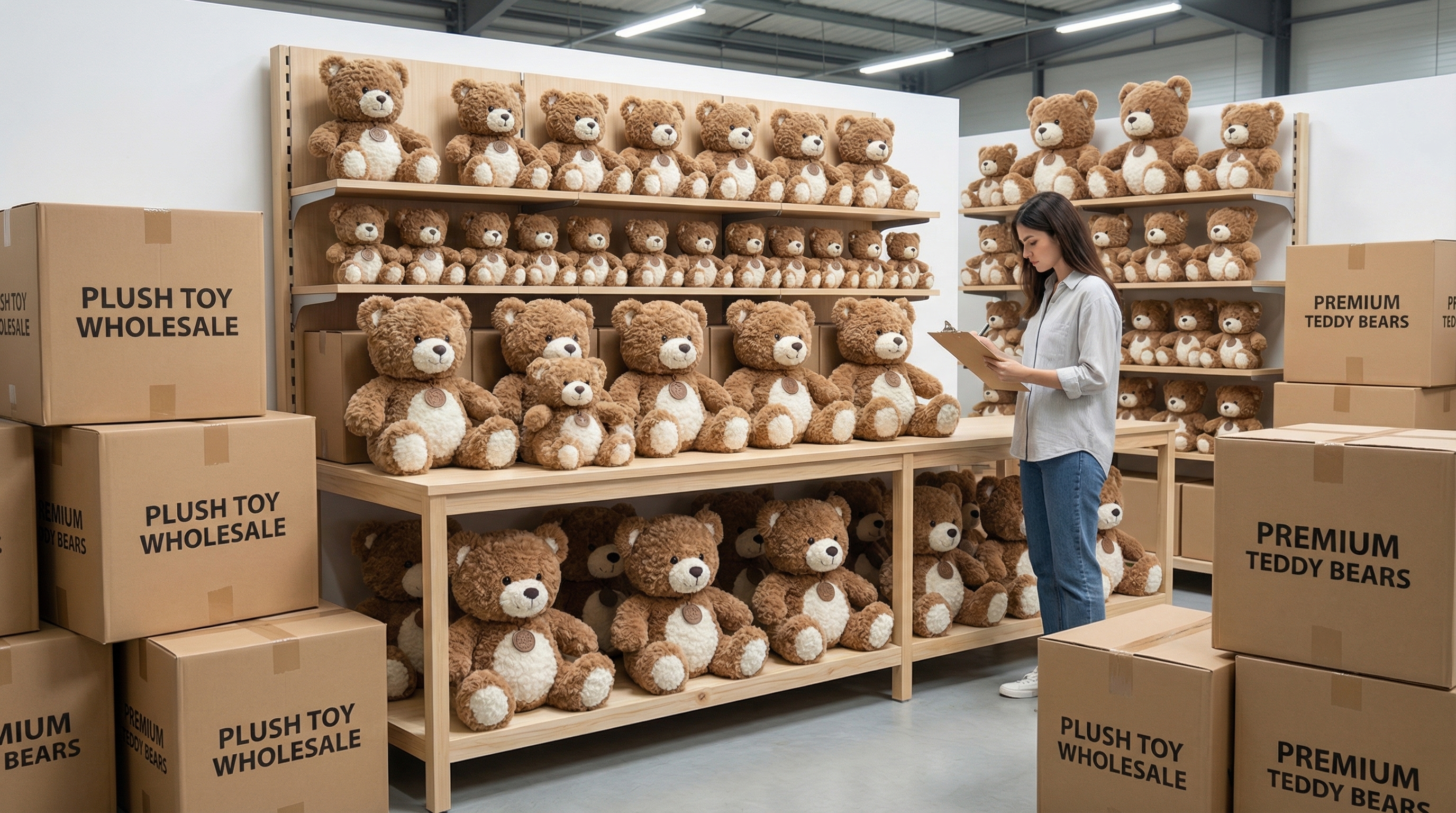
From retail shelves to corporate gift programs, wholesale teddy bears serve diverse commercial applications.
Application Fields: Where Bulk Teddy Bear Orders Create Commercial Value
The wholesale plush toy industry serves a wider range of buyers than most people realize. Understanding your end-use scenario shapes every specification decision:
- Children's retail chains — Shelf-ready SKUs with hang tags, UPC barcodes, and compliance labeling. Typical order: 2,000–20,000 units per style, seasonal replenishment.
- Promotional and corporate gifts — Branded teddy bears with embroidered logos for trade shows, employee appreciation, or customer loyalty programs. Typical order: 500–5,000 units, one-time or annual.
- Carnival, amusement, and claw machine operators — High-volume, cost-optimized plush in standardized sizes. Typical order: 10,000+ units, repeat quarterly.
- Hospital and charity programs — Comfort bears for pediatric wards or disaster relief. Often require hypoallergenic fill and machine-washable construction.
- E-commerce private label — Custom-designed bears sold under the buyer's own brand on Amazon, Shopify, or regional platforms. Requires strong packaging and consistent quality for review-driven channels.
Cost and Value: What Drives Pricing in Teddy Bear Plush Toy Wholesale?
Unit pricing for wholesale teddy bears typically ranges from $1.50–$8.00 USD depending on size, materials, and customization. Here's a compact decision matrix to help you map cost drivers:
| Cost Factor | Budget Tier | Mid-Range | Premium |
|---|---|---|---|
| Size | 15–20 cm | 25–35 cm | 40–60 cm+ |
| Fabric | Standard short plush | Crystal super-soft | Organic cotton / minky |
| Fill | Standard PP cotton | High-loft PP cotton | Recycled polyester / weighted beads |
| Branding | Woven label only | Embroidered logo + hang tag | Full custom design, Pantone match, branded box |
| MOQ | 3,000–5,000 units | 1,000–3,000 units | 500–1,000 units |
| Approx. Unit Cost (FOB) | $1.50–$2.50 | $2.50–$4.50 | $4.50–$8.00+ |
Key insight: Tooling or setup fees for a fully custom design (new pattern, new mold for eyes/nose) typically run $200–$600 one-time. This cost amortizes quickly on orders above 2,000 units but can significantly impact per-unit economics on smaller runs.
OEM Production Workflow: What to Expect from a Custom Teddy Bear Manufacturer
Working with a custom teddy bear manufacturer through an OEM arrangement follows a predictable four-stage workflow. Knowing these stages helps you plan timelines and avoid surprises:
Stage 1: Design Brief & Quotation (Days 1–5)
Submit your target size, color, fabric preference, fill type, logo placement, and packaging requirements. A professional OEM plush toy supplier will return a detailed quotation within 2–5 business days, including unit price tiers by quantity, tooling or setup fees, and estimated lead time.
Stage 2: Sample Development (Days 6–20)
Expect 7–15 days for a pre-production sample. This is your single most important quality gate. Evaluate the sample against your brief and approve in writing before production begins.
Stage 3: Bulk Production & In-Line Inspection (Days 21–50)
During production, request in-line quality checks at 30% and 70% completion. Key checkpoints include seam strength, fill weight consistency, and color batch uniformity. According to ISO 2859-1 (the international standard for sampling procedures in inspection by attributes), an AQL of 2.5 for major defects is standard practice for plush toy production.
Stage 4: Final Inspection, Packing & Shipment (Days 51–60)
Pre-shipment inspection covers finished appearance, packaging integrity, carton labeling, and compliance documentation. Confirm your Incoterm (FOB, CIF, or DDP) and coordinate with your freight forwarder for ocean, air, or rail transport.

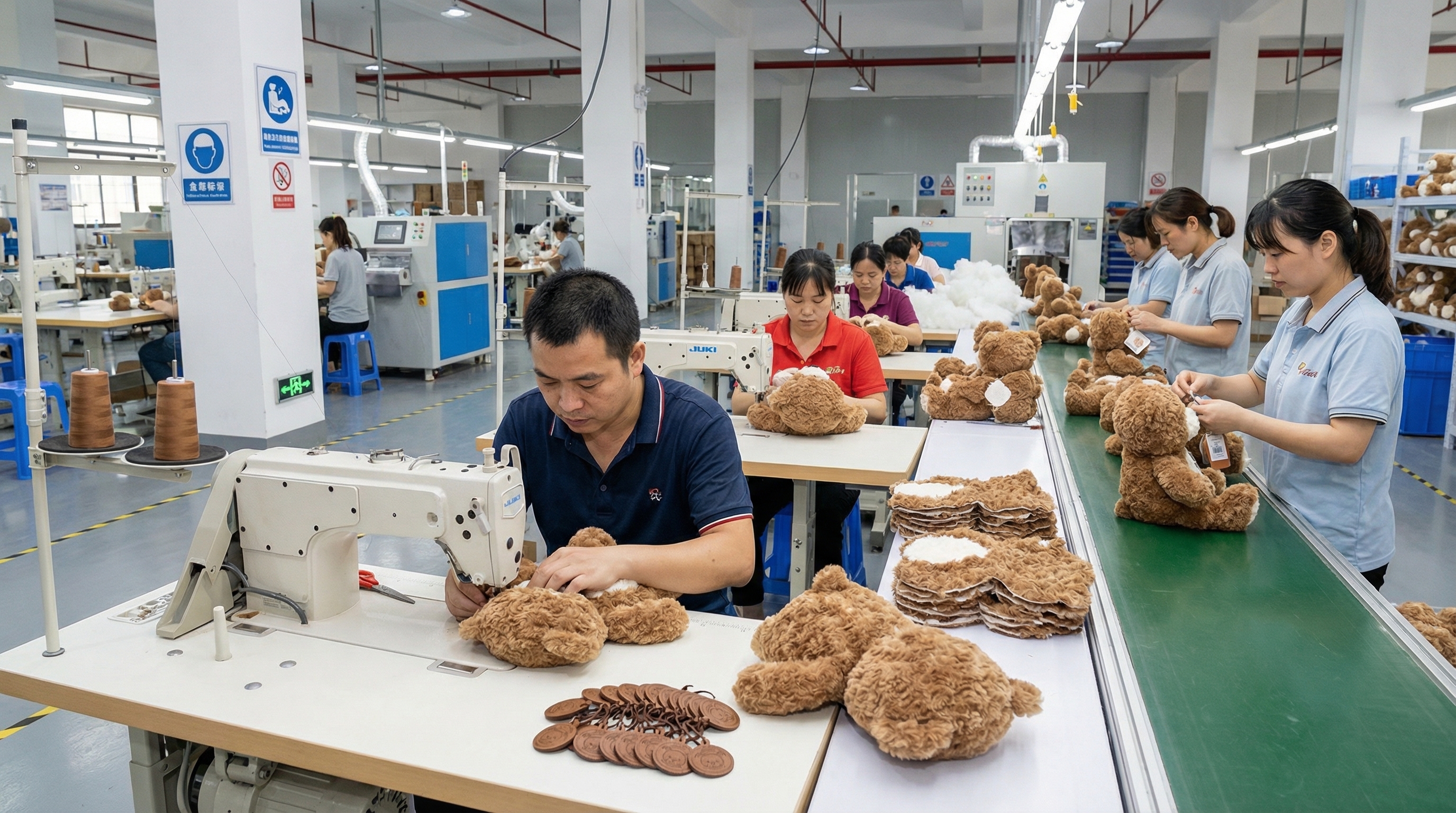
Inside an OEM plush toy production facility—pattern cutting, stitching, and quality inspection stations.
Supply Chain Considerations for Repeat Buyers
For buyers placing recurring orders, supply chain stability matters as much as unit price. Three factors to monitor:
- Fabric availability — Popular plush fabrics can face seasonal shortages, especially in Q3 when holiday production peaks. Lock in fabric reservations 60–90 days ahead of your production window.
- Factory capacity windows — Most plush factories operate at 80–100% capacity from July through October. Place orders for Q4 delivery no later than early summer.
- Shipping volatility — Ocean freight rates and transit times fluctuate. Budget 25–35 days for sea freight from major Asian manufacturing hubs to North American or European ports, and build a 7–10 day buffer into your delivery timeline.
Explore our full product catalog to see available inventory and sourcing options across categories.
Frequently Asked Questions
What is the typical MOQ for teddy bear plush toy wholesale?
Most manufacturers set MOQs between 500 and 5,000 units per SKU. Fully custom designs with new patterns tend toward the higher end; standard catalog styles with logo-only customization can often start at 500 units.
How do I verify that a supplier meets toy safety standards?
Request current third-party test reports for the applicable standard—ASTM F963 for the US market, EN 71 for Europe, or GB 6675 for China. Reports should be issued by an accredited lab (SGS, Bureau Veritas, Intertek, or equivalent) and dated within the last 12 months.
Can I order a mix of sizes and styles in one bulk teddy bear order?
Yes, but each unique SKU (size + color + design combination) typically needs to meet its own MOQ. Discuss assortment packing with your supplier during the quotation stage.
What's the difference between an OEM plush toy supplier and a trading company?
An OEM supplier operates or directly controls the factory floor—giving you better price transparency, faster sample turnaround, and direct quality oversight. A trading company acts as an intermediary, which can simplify logistics but adds a margin layer and reduces your visibility into production.
How long does the entire process take from inquiry to delivery?
For a custom OEM order: approximately 45–75 days from sample approval to goods-ready, plus shipping transit time. Standard catalog items with minimal customization can ship in 20–30 days.
Related Solutions Worth Exploring
If you're building out a broader sourcing program, these resources may be useful:
- Industrial Corrugated Board Buyer Guide — Relevant if you're specifying custom packaging for your plush toy shipments.
- Browse All Products — See our full range of sourcing categories and available inventory.
Conclusion: Source Smarter, Not Just Cheaper
The teddy bear plush toy wholesale market rewards buyers who invest time in supplier evaluation, sample validation, and supply chain planning. The lowest unit price means nothing if fill weights drift, seams fail inspection, or shipments arrive three weeks late for your retail launch window. Focus on manufacturing capabilities, verified safety compliance, and clear communication protocols—and you'll build a sourcing relationship that scales reliably across seasons and campaigns.
Ready to discuss your next bulk teddy bear order? Our team can help you scope specifications, evaluate pricing tiers, and plan production timelines. Submit your inquiry now and receive a detailed quotation within 2–5 business days.