In today's rapidly advancing technological landscape, the demand for smaller, faster, and more powerful electronic devices has pushed the boundaries of electronic engineering. At the heart of this innovation lies the need for increasingly sophisticated components, making a deep understanding of Complex PCB Assembly more critical than ever. As devices shrink and functionalities expand, the circuit boards that power them must accommodate more components in less space, requiring a level of precision and expertise that defines modern electronics manufacturing. Choosing the right partner for this intricate process is not just a procurement decision; it's a strategic move that can determine the success and reliability of a final product.
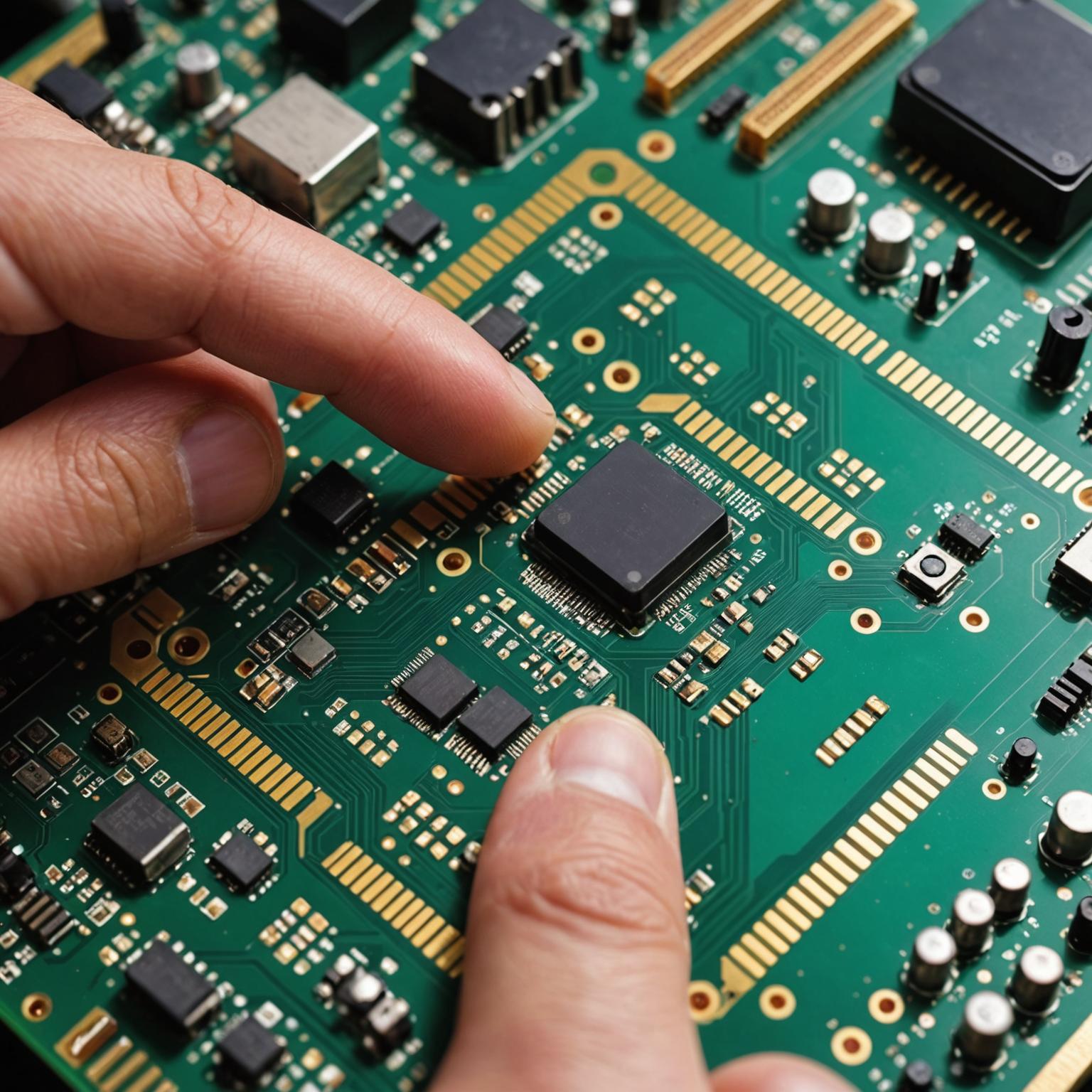
The term 'complex' in the context of a Printed Circuit Board assembly goes far beyond simply having many components. It refers to a confluence of factors including high-density component placement, the use of fine-pitch parts, and the integration of multiple assembly technologies. Modern boards often feature components with pitches as fine as 0.38mm or even Ball Grid Array (BGA) components with a pitch of just 0.2mm. Handling such minuscule parts requires not only advanced machinery but also a profound understanding of material properties and thermal profiles. Furthermore, complexity is amplified by the integration of various component types like Field-Programmable Gate Arrays (FPGA), Land Grid Arrays (LGA), and Quad-flat no-leads (QFN) packages. The assembly process must seamlessly blend different technologies, such as Surface Mount Technology (SMT) for high-density sections and traditional Through-hole assembly for robust connectors and terminals, often on the same board in a mixed-technology process.
Achieving the required precision in a Complex PCB Assembly hinges on the deployment of state-of-the-art technology. Surface Mount Technology (SMT) is the cornerstone, enabling automated and rapid placement of components directly onto the surface of the PCB. This is essential for accommodating tiny passive components, some as small as 0201 inch, and fine-pitch chips. For components like BGAs, where the solder connections are hidden beneath the chip, visual inspection is impossible. This is where advanced X-Ray inspection becomes indispensable, allowing technicians to see through the component to verify the integrity of every solder joint, ensuring there are no shorts, voids, or misalignments. The ability to handle diverse board types, from standard Rigid PCBs to flexible and Rigid-Flex options, adds another layer of capability, allowing for innovative product designs that were previously unachievable.
A successful outcome in electronics production is entirely dependent on a rigorous quality control framework. In PCB manufacturing, quality assurance is not a final step but an integrated process that occurs at every stage. It begins with sourcing high-quality components and continues with meticulous inspections. Automatic Optical Inspection (AOI) systems are utilized after solder paste printing and component placement to automatically scan boards for defects, catching issues like missing components or soldering flaws with incredible speed and accuracy. Following the assembly, In-Circuit Testing (ICT) is employed to check for soldering defects and verify that components are functioning correctly. For the most intricate assemblies, supplementary tests such as voltage testing, chip programming, and full functional testing are performed to guarantee that every single unit meets the highest standards of reliability and functionality before it ever leaves the facility.
Navigating the complexities of a Printed Circuit Board assembly project requires more than just technical capability; it demands a flexible and collaborative service model. Leading providers offer turnkey solutions that cater to a wide range of needs, whether it's a full turnkey service where the provider handles everything from component sourcing to final assembly, or a partial turnkey or kitted/consigned model where the client supplies some or all of the parts. This flexibility is crucial for projects of all sizes, from initial prototypes as small as five pieces to mass production runs of over 100,000 units. Efficiency is also a key factor. With streamlined processes and fully automated SMT lines, lead times can be dramatically reduced, with some assemblies completed in as little as 8 to 72 hours once all parts are ready. This agility allows businesses to accelerate their development cycles and get to market faster, providing a significant competitive advantage. This level of service transforms a supplier into a true production partner, committed to the client's success.
Embarking on a project that involves Complex PCB Assembly without an experienced partner is a significant risk. The challenges associated with fine-pitch components, mixed technologies, and stringent quality demands require a specialized skill set and advanced infrastructure. An expert partner with years of experience, such as a firm with over 16 years in the industry and adherence to ISO9001 standards, brings invaluable knowledge to the table. Their senior engineers and dedicated quality control teams ensure that every aspect of the PCB manufacturing process is held to the highest standard. Moreover, a reliable partner guarantees data confidentiality, safeguarding your intellectual property throughout the design and production process. By leveraging their expertise, you can ensure your final product is not only technologically advanced but also robust, reliable, and manufactured with unparalleled precision and efficiency.
Defining the Intricacies of Modern Circuit Boards
The term 'complex' in the context of a Printed Circuit Board assembly goes far beyond simply having many components. It refers to a confluence of factors including high-density component placement, the use of fine-pitch parts, and the integration of multiple assembly technologies. Modern boards often feature components with pitches as fine as 0.38mm or even Ball Grid Array (BGA) components with a pitch of just 0.2mm. Handling such minuscule parts requires not only advanced machinery but also a profound understanding of material properties and thermal profiles. Furthermore, complexity is amplified by the integration of various component types like Field-Programmable Gate Arrays (FPGA), Land Grid Arrays (LGA), and Quad-flat no-leads (QFN) packages. The assembly process must seamlessly blend different technologies, such as Surface Mount Technology (SMT) for high-density sections and traditional Through-hole assembly for robust connectors and terminals, often on the same board in a mixed-technology process.
Core Technologies Driving Precision and Performance
Achieving the required precision in a Complex PCB Assembly hinges on the deployment of state-of-the-art technology. Surface Mount Technology (SMT) is the cornerstone, enabling automated and rapid placement of components directly onto the surface of the PCB. This is essential for accommodating tiny passive components, some as small as 0201 inch, and fine-pitch chips. For components like BGAs, where the solder connections are hidden beneath the chip, visual inspection is impossible. This is where advanced X-Ray inspection becomes indispensable, allowing technicians to see through the component to verify the integrity of every solder joint, ensuring there are no shorts, voids, or misalignments. The ability to handle diverse board types, from standard Rigid PCBs to flexible and Rigid-Flex options, adds another layer of capability, allowing for innovative product designs that were previously unachievable.
The Unwavering Importance of Quality Control in PCB Manufacturing
A successful outcome in electronics production is entirely dependent on a rigorous quality control framework. In PCB manufacturing, quality assurance is not a final step but an integrated process that occurs at every stage. It begins with sourcing high-quality components and continues with meticulous inspections. Automatic Optical Inspection (AOI) systems are utilized after solder paste printing and component placement to automatically scan boards for defects, catching issues like missing components or soldering flaws with incredible speed and accuracy. Following the assembly, In-Circuit Testing (ICT) is employed to check for soldering defects and verify that components are functioning correctly. For the most intricate assemblies, supplementary tests such as voltage testing, chip programming, and full functional testing are performed to guarantee that every single unit meets the highest standards of reliability and functionality before it ever leaves the facility.
A Flexible and Collaborative Partnership Approach
Navigating the complexities of a Printed Circuit Board assembly project requires more than just technical capability; it demands a flexible and collaborative service model. Leading providers offer turnkey solutions that cater to a wide range of needs, whether it's a full turnkey service where the provider handles everything from component sourcing to final assembly, or a partial turnkey or kitted/consigned model where the client supplies some or all of the parts. This flexibility is crucial for projects of all sizes, from initial prototypes as small as five pieces to mass production runs of over 100,000 units. Efficiency is also a key factor. With streamlined processes and fully automated SMT lines, lead times can be dramatically reduced, with some assemblies completed in as little as 8 to 72 hours once all parts are ready. This agility allows businesses to accelerate their development cycles and get to market faster, providing a significant competitive advantage. This level of service transforms a supplier into a true production partner, committed to the client's success.
Why an Expert Partner is Essential for Your Project
Embarking on a project that involves Complex PCB Assembly without an experienced partner is a significant risk. The challenges associated with fine-pitch components, mixed technologies, and stringent quality demands require a specialized skill set and advanced infrastructure. An expert partner with years of experience, such as a firm with over 16 years in the industry and adherence to ISO9001 standards, brings invaluable knowledge to the table. Their senior engineers and dedicated quality control teams ensure that every aspect of the PCB manufacturing process is held to the highest standard. Moreover, a reliable partner guarantees data confidentiality, safeguarding your intellectual property throughout the design and production process. By leveraging their expertise, you can ensure your final product is not only technologically advanced but also robust, reliable, and manufactured with unparalleled precision and efficiency.