

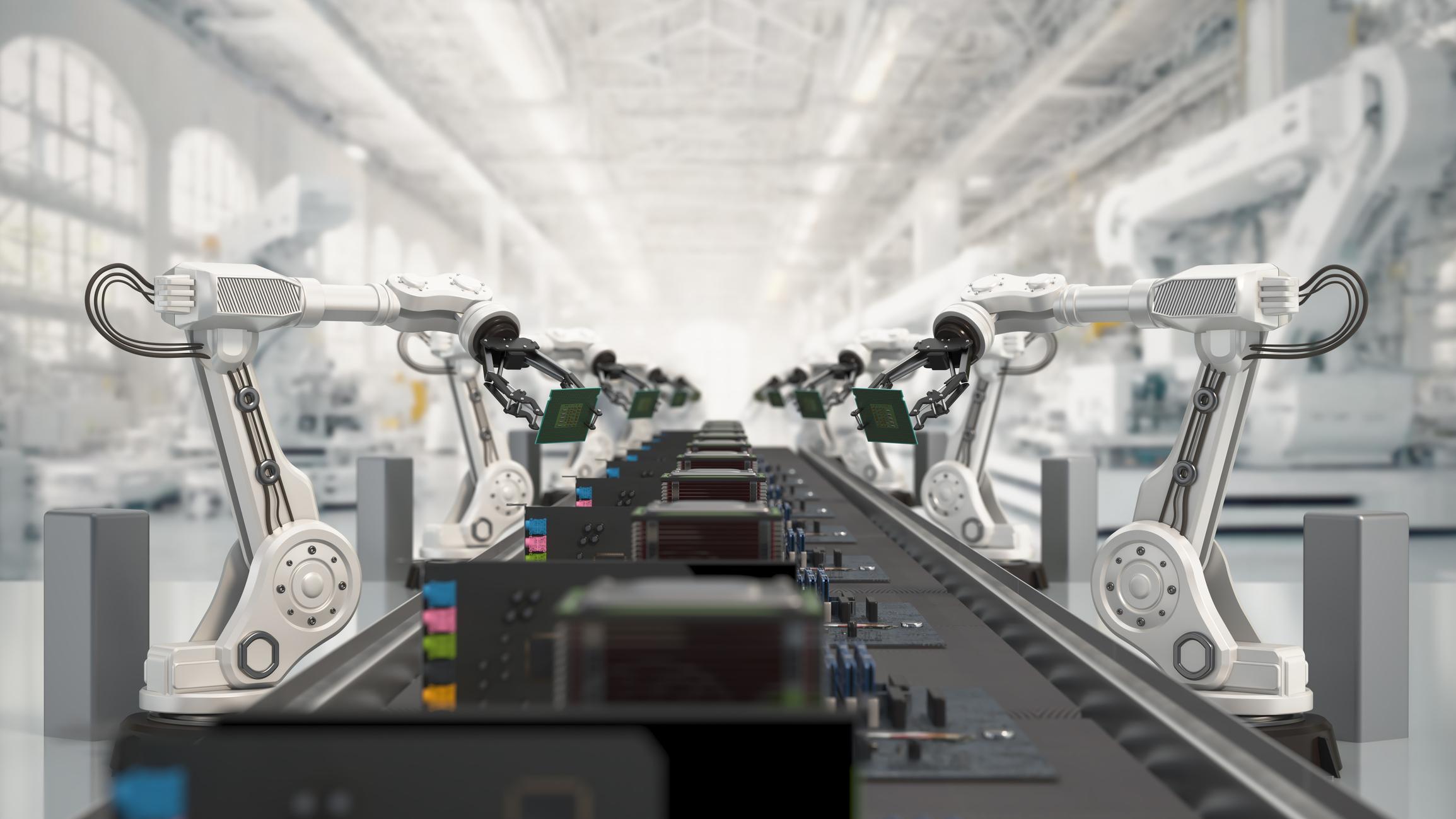
Industrial Automation Equipment Manufacturer: How Factories Reduce Cost and Scale Output
Many factories today are facing the same challenges: rising labor costs, unstable product quality, and increasing pressure to deliver faster. Choosing the right industrial automation equipment manufacturer is becoming a key step for manufacturers who want to stay competitive and scalable.
Why Traditional Manufacturing Is No Longer Sustainable
Manual production still exists in many factories, but it creates clear limitations.
- High dependence on labor leads to rising operational costs
- Human error causes inconsistent product quality
- Production speed is limited and difficult to scale
- Recruitment and workforce stability become ongoing problems
In many cases, factories lose 15%–30% efficiency due to manual inefficiencies. This is where automation becomes not just an upgrade—but a necessity.
How Industrial Automation Equipment Actually Works
An experienced industrial automation equipment manufacturer builds systems that replace repetitive manual work with controlled, intelligent processes.
Core system structure
- PLC control systems manage logic and sequencing
- Servo motors ensure precise positioning and speed
- Sensors detect product status and trigger actions
- HMI panels allow operators to monitor operations
What this means in practice
Instead of relying on workers to assemble or inspect products, machines perform these tasks with high repeatability. This leads to predictable output and stable production cycles.
Manual vs Automated Production: What Really Changes
Factories often hesitate before investing in automation, so it’s important to look at real differences.
| Evaluation Factor | Manual Production | Automated Production | Business Impact |
|---|---|---|---|
| Labor Cost | High and increasing yearly (5%–15%) | Reduced by 30%–70% after automation | Direct cost saving, faster ROI |
| Production Output | 500–800 units/day (typical) | 1,500–3,000+ units/day | 2x–5x capacity increase |
| Product Consistency | Operator-dependent, unstable | Machine-controlled, highly consistent | Reduced customer complaints |
| Defect Rate | 5%–10% common | Reduced to 1%–2% | Less rework and waste |
| Operational Stability | Affected by labor shifts, fatigue | 24/7 continuous operation | Predictable delivery timelines |
| Scalability | Requires more labor and space | Easily scalable with modules | Supports business growth |
| Training Requirement | Continuous worker training needed | Minimal operator training | Lower long-term HR cost |
| Data Visibility | Limited or manual tracking | Real-time production data (MES-ready) | Better decision-making |
| Maintenance | Low upfront, high long-term inefficiency | Planned maintenance, stable lifecycle | Lower downtime risk |
The gap is not just technical—it directly impacts profitability and delivery capability.
What a Good Automation Solution Looks Like
A reliable industrial automation equipment manufacturer does not just sell machines. It provides a complete production solution.
Typical solution structure
- Production line layout planning
- Equipment customization based on product type
- Integration with existing machines
- Testing and validation before delivery
Key capabilities to look for
- Custom automation design for your workflow
- Ability to integrate assembly, inspection, and packaging
- Stable long-term operation under continuous production
Factories that adopt the right automation solution often see ROI within 12–24 months.
Why Working with the Right Manufacturer Matters
Not all automation suppliers are the same. Choosing the wrong partner can result in delays, unstable systems, or poor integration.
What distinguishes a strong industrial automation equipment manufacturer
- Experience across multiple industries such as electronics, automotive, and packaging
- Ability to handle both standard and customized projects
- Strong engineering team covering mechanical, electrical, and software integration
- Reliable after-sales support and technical response
A qualified manufacturer focuses on long-term system stability, not just short-term delivery.
Real Application Scenario: Production Line Upgrade
A mid-sized manufacturing plant upgraded its assembly process through an industrial automation equipment manufacturer.
Before automation
- 18 workers per shift
- Output: 600 units/day
- Defect rate: 7%
After automation
- 5 operators per shift
- Output: 2,200 units/day
- Defect rate: below 2%
Result
- Labor cost reduced by over 60%
- Production capacity increased more than 3 times
- Delivery timelines became stable and predictable
This is a typical example of how automation transforms factory performance.
Where Automation Equipment Is Commonly Used
Automation is no longer limited to large factories. It is widely used across industries.
Typical applications
- Automotive parts assembly lines
- Electronics manufacturing and PCB assembly
- Packaging and labeling systems
- Precision machining support processes
Operating environments
- High-volume continuous production lines
- Precision manufacturing workshops
- Labor-intensive industries transitioning to automation
How to Choose the Right Automation Equipment
Selecting the right solution requires balancing cost, flexibility, and scalability.
Key selection factors
- Production volume requirements
- Product complexity
- Available factory space
- Integration with existing equipment
Practical selection tips
- Start with semi-automation if budget is limited
- Choose modular systems for future expansion
- Prioritize reliability over lowest price
Working with an experienced industrial automation equipment manufacturer ensures these factors are properly evaluated.
Frequently Asked Questions
Can automation equipment be customized
Yes, most systems are designed based on your product specifications and production process.
What is the typical lead time
Usually 30–90 days depending on project complexity.
Is automation suitable for small factories
Yes, especially for reducing labor costs and improving consistency in repetitive processes.
What support is provided after installation
Remote troubleshooting, on-site service, and spare parts support are typically included.
Final Thoughts
Automation is no longer a future concept—it is a practical solution to today’s manufacturing challenges. Choosing the right industrial automation equipment manufacturer can significantly improve efficiency, reduce costs, and create a scalable production system.
If your factory is planning to upgrade production or reduce dependency on manual labor, now is the right time to evaluate automation solutions.
Contact our team to explore a customized automation system designed for your production needs.