

Industrial valves sit at the point where safety, uptime, product control, and operating confidence all meet in tanker transport. That is why experienced buyers rarely ask only for a price. They want to know whether a valve package fits the medium, pressure range, cleaning routine, and operator workflow well enough to reduce downtime after delivery instead of creating more service work later.
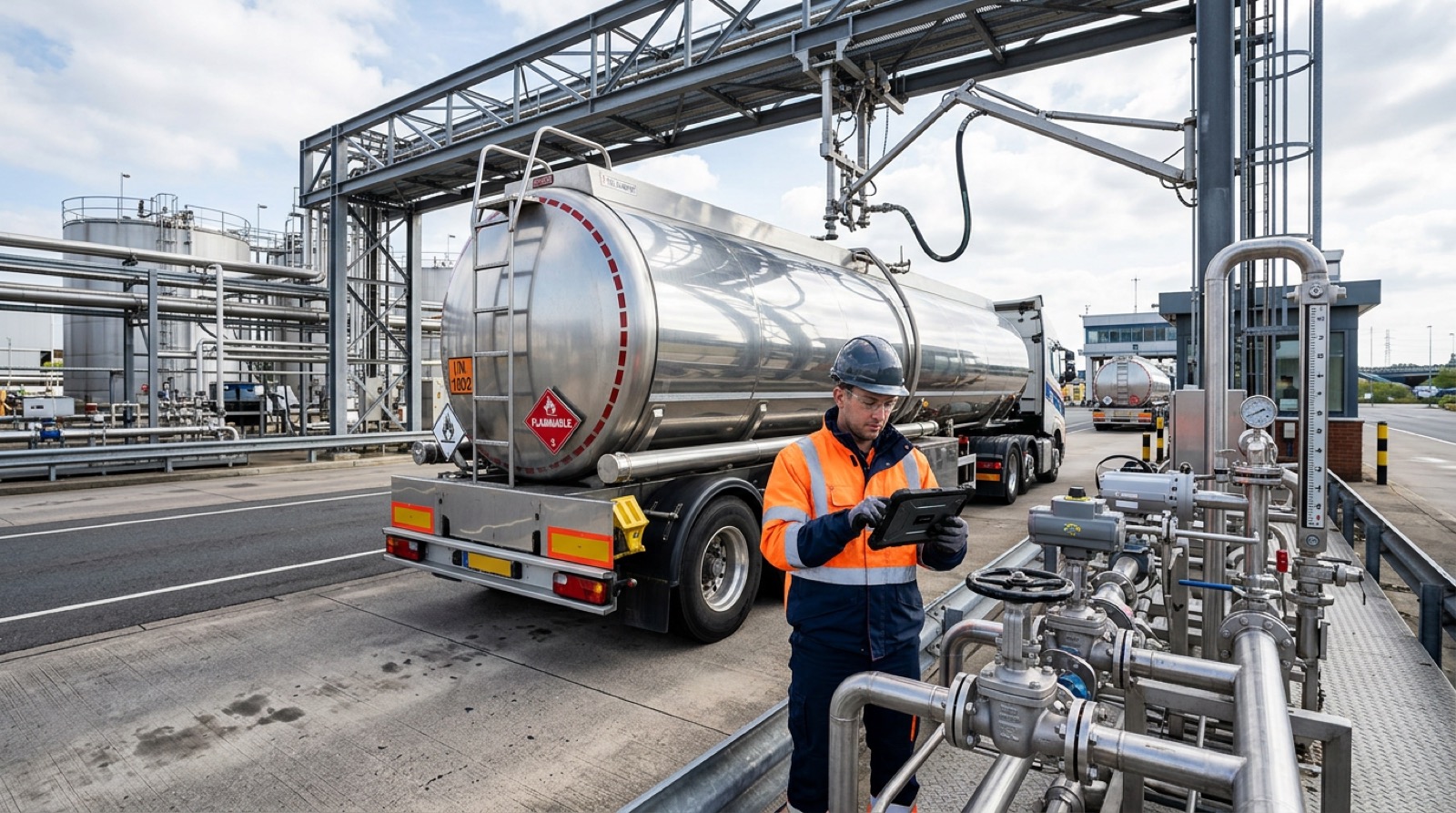
This guide is written for procurement teams, OEM engineers, and distributors who need a practical industrial valve selection guide rather than generic product copy. It keeps one clear focus: how to choose industrial valves for safer, more efficient tanker transport while also answering the real buyer questions around cost, testing, supplier evaluation, and inquiry readiness.
Quick answer: what matters most?
- Treat valve selection as a system decision that includes body material, seals, actuation, gauges, and maintenance access.
- A low quote can become expensive if spare parts, testing records, or serviceability are weak.
- For many projects, recognized references such as API 598, ISO 5208, and ASME B16.34 provide a better technical discussion baseline than brochure claims alone.
- For conversion-focused content and real procurement alike, the strongest pages answer definition, comparison, cost, FAQ, and next-step intent together.
What industrial valves actually do in tanker transport
In real transport operations, industrial valves do much more than basic flow control. They isolate product during loading and unloading, support pressure management, reduce reverse-flow risk, and help operators handle routine and abnormal conditions more predictably. A poor valve match can slow unloading, increase seal wear, complicate cleaning, or create unnecessary safety exposure in daily use.
That is why the best answer depends on the cargo and the duty. A fuel tanker valve supplier may be judged on shutoff reliability and pressure performance. A hygienic liquid project may care more about cleanability and residue control. Chemical applications often require tighter material compatibility and stronger corrosion awareness. The right choice is application-specific, not catalog-driven.
Typical valve package on a tanker system
A practical tanker package often includes shutoff valves, flow-direction protection, level indication, and either manual or pneumatic actuation depending on the operating process. The most reliable projects are usually the ones where the manifold layout, fittings, gauges, and actuator logic are reviewed together before production begins.
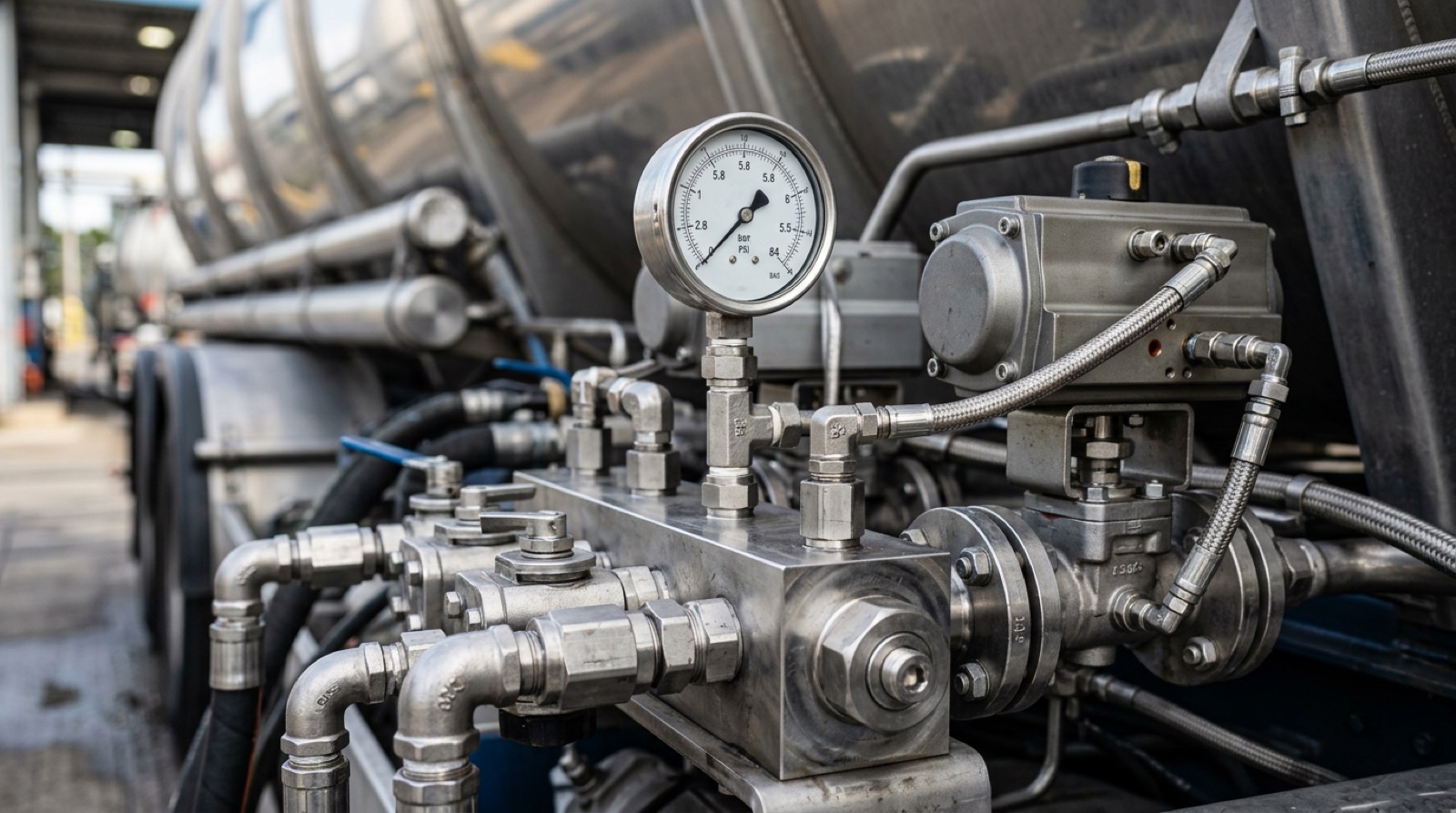
| Valve or component | Why buyers choose it | What to verify |
|---|---|---|
| Ball valve | Fast shutoff and straightforward operation | Seat material, torque, pressure rating, media compatibility |
| Butterfly valve | Compact layout where space and weight matter | Seal wear, disc material, maintenance access |
| Check valve | Helps prevent reverse flow | Directional reliability, fouling resistance, opening pressure |
| Pneumatic actuator | Improves repeatability and can reduce unsafe manual steps | Fail-safe behavior, cycle life, air-supply stability |
Buyer checklist before approving a valve package
1. Match materials and seals to the real medium
Steel grade, sealing material, and internal finish all affect long-term reliability. Buyers should confirm not only what materials are used, but why they fit the real fluid, temperature window, and cleaning method.
2. Ask how inspection was verified
Technical confidence improves when the supplier can explain inspection and testing logic clearly. In many B2B conversations, API 598, ISO 5208, and ASME B16.34 help structure a more objective discussion when they are relevant to the project.
3. Decide whether actuation improves the workflow
Manual valves may be fine for straightforward layouts. Pneumatic actuator solutions are often better when repeatability, remote operation, or safety-sensitive steps matter.
4. Review maintenance early
A valve that is hard to inspect or reseal can turn into recurring downtime even if the purchase price looked competitive.
Industrial valve cost factors that affect total value
When buyers search for industrial valve cost factors, they usually want to know which price differences are justified. Cost often changes because of body material, seal quality, actuator selection, gauges, documentation, export packaging, and after-sales support. The smarter comparison is total first-year operating value, not only the day-one unit price.
If testing documents are weak, spare parts are unclear, or service access is poor, the project can lose time and money during commissioning or early use. That is why a strong quote should make room for both hardware and service logic.
How to evaluate an industrial valve supplier
A reliable supplier should do more than send a catalog. They should answer technical questions clearly, explain why a configuration fits the application, provide usable documentation, and communicate realistic lead times. Many buyers also look for evidence of a structured quality system such as ISO 9001 because it supports consistency in process control.
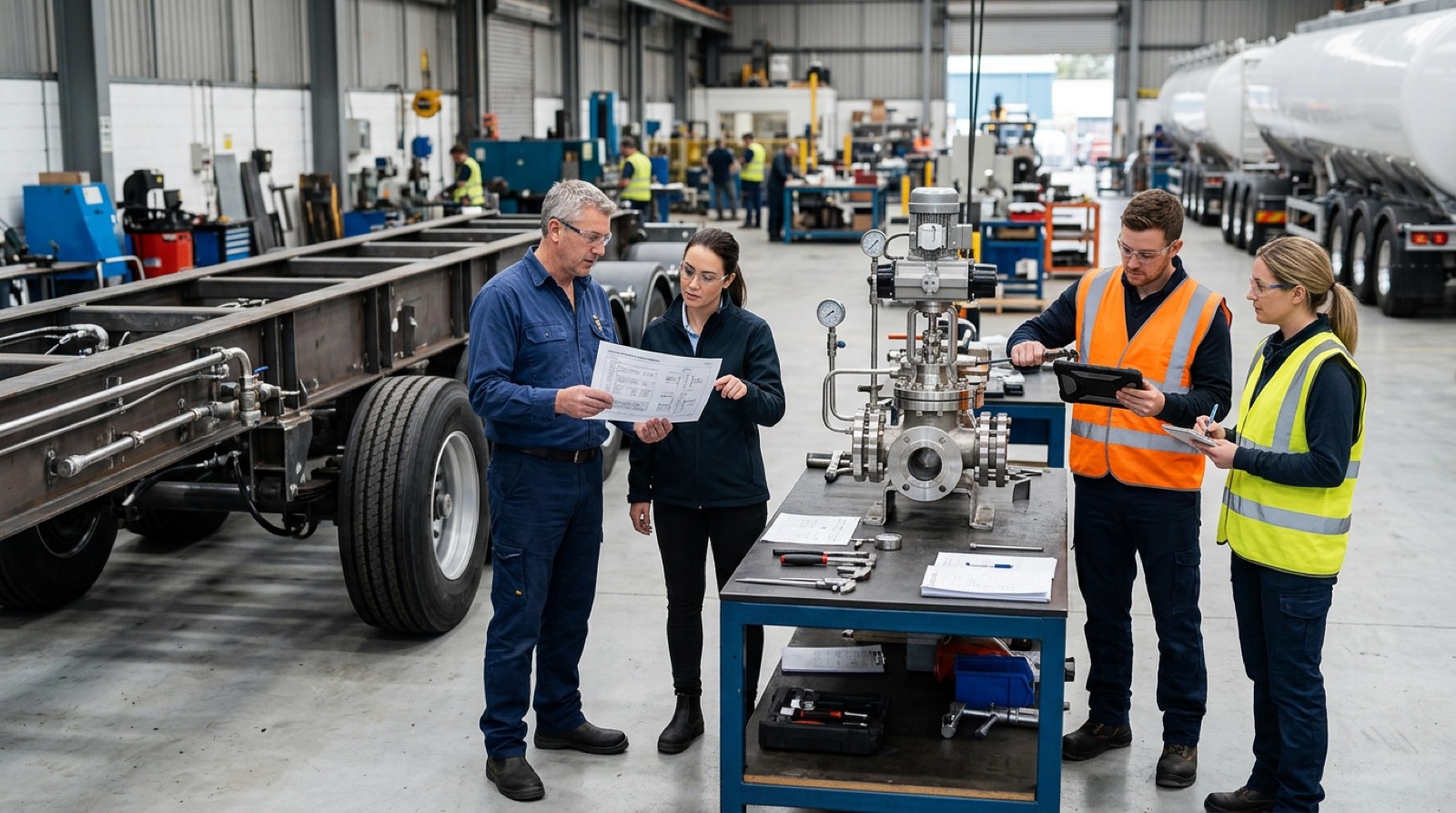
In practical B2B procurement, four signals matter most: response quality, document discipline, engineering cooperation, and after-sales support. If a supplier can discuss testing logic, maintenance planning, and layout adaptation before the order is released, they are much more likely to become a dependable long-term partner.
Recommended next steps and internal resources
- Explore transport equipment and related solutions if you want to compare broader system options alongside valve decisions.
- Browse more industry articles for additional buying and application guidance.
- Read the supporting overview article if you want a simpler introduction before moving into specification details.
FAQ
Which valve type is better for tanker unloading?
It depends on the medium, sealing requirement, pressure, cleaning needs, and operator workflow. Ball valves are often preferred for shutoff reliability, while butterfly valves may be attractive where compact layout matters more.
How much does an industrial valve package cost?
The answer depends on materials, seals, actuation, accessories, testing requirements, and export readiness. Buyers should compare package value, not only a bare valve price.
Do all tanker projects need pneumatic actuators?
No. Pneumatic actuation is most valuable where safety, repeatability, or remote operation matters. Simpler projects may work well with manual valves.
What documents should a buyer request?
Ask for drawings, material details, seal information, inspection or test records, operating guidance, spare-part recommendations, and maintenance instructions.
Ready to move from research to quotation?
If you already know your medium, operating conditions, and delivery window, the next useful step is to send an inquiry or request a quote. A more complete brief at the start usually leads to a better valve recommendation, faster turnaround, and fewer changes after the order enters production.