Choosing a custom bag manufacturer is not simply a matter of finding the lowest unit price. The right partner must translate your design into a repeatable product, control materials and workmanship, communicate clearly, and deliver on the commercial terms your launch requires.
This guide explains how buyers, brand teams, distributors, and promotional-product companies can compare suppliers with less risk. Use it before requesting quotations, approving samples, or placing a production order.
1. Define the bag before you compare manufacturers
A useful quotation begins with a useful product brief. If two suppliers quote different assumptions, their prices cannot be compared fairly. Prepare a specification that covers:
- Bag type, dimensions, capacity, and intended use
- Outer material, lining, padding, reinforcement, and target fabric weight
- Handle or strap construction, length, width, and adjustability
- Closure type, pockets, compartments, and internal organization
- Hardware such as zippers, buckles, snaps, hooks, and feet
- Logo method, artwork size, placement, and color requirements
- Packaging, labeling, barcode, carton, and shipping-mark requirements
- Target quantity, launch date, destination market, and delivery location
Reference photos are helpful, but they should support—not replace—measurable specifications. Ask the manufacturer to confirm every assumption in writing before sampling.
2. Match the manufacturer to your bag type and material
Not every factory is equally strong in every construction. A supplier that excels at simple canvas totes may not be the best choice for technical backpacks, insulated coolers, or structured cosmetic cases.
| Bag type | Common material families | Capabilities to verify |
|---|---|---|
| Tote and shopping bags | Cotton, canvas, non-woven fabric, polyester | Seam reinforcement, handle attachment, printing consistency |
| Backpacks and laptop bags | Polyester, nylon, coated fabrics, foam, mesh | Pattern engineering, padding, load points, zipper installation |
| Drawstring and gym bags | Polyester, cotton, mesh | Eyelets, cord channels, corner reinforcement, logo placement |
| Cooler and lunch bags | Outer fabric, insulation layers, food-contact lining options | Layer bonding, seam construction, leakage testing, odor control |
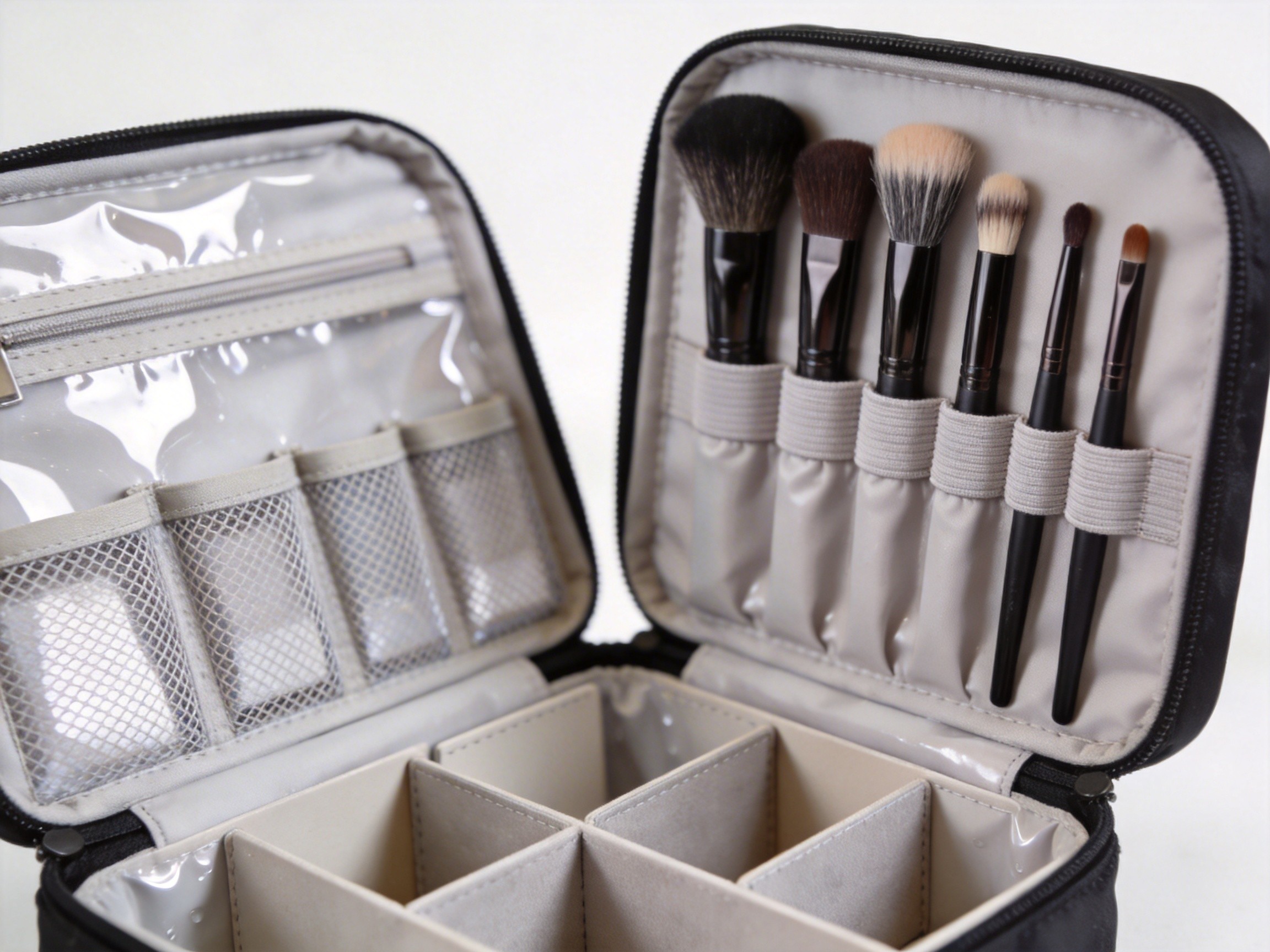
| Travel and cosmetic bags | Polyester, nylon, PU, PVC, TPU | Structured shapes, piping, clear panels, compartment accuracy |
Ask for examples of products that use similar materials, construction, and decoration—not just any bag the factory has made. Relevant experience reduces development time and exposes whether the supplier already understands the critical quality points.
3. Verify the manufacturing capabilities that affect your design
Branding and decoration
Screen printing, heat transfer, sublimation, embroidery, woven labels, rubber patches, debossing, and metal badges each behave differently. The best method depends on the substrate, artwork, order size, durability target, and desired appearance. Request a decorated sample using your actual material whenever possible.
Construction and components
Review stitch type, stitch density, seam allowance, binding, bartacks, edge finishing, and reinforcement at stress points. Confirm whether zippers, webbing, buckles, and other components are standard stock or custom sourced. A component that looks minor can become the schedule’s longest lead-time item.
Pattern engineering and prototyping
A capable custom bag manufacturer should be able to interpret drawings, create or refine patterns, identify weak points, and explain how a design choice affects cost or manufacturability. Good engineering feedback is a value signal, not resistance to your idea.
4. Understand samples, MOQ, and production readiness
Ask the supplier to separate the development sample, pre-production sample, and production approval process. A development sample proves the concept; a pre-production sample should represent the approved materials, colors, branding, components, and workmanship used for the order.
Minimum order quantity, or MOQ, can be driven by fabric dye lots, printed components, custom hardware, packaging, or production-line economics. If the quoted MOQ is too high, ask which feature creates the constraint. A stock color, standard zipper, simplified packaging, or fewer colorways may lower the threshold without compromising the core product.
Do not approve production from photographs alone when fit, hand feel, structure, color, or component operation matters. Keep one signed or clearly documented approval sample and a revision log so both teams work from the same standard.
5. Evaluate the quality-control system, not just the sample
A strong sample does not guarantee a consistent production run. Ask how the factory controls quality at three stages:
- Incoming materials: fabric shade, weight, coating, hardware, labels, and packaging are checked against approved standards.
- In-process production: cutting accuracy, printing, stitching, measurements, reinforcement, and assembly are inspected before defects multiply.
- Final inspection: finished bags are reviewed for appearance, function, measurements, workmanship, packing, and quantity.
Build a defect checklist around the product’s real risks. Typical checks may include seam strength, strap attachment, zipper operation, print position, color consistency, odor, dimensional tolerance, load performance, and carton marking. If you use an AQL-based inspection plan, agree on the sampling level and defect limits before production rather than after a dispute.
6. Confirm compliance for the destination market and intended use
Compliance depends on where the bag will be sold, who will use it, and what it will carry. Applicable requirements may involve restricted substances, labeling, traceability, chemical disclosures, food-contact layers, or children’s product rules.
Ask the manufacturer which requirements it believes apply, which materials or components have current test documentation, and whether testing covers the exact production materials. Then verify current obligations with a qualified compliance professional for your market. A generic certificate for a different material, color, or product is not a substitute for product-specific due diligence.
7. Compare total landed cost, not only the unit price
A clear quotation should identify the specification, quantity tier, sample charges, tooling or setup, packaging, testing, inspection, freight terms, payment terms, and quote validity. Clarify whether taxes, duties, delivery, and destination fees are included.
When one quote is unusually low, compare the hidden assumptions: fabric weight, lining, foam thickness, zipper grade, reinforcement, print method, packaging, inspection, and acceptable tolerances. The cheapest initial quote can become the most expensive option after redesigns, defects, rush freight, or missed launch dates.
8. Test communication and lead-time discipline
Ask for a phase-by-phase schedule covering specification review, material sourcing, sample rounds, approval, bulk production, inspection, and shipping. Identify which dates depend on your feedback and which depend on the supplier.
Communication quality is visible before an order: Does the team answer every question? Does it flag contradictions? Does it record revisions? Does it distinguish confirmed facts from estimates? A supplier that manages small details during development is more likely to manage production changes responsibly.
9. Validate sustainability claims with evidence
Terms such as recycled, organic, biodegradable, and eco-friendly should be supported by specific material information and relevant documentation. Ask what percentage of the product uses the claimed material, how chain-of-custody evidence is maintained, whether coatings or mixed components affect recyclability, and what packaging changes are available.
A practical sustainability review also considers durability, repairability, packaging volume, shipment efficiency, and overproduction. A longer-lasting bag with a clear material record can be a stronger choice than a vague green claim.
10. Use a supplier scorecard
Score each candidate with the same evidence so price does not dominate the decision.
| Evaluation area | Suggested weight | Evidence to review |
|---|---|---|
| Relevant product and material experience | 20% | Comparable samples, factory capability, engineering feedback |
| Sample accuracy | 15% | Measurements, appearance, function, revision control |
| Quality system | 20% | Inspection plan, records, defect handling, traceability |
| Communication | 10% | Response quality, clarity, ownership, documentation |
| Capacity and schedule | 10% | Production plan, bottlenecks, contingency options |
| Compliance readiness | 10% | Applicable standards, material records, test strategy |
| Cost transparency | 10% | Complete quotation, assumptions, change-cost clarity |
| Sustainability evidence | 5% | Material claims, documentation, packaging options |
11. Questions to ask every custom bag manufacturer
- Which similar bag types and materials do you produce regularly?
- Which steps are completed in-house, and which are subcontracted?
- What information do you need to produce an accurate quotation?
- What drives the MOQ for this specific design?
- How many sample stages do you recommend, and what does each stage prove?
- How do you control fabric shade, dimensions, stitching, and logo placement?
- Which components present the greatest quality or lead-time risk?
- How are design revisions documented and approved?
- What inspection records are available before shipment?
- How are defects, rework, shortages, or late delivery handled?
12. Watch for common red flags
- A quotation arrives without questions or written assumptions.
- The supplier avoids measurable specifications and relies only on photos.
- Certificates cannot be matched to the actual material or product.
- The factory promises every bag type, material, and process with equal expertise.
- Sample changes are not recorded, creating confusion over the approved version.
- Payment, inspection, defect, and delivery responsibilities remain vague.
13. A practical sourcing process
- Create the product brief and target cost range.
- Shortlist manufacturers with relevant construction experience.
- Issue the same request for quotation to each supplier.
- Compare assumptions, capabilities, samples, and scorecard results.
- Approve a complete pre-production standard and inspection plan.
- Monitor production milestones, inspect the order, and retain quality records.
Frequently asked questions
What should I send a custom bag manufacturer for a quote?
Send dimensions, materials, construction details, logo artwork, color references, packaging requirements, quantity, destination, and target date. A technical drawing or annotated reference sample improves accuracy.
How can I reduce the MOQ for a custom bag?
Ask which feature drives the minimum. Stock materials, standard colors, existing hardware, fewer variants, and simpler packaging may reduce the MOQ while preserving the main design.
How do I know whether a bag sample is production-ready?
The sample should match approved materials, colors, components, branding, dimensions, workmanship, and packaging. All deviations should be closed in a written revision log before bulk production.
Should I use a third-party inspection?
Independent inspection can add useful verification, especially for a new supplier or a high-risk order. It works best when the inspector receives a clear specification, approved sample, defect list, and agreed acceptance plan.
Make the decision with evidence
The best custom bag manufacturer is the one that fits your product, quality expectations, compliance needs, schedule, and commercial model—not automatically the supplier with the lowest quote. Start with a precise brief, compare candidates with the same scorecard, validate the sample, and agree on quality controls before production.
Ready to develop a custom bag? Prepare your dimensions, material preferences, artwork, quantity, and target delivery date, then request a detailed manufacturing review and quotation.